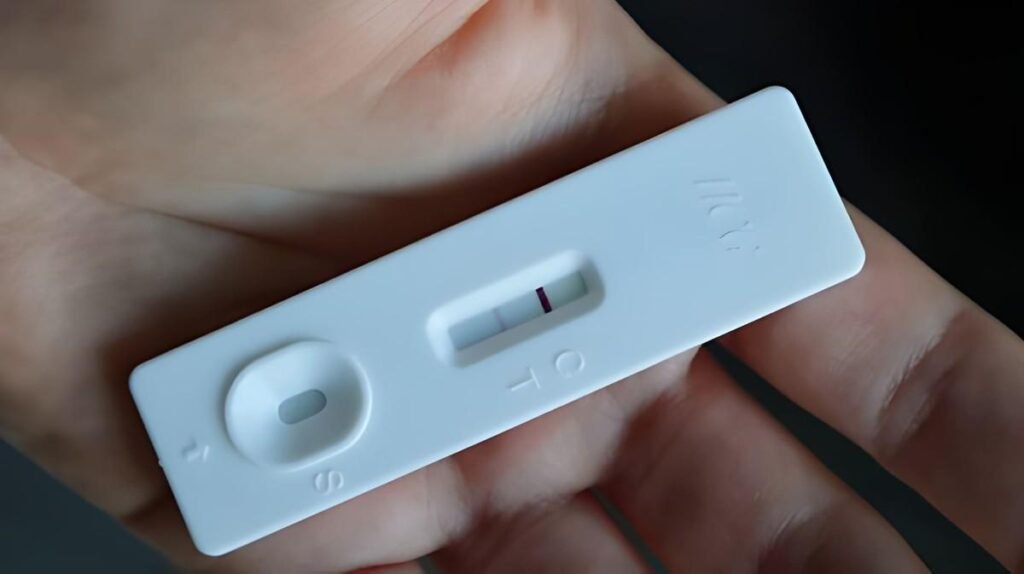
The Final Word on the Two-Week Wait
17 DPO and a Negative Test: Interpreting Results and Moving Forward
Table of Contents
The Hormonal Reality of 17 DPO
Seventeen days past ovulation (17 DPO) places an individual deep into the luteal phase, often three or more days past the expected start of menstruation. This timing is crucial because it marks a point of hormonal certainty. If a viable pregnancy has established, the embryo should have implanted long ago, and the body should be producing high levels of human Chorionic Gonadotropin (hCG) to maintain the uterine lining.
The End of the Luteal Phase
The standard luteal phase typically spans 12 to 16 days. By 17 DPO, the corpus luteum—the cyst that produces progesterone after ovulation—would normally be dissolving, causing progesterone levels to plummet, which triggers menstruation. If a fertilized egg has successfully signaled its presence, it would take over this task, ensuring progesterone remains high and the period is suppressed.
Clinical Perspective: For most individuals with accurately tracked cycles, a negative pregnancy test at 17 DPO is statistically robust. This day is significantly past the window where a test might be falsely negative due to "testing too early."
Analyzing the Negative: Accuracy at 17 DPO
Home pregnancy tests (HPTs) are designed to detect hCG levels generally at or above 25 mIU/mL. Given the hormone's rapid doubling time (every 48 to 72 hours), a developing embryo would have generated substantial levels by 17 DPO, far exceeding the test's minimum threshold.
Statistically, the chance of being pregnant and still registering a negative test at this stage is extremely low, usually attributed to a few specific, identifiable factors rather than normal biological variance. The key focus shifts from whether hCG is present to why, if present, the test cannot detect it.
Potential Causes of a False Negative
- Extreme Dilution: Testing after consuming large volumes of water or liquids can temporarily dilute the urine's concentration of hCG, dropping it below the test's sensitivity.
- Hook Effect (Extremely Rare): In rare instances involving very high hormone levels (often associated with multiple gestations), the excess hCG can overwhelm the test's antibodies, paradoxically leading to a false negative. This is not applicable to early pregnancy tests.
- Late Ovulation/Misdating: The most common reason for a true false negative at this point is an error in tracking. If ovulation occurred later than anticipated, 17 DPO might actually be 12 DPO or earlier, placing the test timing outside the definitive window.
| Scenario | Likelihood at 17 DPO | Actionable Insight |
|---|---|---|
| True Negative | High (The expected result) | The current cycle is likely complete; await menstruation. |
| Late Implantation & Low hCG | Very Low (Implantation rarely occurs after 12 DPO) | Retest in 48-72 hours. |
| Cycle Miscalculation | Common (If cycle tracking is inconsistent) | Re-evaluate ovulation timing using basal body temperature or past data. |
The Late Implantation Scenario: Fact vs. Fiction
Implantation is the rate-limiting step for hCG production. While implantation can occur between 6 and 12 DPO, the further past 12 DPO it occurs, the less likely the pregnancy is to be viable. Even with implantation at the absolute latest point of 12 DPO, hCG levels have had five days to double by 17 DPO. This should be more than enough time for any standard test to register a positive result.
Simulating Late hCG Progression
To understand the hormonal timeline, visualize the absolute worst-case scenario: Implantation at the latest normal time (12 DPO) with a minimal initial hCG reading of 5 mIU/mL. Even in this scenario, the hormone level should be easily detected by 17 DPO.
Visualize Your hCG Levels (Worst-Case Implantation)
This simulates a highly delayed start with hCG doubling every 48 hours.
Target Detection Threshold: 25 mIU/mL
The conclusion drawn from this hormonal progression is clear: A true 17 DPO negative result, when ovulation timing is confirmed, strongly indicates a non-pregnant cycle. Hope must now pivot toward understanding the cause of the missed period, which is likely related to progesterone withdrawal timing or cycle regulation, not an undetected pregnancy.
The Symptom Paradox: Hormones and Ambiguity
One of the most confusing aspects of the waiting period is the continued presence of symptoms that feel exactly like early pregnancy—breast soreness, fatigue, mild cramping, and bloating. This is the symptom paradox, rooted in the shared hormonal driver of both early pregnancy and the late luteal phase: progesterone.
Progesterone's Influence
Progesterone, which rises after ovulation in all cycles, is responsible for these physical sensations. In a non-pregnant cycle, progesterone levels naturally stay elevated for a time before dropping, causing a slight delay in the period but sustaining PMS symptoms beyond the expected start date. Furthermore, stress and emotional anticipation can amplify these somatic experiences, making it feel impossible to distinguish a "real" pregnancy symptom from a heightened PMS symptom.
Focus on the Period, Not the Symptoms
If you have a confirmed negative test at 17 DPO, shift your attention from analyzing twinges and tiredness to waiting for the expected menstrual flow. The drop in progesterone, signaling the end of the cycle, should occur within the next few days.
Actionable Next Steps: When and How to Retest
While the 17 DPO negative result carries high certainty, the emotional need for confirmation is real. We advise one final, definitive retest to close the loop on this cycle.
The Final Test Protocol
- Time Frame: Wait three to five days (until 20-22 DPO). This allows for two full doubling cycles of hCG, ensuring that even a profoundly delayed implantation event would yield a detectable result.
- Technique: Use the first morning urine (FMU) only, as it holds the highest concentration of hormones.
- Test Sensitivity: Use a high-quality, sensitive digital or line test from a trusted brand.
The Role of Cycle Variation and Late Ovulation
For individuals tracking their cycles using ovulation predictor kits (OPKs), basal body temperature (BBT), or period apps, a period delay following a 17 DPO negative is frequently rooted in a variable cycle length.
Common Misunderstandings in Cycle Dating
- Stress and Illness: External factors like high stress, sickness, travel, or dramatic weight changes can delay ovulation by several days or even weeks. This pushes all subsequent phases—including 17 DPO—forward. You might mistakenly believe you are 17 DPO when you are actually only 12 DPO due to a late ovulation event.
- Luteal Phase Defect (LPD): While controversial, some specialists diagnose LPD when the luteal phase is consistently shorter than 12 days. Conversely, an unusually long luteal phase (past 16 days) without pregnancy is rare and may point toward a hormonal imbalance that warrants investigation.
If the final retest is also negative and menstruation has not started, the cause of the delay is almost certainly anovulation (a cycle where no egg was released) or delayed ovulation, not an unseen pregnancy.
Emotional Wellness and Planning Ahead
A negative test, especially after a period delay, often brings feelings of disappointment, frustration, and confusion. It is vital to acknowledge these emotions and transition from the 'wait' phase into a proactive 'plan' phase.
If the result confirms the absence of pregnancy, use this knowledge to regroup. Schedule a preconception appointment with your healthcare provider. This is the optimal time to discuss cycle variability, nutrient intake, and any underlying conditions (such as thyroid imbalance or Polycystic Ovary Syndrome) that might be contributing to irregular cycles or period delays. A proactive conversation about optimizing future cycles is the most positive next step.
Accept the cycle's outcome with self-compassion. The 17 DPO negative is not a failure; it is definitive biological information that allows you to close the current chapter and focus renewed energy on the next opportunity. Trust the science, embrace the certainty, and prioritize your holistic well-being as you look ahead.