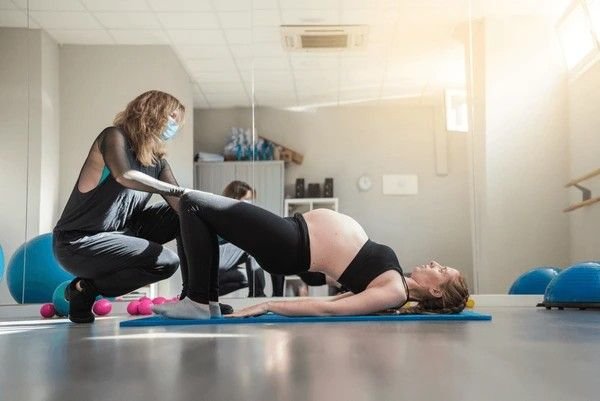
An intelligent, safe routine focusing on pelvic floor integrity, deep abdominal breathing, and posture maintenance throughout the second and third trimesters.
Article Navigation
Safety First: Trimester Guidelines and Red Flags
Before beginning any exercise regimen during pregnancy, secure approval from your healthcare provider. This routine focuses on modifications necessary for a growing abdomen and shifting center of gravity.
The Supine Safety Rule: Avoiding Vena Cava Compression
After the first trimester (approximately 14 weeks), it is essential to avoid lying flat on your back. The weight of the gravid (pregnant) uterus can press on the inferior vena cava, a major vein that returns blood to the heart. This compression can reduce blood flow to the baby and cause dizziness or nausea for the mother. All exercises performed lying down must utilize a ramp or wedge (pillows, yoga bolster) to elevate the upper body by at least 30 to 45 degrees. For simplicity, most exercises in this 20-minute flow are performed sitting, standing, or on hands and knees.
Key Warning Signs to Halt Exercise
Listen to your body vigilantly. If you experience any of the following, stop the exercise immediately and contact your doctor:
- Vaginal bleeding or fluid leakage.
- Dizziness, faintness, or lightheadedness.
- Sudden, persistent headache or chest pain.
- Calf pain or swelling (potential sign of deep vein thrombosis).
- Decreased fetal movement (if quickening is already established).
- Sudden abdominal pain or persistent uterine contractions.
The Core Principles of Prenatal Pilates
Prenatal Pilates prioritizes deep, intrinsic core muscles over superficial abdominal muscles. The goal is building a "girdle of strength" that supports the spine and pelvis as the body changes.
Breath and Core Connection
All movements begin with the breath. Use lateral (rib-cage) breathing: inhale to expand the rib cage sideways, and exhale to gently draw the belly button inward toward the spine, focusing on wrapping the transversus abdominis (TA) muscle around the trunk. Avoid the tendency to hold your breath or push down with your abdomen.
Pelvic Floor Engagement: The Kegel Connection
Integrate a gentle pelvic floor lift (Kegel) on every exhale. Imagine drawing the pelvic floor muscles upward and inward, then relaxing fully on the inhale. This repetitive engagement strengthens the pelvic area, supports the increasing weight of the uterus, and aids in postpartum recovery.
The 20-Minute Pregnancy Pilates Flow (Detailed Breakdown)
This routine is broken into three phases: Warm-up and Posture (5 min), Stability and Strength (10 min), and Cool-down (5 min). Perform each exercise for the specified duration or repetition count, focusing entirely on controlled movement and breath.
Phase 1: Warm-up and Posture (5 Minutes)
1. Postural Check and Breathing (2 Minutes)
Action: Sit upright on a mat or cushion. Find a neutral pelvis position (not tilted forward or back). Place hands on ribs and practice lateral breathing. On the exhale, gently knit ribs together and engage the pelvic floor.
Focus: Connect mind to body. Establish the breathing pattern that guides the entire flow.
2. Pelvic Tilts (Cat/Cow Modification) (3 Minutes)
Action: Move to hands and knees (quadruped position). Ensure hands are under shoulders, knees under hips. Gently tuck the tailbone under (Cat position, rounding the low back), releasing tension in the lower back. Then, slowly untuck the tailbone (Cow position, allowing a natural arch). Keep the head and neck neutral.
Focus: Mobilize the spine, relieve lower back pressure, and find the neutral pelvic position you will maintain during stability work.
Phase 2: Stability and Strength (10 Minutes)
3. Bird Dog Preparation (5 Reps per Side)
Action: Remain in the quadruped position. Inhale to prepare. On the exhale, draw the belly button inward (TA engagement) and lift just one hand a few inches off the floor. Inhale to lower. Repeat on the other side. This establishes shoulder stability without challenging the core with leg movement.
Modification: To progress, lift one arm and the opposite leg simultaneously, ensuring the torso remains absolutely still and the lower back does not arch. Maintain a slight tuck of the tailbone for stability.
4. Single Leg Slides (5 Reps per Side)
Action: Lie on your side, propped up on your elbow (or lie fully on your side if propping is uncomfortable). Bend both knees to a 90-degree angle. On the exhale, perform a pelvic floor lift and slide the top leg out straight, keeping the leg parallel to the floor. Inhale to return. Ensure the top hip does not roll backward.
Focus: Strengthen the gluteus medius, a key muscle for stabilizing the pelvis and preventing the waddling gait common in the third trimester.
5. Clam Shells (10 Reps per Side)
Action: Remain on your side, knees bent and stacked. Keep your feet together. On the exhale, lift the top knee while keeping the feet touching. Inhale to lower. Maintain core stability so the pelvis remains stacked and does not rock back and forth.
Focus: Target hip external rotators and deep gluteal muscles for posterior pelvic stability. Crucial for managing symphysis pubis dysfunction (SPD).
Phase 3: Standing and Cool-down (5 Minutes)
6. Standing Roll Down (2 Minutes)
Action: Stand tall, feet hip-width apart. Exhale and slowly tuck the chin, rolling the spine down one vertebra at a time until the hands rest on the thighs or shins (never the floor). Do not hang the head below the heart. Inhale at the bottom, and exhale to slowly restack the spine, drawing the core gently inward.
Focus: Stretch the hamstrings and lower back, countering the lordotic (arched) posture caused by the growing belly.
7. Standing Arm Circles and Side Bends (3 Minutes)
Action: Stand tall. Perform small arm circles forward and backward to release tension in the neck and shoulders. Then, place one hand on the hip and gently stretch the opposite arm overhead, bending sideways. Inhale to return to center, exhale to stretch to the other side.
Focus: Increase thoracic mobility (upper back) and stretch the intercostal muscles, assisting with lateral breathing and shoulder posture.
Essential Modifications and Prop Use
Modifying exercises ensures safety and comfort at every stage of pregnancy. Props allow you to achieve correct form and minimize strain on joints softened by the hormone relaxin.
Prop Focus: Stability Ball and Cushions
A large exercise ball (stability ball) is highly recommended. Using the stability ball for seated work (instead of sitting on the floor) reduces hip tension and encourages better spinal alignment. Use cushions or a folded towel under the knees during quadruped work to protect sensitive joints.
Modification for Diastasis Recti
If you have been diagnosed with or suspect diastasis recti (abdominal separation), you must strictly avoid movements that cause "doming" or "coning" of the abdominal wall (where the midline pushes outward like a ridge). In this routine, the focus is exclusively on deep TA engagement and pelvic floor work, which minimizes risk. Never perform crunches, planks, or standard Pilates "hundreds." Always maintain a gentle inward draw of the belly button toward the spine on the exhale.
Post-Workout Care and When to Stop
The period immediately following exercise is as important as the routine itself. Post-workout habits aid recovery and ensure maximum benefit from the stability work.
Hydration and Monitoring Heart Rate
Immediately replenish fluids lost during the flow. Adequate hydration is critical for preventing overheating and reducing the likelihood of contractions. While specific heart rate monitoring is often unnecessary for low-impact exercise like this, use the "Talk Test": you should be able to hold a conversation comfortably throughout the entire 20 minutes. If you are too breathless to speak without strain, reduce the intensity of the movement or rest entirely.
Commitment to Functional Strength
This 20-minute pregnancy Pilates flow is a purposeful investment in your core function and pelvic floor integrity. By focusing on controlled breathing, deep abdominal engagement, and hip stability, you actively support your posture and mitigate the common physical discomforts of late pregnancy. Consistency is more important than intensity. Incorporating this short, intelligent routine several times a week builds the lasting functional strength necessary for both an easier third trimester and a more confident recovery postpartum.
© 2025 Child and Mother Specialist Guidance. All rights reserved.