The 21st century has transformed the skills and competencies students need to thrive in an increasingly complex, interconnected, and technology-driven world. Elementary education now goes beyond rote memorization to focus on critical thinking, creativity, collaboration, communication, and digital literacy. Integrating 21st-century learning activities into the elementary curriculum equips children with cognitive, social, and emotional skills essential for lifelong learning. This article explores a wide range of modern learning activities designed for elementary students, their benefits, and practical implementation strategies.
1. Core Skills of 21st Century Learning
21st-century learning emphasizes a holistic approach that combines academic knowledge with essential life skills.
| Core Skill | Description | Classroom Application |
|---|---|---|
| Critical Thinking | Analyzing, evaluating, and problem-solving | Puzzle challenges, logic games, data interpretation |
| Creativity | Generating new ideas and innovative solutions | Art projects, story creation, invention challenges |
| Collaboration | Working effectively with peers | Group projects, team-based science experiments |
| Communication | Expressing ideas clearly and listening actively | Presentations, debates, peer feedback |
| Digital Literacy | Using technology responsibly and effectively | Coding games, educational apps, digital storytelling |
| Global Awareness | Understanding diverse cultures and global issues | Geography projects, cultural exchange activities |
| Social-Emotional Learning | Managing emotions, empathy, and teamwork | Role-playing, mindfulness exercises, peer mentoring |
2. Interactive STEM Activities
STEM (Science, Technology, Engineering, and Mathematics) learning in elementary schools emphasizes hands-on experiments and problem-solving activities:
- Science Experiments: Growing plants under different conditions, building simple circuits, observing chemical reactions with safe materials.
- Mathematics Games: Using manipulatives like blocks, beads, or digital apps to teach addition, subtraction, fractions, and patterns.
- Technology Projects: Introducing basic coding through visual programming tools like Scratch or Blockly.
- Engineering Challenges: Constructing bridges, towers, or simple machines using recycled materials.
Example Table: Sample STEM Activity Schedule
| Activity | Grade Level | Objective | Skills Developed |
|---|---|---|---|
| Build a Water Filter | 4–5 | Understand filtration process | Critical thinking, problem-solving |
| Coding a Simple Game | 3–5 | Introduce programming logic | Digital literacy, creativity |
| Plant Growth Experiment | 1–3 | Observe growth patterns | Observation, data collection, scientific reasoning |
| Shape & Pattern Hunt | 1–2 | Identify geometric shapes in surroundings | Math skills, pattern recognition |
3. Project-Based Learning (PBL)
Project-Based Learning allows students to engage deeply with topics by solving real-world problems or creating meaningful products. Examples include:
- Designing a miniature sustainable city
- Creating a classroom newspaper
- Investigating local environmental issues
- Developing a recycling awareness campaign
Benefits of PBL:
- Encourages independent research
- Enhances teamwork and collaboration
- Integrates multiple subjects (math, science, language arts)
- Improves problem-solving and critical thinking
4. Arts Integration Activities
Integrating arts into core subjects enhances creativity, cultural awareness, and emotional expression:
- Visual Arts: Painting, drawing, and sculpting to represent stories or scientific concepts
- Music: Learning songs, rhythms, or creating soundscapes linked to classroom themes
- Drama & Role-Play: Acting out historical events, social scenarios, or book stories
- Dance & Movement: Using choreography to explore patterns, math concepts, or storytelling
Comparison Table: Traditional vs 21st Century Arts Integration
| Feature | Traditional Arts | 21st Century Arts Integration |
|---|---|---|
| Approach | Skills-focused, isolated | Interdisciplinary, project-based |
| Student Role | Passive learners | Active creators and collaborators |
| Assessment | Teacher evaluation | Peer review, self-assessment, presentation |
| Tools | Paper, paint, instruments | Digital media, coding, collaborative platforms |
5. Digital and Technology-Enhanced Learning
Technology has become central to 21st-century elementary education. Effective digital learning activities include:
- Interactive educational apps for math, reading, and science
- Digital storytelling using tablets or computers
- Virtual field trips and augmented reality explorations
- Collaborative online projects with students from different schools or countries
Example: Coding & Robotics Table
| Activity | Age Group | Tools Used | Skills Developed |
|---|---|---|---|
| Scratch Coding | 7–10 | Scratch software | Logic, sequencing, creativity |
| Robot Maze Challenge | 9–11 | LEGO WeDo / simple robots | Problem-solving, teamwork, computational thinking |
| Digital Storybook | 6–8 | Tablets, StoryJumper | Communication, creativity, digital literacy |
6. Collaborative Learning Activities
Collaboration develops social-emotional skills, communication, and empathy. Activities include:
- Peer mentoring and buddy reading programs
- Group problem-solving challenges
- Cooperative games that emphasize teamwork over competition
- Classroom debates and discussion circles
7. Outdoor and Experiential Learning
Learning beyond the classroom supports exploration, environmental awareness, and physical activity:
- Nature walks and observations
- Gardening projects to understand plant life cycles
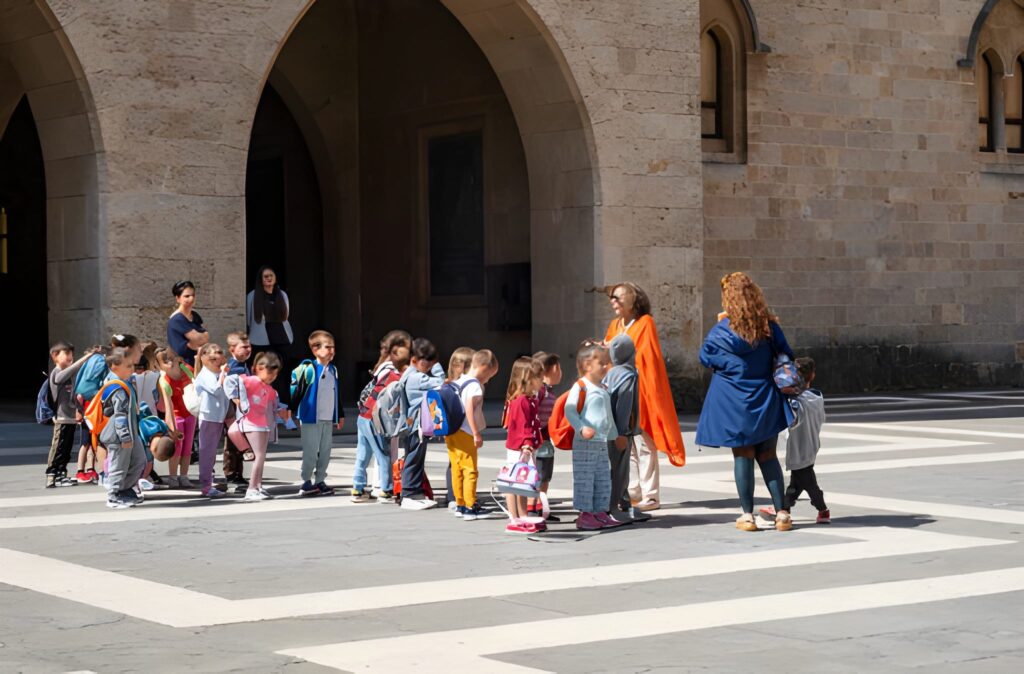
- Community visits to museums, local farms, or historical sites
- Science scavenger hunts
8. Social-Emotional Learning (SEL) Activities
SEL ensures that students develop empathy, self-awareness, and interpersonal skills:
- Emotion charts and reflective journaling
- Mindfulness and breathing exercises
- Role-playing conflict resolution scenarios
- Group circle discussions for sharing ideas and feelings
9. Benefits of 21st Century Learning Activities
- Enhances engagement and motivation through hands-on learning
- Develops critical thinking, creativity, and problem-solving skills
- Promotes collaboration, communication, and empathy
- Prepares students for digital and global citizenship
- Fosters lifelong learning habits
10. Implementation Strategies for Teachers
- Blend traditional instruction with interactive activities
- Incorporate technology thoughtfully to complement learning objectives
- Design activities that integrate multiple subjects
- Provide opportunities for student choice and voice
- Use formative assessment to guide instruction and provide feedback
Conclusion
21st-century learning activities in elementary education prepare students for a rapidly evolving world by fostering cognitive, social, emotional, and digital skills. Hands-on STEM projects, project-based learning, arts integration, collaborative exercises, and technology-enhanced experiences help students develop critical thinking, creativity, and problem-solving abilities. By adopting these practices, educators nurture well-rounded, confident, and adaptable learners ready to navigate the challenges and opportunities of the modern era.