
The Heart of Organogenesis
7 Weeks, 5 Days Pregnant: Core Milestones and First Scan Readiness
Table of Contents
Embryonic Status: The Size of a Raspberry
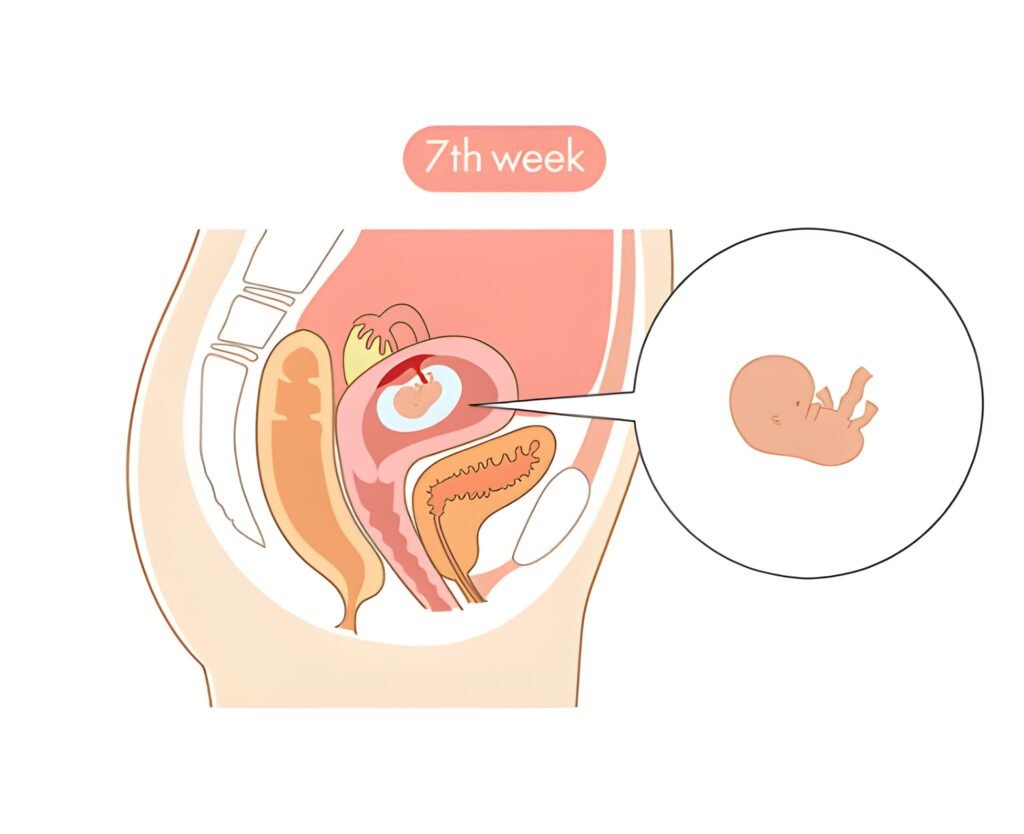
At $7$ weeks and $5$ days, the developing entity is firmly established as an **embryo**, measuring approximately $13$ to $18$ millimeters (about $0.5$ to $0.7$ inches) from crown to rump—roughly the size of a raspberry. This specific stage is the most active and vulnerable period of **organogenesis**, where every major organ system is being laid down or refined.
The physical structure is rapidly changing from the simple fetal pole seen a few weeks ago to a distinctly human form, albeit with disproportionately large head, which is necessary to house the quickly expanding brain. The core focus is on functional systems that will sustain life: the heart and the circulatory system, and the central nervous system.
Major Milestones: Heart, Brain, and Limbs
The biological activity between Week $7$ and Week $8$ is centered on separating and refining the structures that have already formed.
Heart and Brain Development
The circulatory system is functioning fully, pumping blood between the embryo and the yolk sac/placental connection:
- Heart: The heart is now fully partitioned into four chambers (though not completely sealed) and beats strongly, often at a rate of $150$ to $170$ beats per minute (BPM), nearly double the maternal rate. This strong, consistent heartbeat is the clearest sign of viability seen on an early ultrasound.
- Brain: The brain is developing faster than any other organ. The head is large, and the major divisions of the brain (forebrain, midbrain, hindbrain) are taking shape, responsible for thought, memory, and coordination.
Limbs and Defining Features
Physical appearance is also changing quickly:
- Limbs: The arm and leg buds have lengthened, and the ends are flattening into hand and foot plates. Fingers and toes are distinguishable but remain webbed together.
- Facial Features: Eye structures are forming, although they are far apart on the sides of the head. The beginnings of the external ears, nose, and lips are becoming apparent.
- Placenta: The placenta continues to grow its vascular network, ensuring the hormone production (hCG) is strong and steady.
Maternal Peak: Symptoms at 7w5d
For the mother, $7$ weeks and $5$ days often coincides with the peak intensity of first-trimester symptoms, driven by the maximum hormonal surge.
HCG-Driven Symptoms and Managing Fatigue
The high levels of Human Chorionic Gonadotropin (hCG) and estrogen are causing the body to react strongly:
- Nausea and Vomiting: Often at its height. Nausea can be persistent and severe, striking at any time of day. It is critical to manage this with small, frequent meals and hydration to prevent dehydration.
- Extreme Fatigue: The body is increasing blood volume and metabolic activity massively. This causes a bone-deep exhaustion that requires prioritizing rest and sleep.
- Sensory Amplification: Heightened sense of smell (olfactory sensitivity) and the metallic taste (dysgeusia) are common, often exacerbating nausea.
- Emotional Volatility: The dramatic fluctuation of hormones can lead to intense mood swings, anxiety, and tearfulness—all normal responses to the biological workload.
Clinical Timing: Preparing for the First Scan
Most physicians schedule the first prenatal appointment and ultrasound between Weeks $8$ and $10$. At $7$ weeks and $5$ days, you are perfectly positioned to confirm that appointment and prepare for the crucial viability check.
The Viability Scan (Dating Scan)
The primary goal of the first ultrasound is to confirm viability:
- Location: Confirm the gestational sac and embryo are correctly located within the uterus (ruling out ectopic pregnancy).
- Heartbeat: Visually confirm the strong, rhythmic cardiac activity. This is the clearest measure of viability and significantly reduces the risk of miscarriage moving forward.
- Dating: Measure the crown-rump length (CRL) to accurately confirm the gestational age and establish the Estimated Due Date (EDD). This measurement is most precise at this early stage.
Safety and Risk: Protecting the Embryo
The period between Week $3$ and Week $10$ carries the highest risk for developmental issues. Safety vigilance must be maintained at $7$ weeks and $5$ days.
Folic Acid and Teratogen Avoidance
The foundational development of the central nervous system has just occurred or is being finalized.
- Folic Acid: Ensure daily intake of a prenatal vitamin containing at least $400$ micrograms of folic acid. While the neural tube is closed, the continued growth of the central nervous system is supported by this nutrient.
- Medication Review: Avoid all medications (prescription and over-the-counter) unless explicitly approved by your provider. NSAIDs (like ibuprofen) are especially risky during early pregnancy.
- Toxin Avoidance: Strict abstinence from alcohol, tobacco, and high caffeine intake is mandatory.
Interactive: Symptom Severity Checker
Use this guide to determine if your symptoms require immediate clinical consultation.
Select the most relevant maternal symptom:
Select a symptom above to receive immediate guidance.
Socioeconomic Planning: Early Resources
At $7$ weeks and $5$ days, the intense symptoms often necessitate practical adjustments to daily life and work schedules.
Work and Resource Planning
- FMLA: While too early to file, review the Family and Medical Leave Act (FMLA) policies for eligibility. Documentation for medical accommodations (such as modified hours due to severe nausea) may be needed soon.
- Insurance: Ensure your insurance has processed your claim for the first prenatal appointment and verify your deductible and out-of-pocket maximums for labor and delivery costs.
- Nutrition Aid: If experiencing severe food aversions, explore local resources like WIC (Women, Infants, and Children) for nutritional counseling and financial aid to ensure healthy food access during the symptom peak.
Conclusion: The Viability Moment
Seven weeks and five days is the definitive moment of viability confirmation in the early pregnancy journey. The embryo's heart is beating strongly, and the structural foundation is nearly complete. The mother’s primary duties are self-care against the peak of hormonal symptoms and ensuring clinical follow-up for the viability scan. Successfully navigating this week establishes confidence and stability for the rest of the first trimester.



