Am I Drying Up? Navigating the Science of Milk Supply
The fear of losing milk supply is the leading cause of premature weaning. Discover the objective markers of lactation success, identify biological "fake-outs," and learn how to restore balance through evidence-based support.
Perceived vs. Actual Low Supply: The 95 Percent Rule
In clinical practice, the vast majority of mothers who worry they are "drying up" actually possess a perfectly adequate milk supply. Research indicates that while roughly 40 percent of women cite low milk supply as their reason for stopping breastfeeding, actual physiological insufficiency affects only about 5 percent of the population.
This discrepancy is known as Perceived Insufficient Milk (PIM). PIM is driven by a lack of understanding of normal newborn behavior and the natural evolution of the breast tissue. When a mother interprets her baby's fussiness or her own soft breasts as signs of failure, she may prematurely introduce formula. This introduction leads to less time at the breast, which then causes the supply to drop—a self-fulfilling prophecy known as the "top-up trap."
Specialist Insight: The Feedback Inhibitor of Lactation
Milk production is regulated by a protein called FIL (Feedback Inhibitor of Lactation). When milk sits in the breast, FIL accumulates and tells the body to slow down. When the breast is emptied, FIL is removed, and production speeds up. The feeling of "emptiness" is actually when your body is working the hardest to create new milk.
The Biology of the "On-Demand" Manufacturing Plant
To understand why you are likely not drying up, you must understand how lactation transitions from endocrine (hormonal) control to autocrine (local) control.
During the first few weeks, your milk supply is driven by massive surges of prolactin and oxytocin. During this phase, you may experience engorgement, leaking, and a constant feeling of "fullness." However, around 6 to 12 weeks postpartum, the supply-and-demand feedback loop takes over completely. Your breasts become highly efficient manufacturing plants that create milk while the baby is nursing, rather than just storing it beforehand.
The Fake-Outs: Why You Feel "Empty"
The transition to autocrine control brings several changes that mothers often mistake for "drying up." These are actually signs of a healthy, regulated biological system.
Soft Breasts
The Worry: "My breasts don't feel hard or full anymore. I must be empty."
The Reality: This is a sign of regulation. Your body has learned exactly how much milk your baby needs and stopped overproducing. Tissue softness is the goal, not a sign of failure.
No More Leaking
The Worry: "I used to leak through my shirts, and now I don't. My supply is gone."
The Reality: Your nipple sphincters have strengthened, and your let-down reflex has become more controlled. Leaking is an early inefficiency, not a marker of volume.
The "4-Month Fussiness" and Cluster Feeding
Babies undergo massive cognitive and physical growth spurts (commonly at 3 weeks, 6 weeks, 3 months, and 4 months). During these times, they may engage in cluster feeding—nursing every hour for several hours.
Mothers often interpret this as "my baby is still hungry because I don't have enough milk." Biologically, the baby is doing the exact opposite: they are placing an order for more milk. By nursing frequently, they are removing FIL and signaling your brain to increase the production rate for the following day. This behavior is a feature of a healthy lactation system, not a bug.
Objective Markers: Diaper and Weight Math
Instead of relying on how your breasts feel, specialists use two objective metrics to determine if a supply is actually low. If these markers are met, you are not drying up.
The "Input vs. Output" Verification
Select the age of your baby to see the minimum objective safety benchmarks.
| Marker | Standard for Success | When to Worry |
|---|---|---|
| Weight Gain | Regains birth weight by Day 14; gains ~5-7 oz per week. | Continuous weight loss or failure to gain over a 2-week period. |
| Wet Diapers | 6+ heavy wet diapers per 24 hours (after Day 5). | Fewer than 4 wet diapers; dark yellow or orange urine. |
| Lethargy | Baby is alert and active between feeds. | Baby is too weak to cry or difficult to wake for feeds. |
Clinical Causes of Actual Low Supply
If the objective markers (weight and diapers) indicate an actual drop in supply, we investigate specific clinical disruptors.
Breastfeeding is an endocrine process. If your Thyroid (TSH) is too low or high, or if you have PCOS (which can involve insulin resistance and androgen dominance), your mammary tissue may struggle to receive the signal to produce. A simple blood panel can identify these treatable issues.
If a microscopic piece of the placenta remains in the uterus, your body continues to produce progesterone. Progesterone is a direct inhibitor of prolactin. If your milk never "came in" or dropped suddenly while you are still bleeding heavily, an ultrasound is required to rule out retained tissue.
If the baby has a tongue-tie or a "shallow latch," they cannot effectively compress the milk ducts. This means the breast is never truly emptied, FIL builds up, and your supply slowly "dries up" because the demand signal is weak.
Restoration: Power Pumping and Skin-to-Skin
If a supply has actually decreased, the "re-set" button involves high-frequency stimulation.
The Power Pumping Protocol
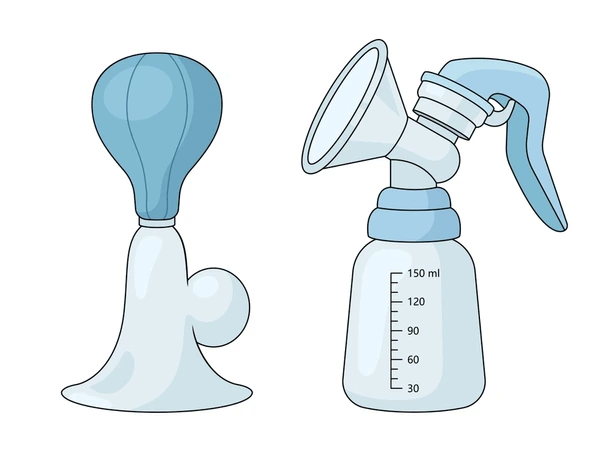
Power pumping mimics a baby's cluster feeding. It is a targeted strategy to signal the pituitary gland for an immediate prolactin increase.
The 60-Minute Power Session:
- - Pump for 20 minutes
- - Rest for 10 minutes
- - Pump for 10 minutes
- - Rest for 10 minutes
- - Pump for 10 minutes
Repeat this once a day for 3-5 days. Most mothers see a measurable increase in volume within 72 hours.
Workplace Rights: The PUMP Act
In the United States, return-to-work stress is a primary driver of perceived and actual supply drops. Cortisol (the stress hormone) directly inhibits Oxytocin (the let-down hormone). If you feel you are drying up after returning to work, it may be a "let-down" issue rather than a production issue.
Under the PUMP for Nursing Mothers Act, you have a federal right to:
- Reasonable Break Time: Time to pump every time you have the need for one year after birth.
- Private Space: A space other than a bathroom, shielded from view, and free from intrusion.
Summary: Trust the Markers
The feeling of "drying up" is usually your body becoming an efficient, on-demand machine. Soft breasts and a lack of leaking are the hallmarks of biological mastery, not failure. By focusing on objective diaper counts and weight gain—and utilizing power pumping or clinical screening if those markers falter—you can navigate the fourth trimester with confidence. You are the expert of your body, and your supply is a resilient, adaptive system designed to support your child.