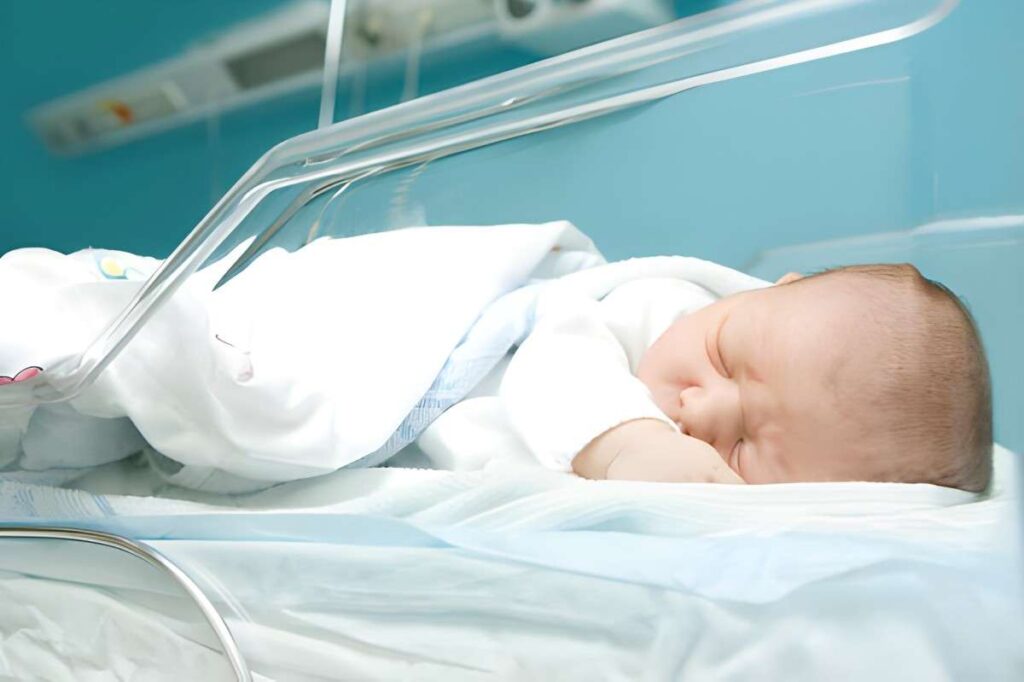
A newborn incubator equipped with a laminar flow unit represents the pinnacle of neonatal engineering. For the most fragile infants, especially those born at the limits of viability, the surrounding air is both a lifeline and a potential threat. Traditional incubators rely on turbulent airflow, which can swirl pathogens and cause inconsistent temperature pockets. In contrast, laminar flow technology provides a unidirectional, steady stream of purified air that moves in parallel layers. This specialized movement eliminates eddies and turbulence, creating a "cleanroom" environment within the confines of a plastic canopy. Understanding this technology requires a journey through fluid dynamics, microbiology, and the precise needs of human development.
The Physics of Unidirectional Airflow
The term laminar flow refers to a fluid (or gas) dynamic state where the fluid travels in smooth paths or layers. In the context of a neonatal incubator, this means the air moves from the supply to the exhaust without crossing paths. This is the opposite of turbulent flow, where chaotic changes in pressure and velocity lead to mixing. By maintaining a Reynolds Number below 2000, engineers ensure that the air remains stable and predictable.
Parallel Layers vs. Chaotic Swirls
In a standard incubator, air is often blown in from a single point, creating a whirlpool effect around the infant. This movement can pick up skin cells, respiratory droplets, or dust and keep them in suspension. A laminar flow unit uses a distribution plenum to push air across the entire width of the incubator at a constant velocity. This "piston-like" movement of air effectively pushes contaminants out of the microenvironment rather than circulating them.
Infection Control and HEPA Filtration
For an infant with an immature immune system, a single colony-forming unit of bacteria can lead to devastating sepsis. Laminar flow units are almost always paired with High-Efficiency Particulate Air (HEPA) filters. These filters trap 99.97% of particles as small as 0.3 microns. Because the airflow is unidirectional, the purified air reaches the infant first, before it has a chance to be contaminated by healthcare providers or hospital surfaces.
Advanced Thermoregulation Mechanics
Maintaining a neutral thermal environment is the primary function of any incubator, but laminar flow units do this with unprecedented precision. Heat loss in neonates occurs through four pathways: conduction, convection, radiation, and evaporation. Convective heat loss is particularly dangerous because it depends on the velocity and temperature of the air moving over the skin.
| Mechanism | Standard Incubator Impact | Laminar Flow Improvement |
|---|---|---|
| Convective Loss | High due to air mixing | Minimal due to stable velocity |
| Evaporative Loss | Variable humidity control | Uniform humidity distribution |
| Radiant Loss | Affected by canopy temp | Stable air buffer minimizes delta |
| Temperature Recovery | Slow after port opening | Instantaneous via air curtain |
Protecting the Fragile Microenvironment
The skin of a micro-preemie is as thin as tissue paper and lacks a developed stratum corneum. This makes them highly susceptible to Trans-Epidermal Water Loss (TEWL). In a laminar flow unit, the humidity can be maintained at levels as high as 80% to 95% without the risk of condensation or mold growth that often plagues older designs. The unidirectional flow ensures that the moisture is evenly distributed, preventing "dry spots" that could damage the infant's skin.
Distribution Plenum: A pressurized chamber that ensures air is released evenly across the entire surface area of the incubator.
Variable Speed Fans: These fans adjust in real-time to maintain the specific velocity required for laminar flow regardless of filter loading.
Dual-Wall Canopy: An inner wall that directs the laminar flow while the outer wall provides insulation against ambient hospital noise and light.
Ultrasonic Humidifiers: These generate a cool mist that is easily integrated into the laminar stream for uniform humidity.
Calculating Air Exchange Ratios
To maintain a sterile and thermally stable environment, the laminar flow unit must move a specific volume of air every minute. This is known as the Air Change per Hour (ACH). In a high-end neonatal unit, the ACH is significantly higher than in standard hospital rooms, ensuring that the air remains fresh and free of CO2 buildup.
Target Airflow Velocity (v): 0.2 meters per second
Plenum Area (A): 0.3 square meters
Flow Rate (Q) = Area * Velocity
Q = 0.3 * 0.2 = 0.06 cubic meters per second
Air Changes per Minute = Q / V
0.06 / 0.15 = 0.4 changes per second
Result: The air inside the incubator is completely replaced every 2.5 seconds. This rapid turnover is what ensures the removal of any potential contaminants or CO2.
Economic Integration in US NICUs
In the United States, the adoption of laminar flow incubators is a subject of intense socioeconomic discussion. These units can cost between 50,000 and 100,000 dollars, which is double or triple the price of a standard closed incubator. Hospitals must weigh the clinical benefit—specifically the reduction in Late-Onset Sepsis (LOS) and shorter hospital stays—against the capital expenditure. Research indicates that preventing a single case of neonatal sepsis can save a hospital upwards of 40,000 dollars in treatment costs, suggesting that the technology may pay for itself over time.
Furthermore, the training required to operate these units is significant. Nurses and respiratory therapists must understand the importance of not blocking the plenums with blankets or stuffed animals, as this disrupts the laminar flow and turns it into turbulent flow. In many high-acuity NICUs in the US, these units are reserved for "Level 4" care, dedicated to infants weighing less than 1,000 grams or those recovering from major thoracic surgeries.
Future Horizons in Neonatal Engineering
As we move through , the integration of Artificial Intelligence (AI) into laminar flow units is beginning to emerge. Future incubators will use sensors to detect the exact position of the infant and adjust the direction of the laminar flow to compensate for heat loss in specific areas of the body. There is also ongoing research into "Bio-Mimetic" airflows that mimic the gentle pulsations of maternal breathing, potentially providing a soothing sensory experience alongside sterile protection.
Conclusion: A Breath of Pure Air
The laminar flow incubator is more than a piece of medical equipment; it is an engineered sanctuary. By applying the laws of physics to the challenges of neonatal biology, we have created a space where the most vulnerable can grow without the interference of a chaotic environment. As our understanding of fluid dynamics and neonatal needs continues to evolve, these units will remain at the forefront of the battle for infant survival. The goal remains clear: providing a breath of pure, warm air to those who need it most, ensuring that a child's first weeks of life are as stable as the air that surrounds them.