Decoding the Neonate: A Specialist’s Guide to Newborn Medical Terminology
Contents
Defining the Neonate
The term neonate originates from the Greek word neos (new) and the Latin natus (born). In clinical practice, the neonatal period encompasses the first 28 days of life. This window represents the most significant physiological transition a human ever undergoes, shifting from a fluid-filled uterine environment to independent atmospheric breathing.
Healthcare providers categorize newborns based on their gestational age. A full-term infant arrives between 37 and 42 weeks. Those born before 37 weeks receive the label preterm, while those exceeding 42 weeks are post-term. Understanding these distinctions allows specialists to anticipate specific developmental needs and potential complications.
The APGAR Score System
Developed in 1952 by Dr. Virginia Apgar, this assessment remains the gold standard for evaluating a newborn immediately after delivery. Specialists record scores at one minute and five minutes post-birth. If the score remains low, additional checks occur at ten minutes.
| Sign | 0 Points | 1 Point | 2 Points |
|---|---|---|---|
| Appearance (Skin Color) | Blue or Pale | Body pink, limbs blue | All pink |
| Pulse (Heart Rate) | Absent | Below 100 bpm | Over 100 bpm |
| Grimace (Reflex Irritability) | No Response | Grimace | Cry or active withdrawal |
| Activity (Muscle Tone) | Limp | Some flexion | Active motion |
| Respiration (Breathing) | Absent | Slow or irregular | Good, crying |
Vital Physical Markers
During the initial physical exam, specialists look for specific anatomical features that indicate health or maturity. Parents often notice vernix caseosa, a white, cheese-like substance coating the skin. This serves as a natural moisturizer and antimicrobial barrier during the transition from the womb.
Fine, soft hair that covers the body of some newborns, especially those born slightly early. It usually disappears within a few weeks as the baby develops more subcutaneous fat.
Often called "soft spots," these are gaps between the skull bones. The anterior fontanelle (top) and posterior fontanelle (back) allow the head to mold during birth and the brain to grow rapidly afterward.
The first stool passed by a newborn. It is thick, sticky, and greenish-black. It consists of materials ingested during time in the uterus, such as amniotic fluid, mucus, and skin cells.
Neonatal Reflexes and Neurology
A specialist assesses primitive reflexes to evaluate the integrity of the central nervous system. These involuntary movements are present at birth and typically fade as the brain matures and voluntary motor control takes over.
The Moro Reflex
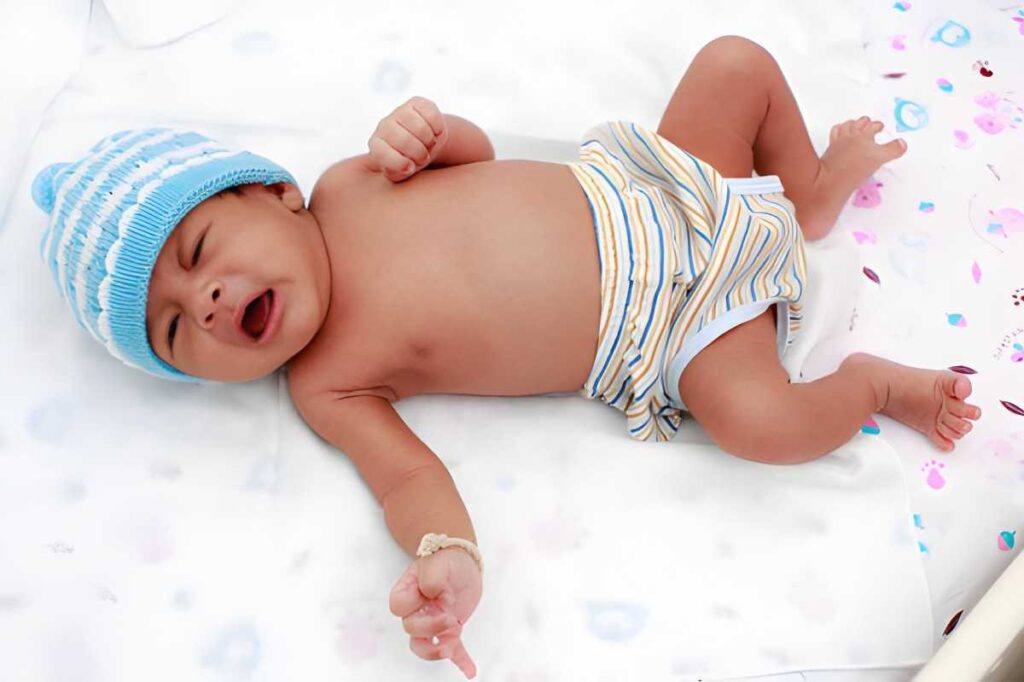
Commonly known as the startle reflex. When the infant feels a sudden loss of support or hears a loud noise, they extend their arms out, pull them back in, and often cry. This reflex usually disappears by 4 months of age.
Rooting and Sucking
Essential for survival and nutrition. Rooting occurs when the corner of the baby’s mouth is touched; the baby turns their head toward the stimulus. This helps the infant find the breast or bottle for feeding.
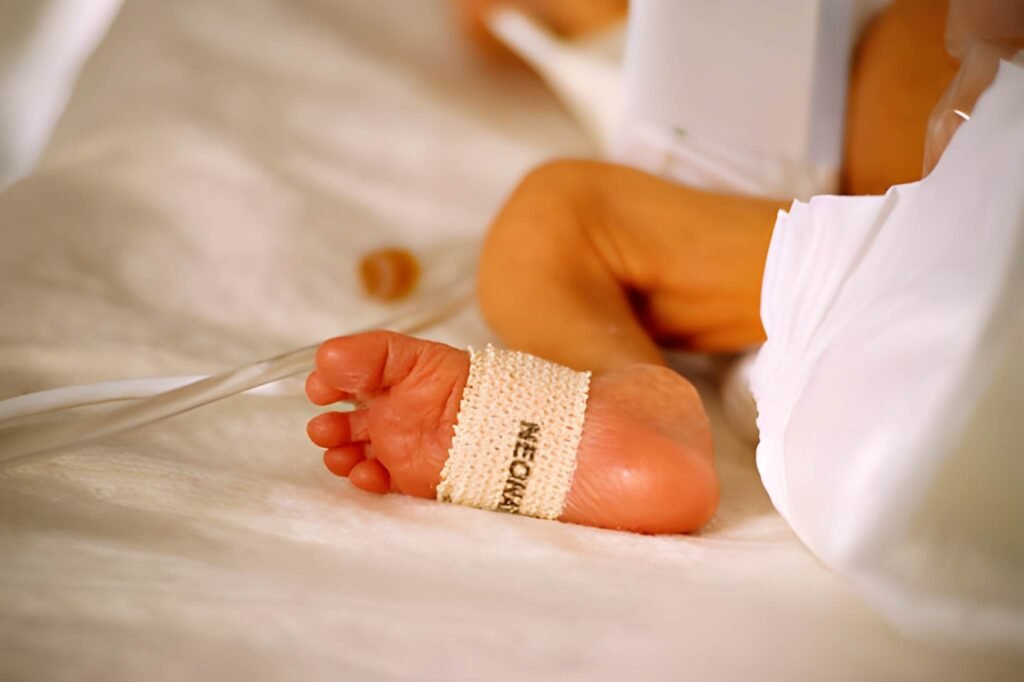
A specialist tests the Babinski Reflex by stroking the sole of the foot. In a healthy neonate, the big toe bends back toward the top of the foot and the other toes fan out.
- Palmar Grasp: Birth to 6 months
- Stepping Reflex: Birth to 2 months
- Tonic Neck: Birth to 7 months
Metabolic and Genetic Screening
In the United States, every state requires a Newborn Screening (NBS) panel. This involves a small heel prick to collect blood drops on a special card (often called the Guthrie card). These tests identify disorders that are not apparent at birth but can cause significant developmental delays or health issues if not treated immediately.
| Condition | Medical Term | What it Affects |
|---|---|---|
| PKU | Phenylketonuria | The ability to break down a specific amino acid found in protein. |
| Hypothyroidism | Congenital Hypothyroidism | Thyroid hormone production, which is vital for brain growth. |
| Galactosemia | Galactosemia | The ability to process galactose, a sugar found in milk. |
| Sickle Cell | Sickle Cell Disease | The shape and function of red blood cells. |
Common Clinical Conditions
Many conditions that appear alarming to parents are actually benign (harmless) and temporary. However, understanding the medical terminology helps in clear communication with the pediatric team.
Physiological Jaundice
Jaundice is characterized by hyperbilirubinemia, which causes a yellowing of the skin and the whites of the eyes (sclera). It occurs because the newborn’s liver is not yet efficient enough to process bilirubin, a byproduct of breaking down old red blood cells. This usually peaks between day 3 and day 5 and resolves on its own.
Erythema Toxicum
Despite its intimidating name, this is a common, harmless rash. It appears as small, yellow-to-white bumps surrounded by red skin. It typically appears within the first few days of life and clears without treatment.
Nutrition and Anthropometrics
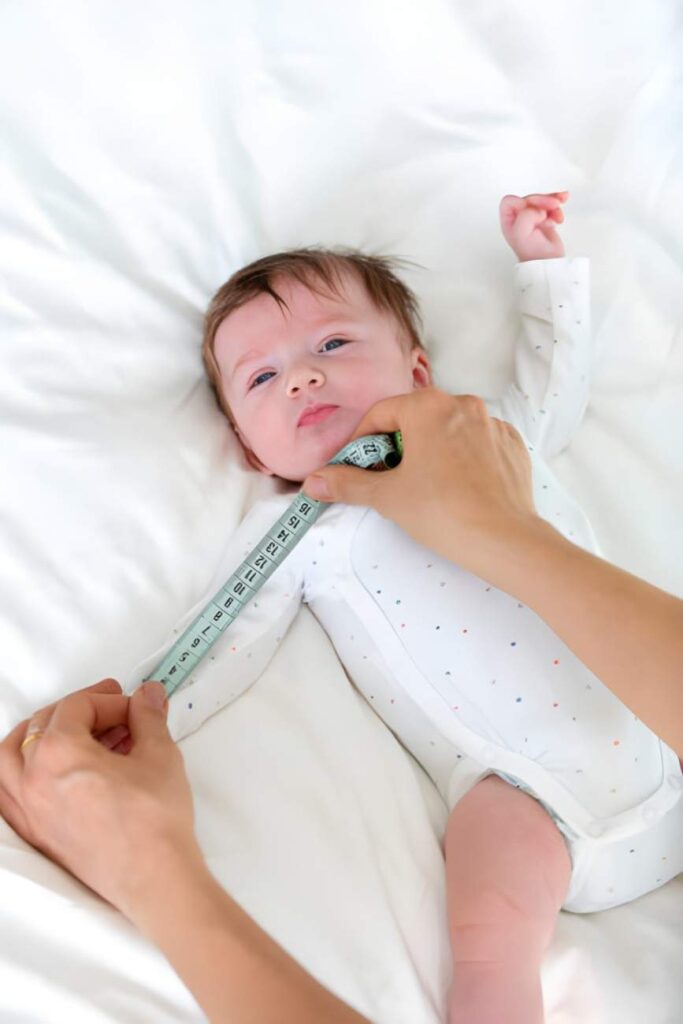
Growth is the primary indicator of neonatal health. Specialists use anthropometrics—the measurement of the human body—to track progress. This includes weight, length, and head circumference.
It is medically normal for a newborn to lose between 5% and 10% of their birth weight in the first few days of life. This occurs as the infant sheds excess fluid and adjusts to a feeding schedule. Most healthy neonates regain their birth weight by 10 to 14 days of age.
The Colostrum Phase
In the first 48 to 72 hours, the mother produces colostrum. This "liquid gold" is highly concentrated with antibodies (Immunoglobulin A), protein, and vitamins. It acts as the baby’s first vaccine, coating the gastrointestinal tract to prevent pathogens from entering the system.
If an infant is born at 3,500 grams and weighs 3,200 grams on day three:
Calculation: (Birth Weight - Current Weight) / Birth Weight x 100
(3500 - 3200) / 3500 = 0.0857
0.0857 x 100 = 8.57% weight loss. This falls within the expected 10% clinical range.
The journey through the neonatal period is a complex dance of biological systems. By understanding these terms, we demystify the medical process and provide the highest level of care for the most vulnerable members of our society. The transition from fetus to neonate is nothing short of miraculous, and every medical term associated with it represents a specific milestone in the architecture of human life.