The Language of the Littlest: Interpreting Newborn Reactions to Slight Pain
Understanding behavioral cues and physiological responses in early infancy
When a newborn experiences even the slightest discomfort—the cold press of a stethoscope, the friction of a dry diaper, or a minor heel prick—the resulting reaction is far from slight. To an infant, pain is not just a localized sensation; it is a total-body event. Because their nervous system is still refining the pathways that distinguish between "touch" and "threat," a minor stimulus can trigger a cascade of neurological and physiological responses that seem disproportionately intense to the adult eye.
As specialists in maternal and child health, we look beyond the cry. We examine the arch of the brow, the tension in the toes, and the rhythm of the heart. Understanding these reactions is critical for both clinical care and parental peace of mind. By learning the "alphabet" of newborn pain, we can better protect their developing brains from the cumulative stress of unmanaged discomfort.
Article Navigation
1. Facial Coding: The Primary Indicator 2. Physiological Echoes: The Internal Storm 3. Standardized Assessment: NIPS and CRIES 4. When Environment Mimics Pain 5. The Art of the SootheFacial Coding: The Primary Indicator
The most reliable "window" into a newborn’s experience of pain is their face. Research into the Neonatal Facial Coding System (NFCS) has identified specific movements that consistently signal distress. Unlike older children who might mask their feelings, a newborn’s facial muscles react reflexively to the stimulation of pain fibers in the dorsal horn of the spinal cord.
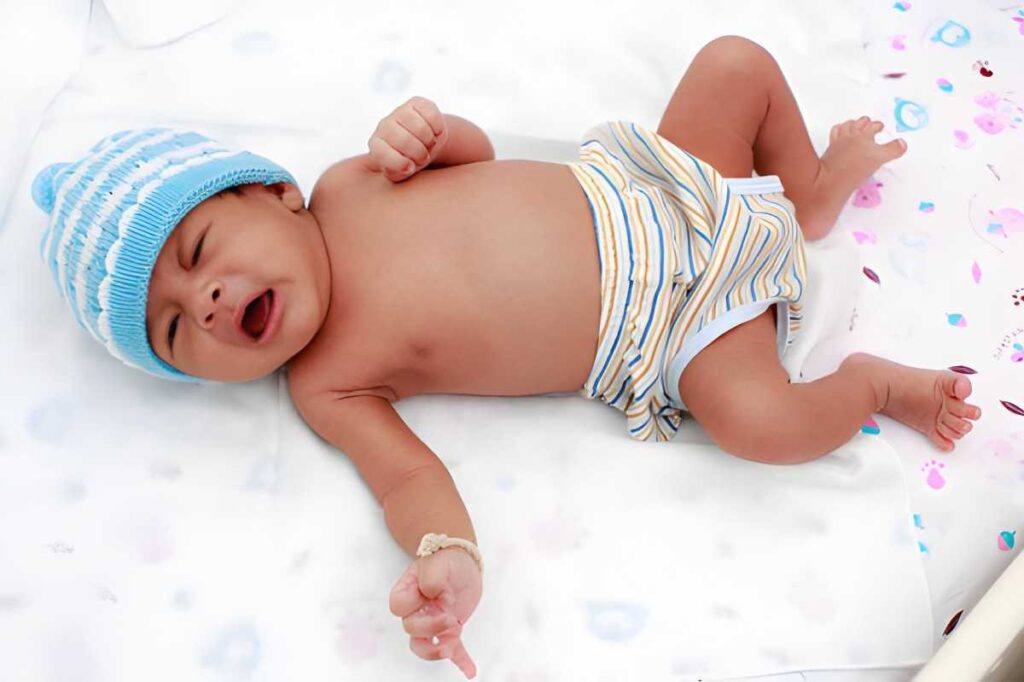
The skin between the eyebrows is pulled together and downward, creating vertical furrows. This is often the very first sign of irritation before a vocal cry begins.
The eyelids are squeezed shut tightly. This is a protective reflex, attempting to shut out the external world while the internal system processes the pain signal.
A deep line forms between the nose and the corners of the mouth, often accompanied by a squared-off mouth shape as the infant prepares to vocalize.
In response to sharper pain, the tongue may become cupped or taut, and the chin may quiver—a sign of extreme neurological stimulation.
These facial cues are often more accurate than crying itself. Some infants, particularly those who are premature or fatigued, may experience "silent pain" where they lack the energy to cry but still exhibit these clear facial distortions. Recognizing these subtle signs ensures that discomfort does not go unnoticed simply because the nursery is quiet.
Physiological Echoes: The Internal Storm
While we see the face, the monitors in a clinical setting tell a different story. Slight pain triggers the sympathetic nervous system—the "fight or flight" response—long before the baby has any conscious understanding of what is happening. This internal storm can be measured through several key biological markers.
These changes are not merely temporary spikes. They represent a significant metabolic cost. A baby reacting to pain burns calories at a much higher rate and experiences a surge in cortisol, the primary stress hormone. In the context of a healthy newborn, this is manageable. However, for a baby struggling with weight gain or recovery, repeated "slight" pain events can hinder their overall progress.
Standardized Assessment: NIPS and CRIES
To remove the guesswork from neonatal care, medical professionals use standardized scales to quantify pain. These tools allow us to assign a numeric value to the baby's reaction, ensuring that interventions are based on objective data rather than subjective perception.
The Neonatal Infant Pain Scale (NIPS)
| Category | Score 0 | Score 1 | Score 2 |
|---|---|---|---|
| Facial Expression | Relaxed/Neutral | Grimace/Contorted | - |
| Cry | No Cry | Whimper/Mild | Vigorous/Loud |
| Breathing Pattern | Relaxed | Change in Pattern | - |
| Arm Movement | Relaxed/Restrained | Flexed/Extended | - |
| Leg Movement | Relaxed/Restrained | Flexed/Extended | - |
| State of Arousal | Sleeping/Awake | Fussy/Irritable | - |
A total score higher than 3 typically indicates that the infant is experiencing pain and requires intervention. This scale highlights that "slight" pain is often identified by the combination of several small movements—a flexed arm, a change in breathing, and a grimace—rather than one large scream.
When Environment Mimics Pain
It is important to distinguish between nociceptive pain (damage to tissue) and sensory overload. Because a newborn's brain is still developing its "filter," the environment can sometimes feel painful. This is particularly true in the year , as we become more aware of the impact of high-decibel hospital environments and bright artificial lighting.
When a baby is overstimulated, they may show "avoidance cues." These include turning the head away, splaying the fingers (the "stop sign"), or a sudden, deep sleep as the brain attempts to shut down to protect itself. While these aren't reactions to physical pain, the physiological stress (cortisol rise) is remarkably similar.
The Art of the Soothe
The good news is that the same hypersensitivity that makes a newborn feel pain more intensely also makes them incredibly responsive to comfort. We can use their sensory system to our advantage by providing "competing" signals that travel faster to the brain than the pain signals.
By gently holding the baby’s arms and legs close to their body in a "fetal" position, we provide a sense of containment. This mimics the tight environment of the womb and helps the infant regulate their motor response to pain.
Sucking on a pacifier or a clean finger triggers the release of serotonin and reduces heart rate. When combined with a tiny drop of sucrose (sugar water), it acts as a powerful, short-term analgesic for minor procedures.
The most effective long-term soothing technique. The mother’s chest provides warmth, a familiar heartbeat, and the scent of milk, all of which flood the baby’s brain with oxytocin, the "love hormone" that naturally inhibits pain pathways.
A snug swaddle prevents the "startle reflex" (Moro reflex) from being triggered by slight pain. By keeping the limbs still, we prevent the "wind-up" phenomenon where movement causes more irritation.
The Role of Parental Intuition
As a specialist, I always tell mothers: you are the best monitor in the room. While clinicians use scales like NIPS, a mother often senses a change in her baby’s "aura" or tension before the first grimace. This intuition is backed by biology—the synchronization of maternal and infant heart rates.
When you notice your baby reacting to slight discomfort, your primary goal is to provide a "calm anchor." By keeping your own voice low and your touch firm and steady (rather than light and ticklish), you send a signal to the baby's nervous system that the threat has passed.
The journey of understanding a newborn's pain is one of empathy and observation. By respecting their sensitivity and responding with precision, we don't just stop the crying—we provide the security they need to navigate their new, bright, and sometimes startling world.