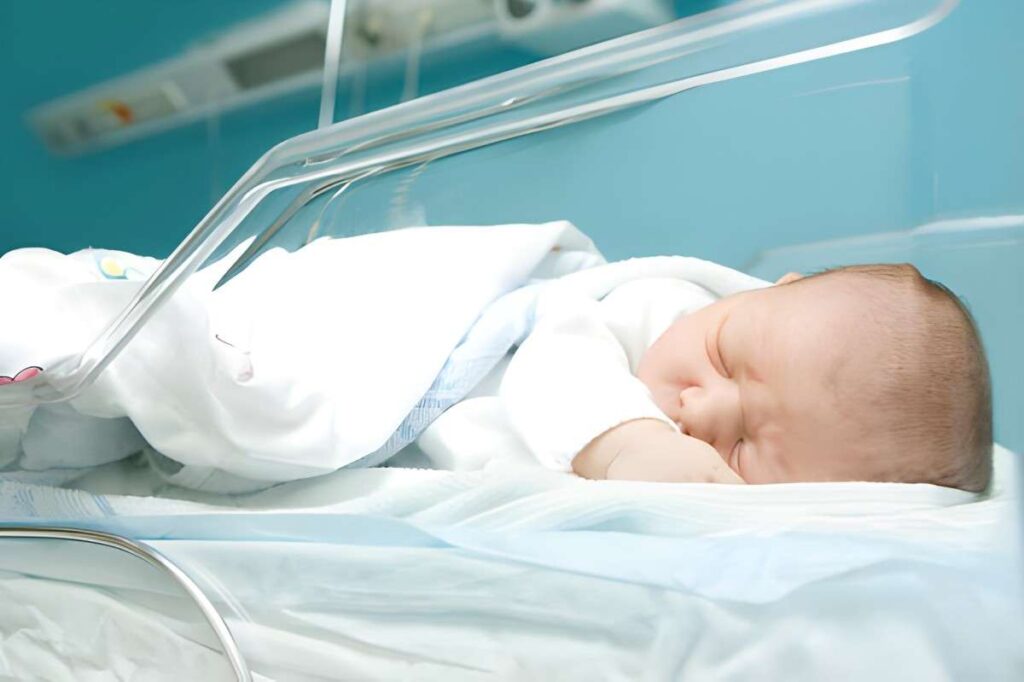
The 21-Day Glow: Understanding Jaundice in a 3-Week-Old Newborn
An Expert Exploration of Late-Onset Hyperbilirubinemia and Clinical Red Flags in
Physiological vs. Pathological Onset
Most parents encounter jaundice within the first 48 to 72 hours of an infant's life. This early yellowing, known as physiological jaundice, typically resolves by the end of the first week as the newborn’s liver begins to function more efficiently. However, when a previously healthy 3-week-old infant exhibits persistent or new-onset jaundice, the clinical perspective shifts significantly. At this age, the infant’s liver should theoretically be mature enough to process standard levels of bilirubin.
Late-onset jaundice requires a systematic evaluation to determine if the cause is a benign continuation of breastfeeding factors or a more serious underlying pathology. While many cases remain harmless, specialists categorize any jaundice persisting beyond 14 days in a full-term infant (or 21 days in a preterm infant) as prolonged neonatal jaundice. This distinction triggers a set of diagnostic protocols aimed at protecting the infant's liver and neurological health.
Bilirubin Metabolism at Three Weeks
Bilirubin is the byproduct of the natural breakdown of red blood cells. In the womb, the mother’s liver processes the baby's bilirubin. After birth, the infant must take over this task. The liver converts unconjugated (indirect) bilirubin into conjugated (direct) bilirubin, which the body then excretes through stool and urine. By three weeks of age, the massive turnover of fetal red blood cells has usually slowed down, and the liver’s enzymatic pathways should be well-established.
In cases of late-onset jaundice, we look for a breakdown in this assembly line. If the infant produces too much bilirubin (hemolysis) or if the liver cannot conjugate it fast enough, the unconjugated levels rise. More concerningly, if the liver conjugates the bilirubin but cannot move it into the intestines (obstruction), the conjugated levels rise. This "fractionated" bilirubin test is the single most important lab tool for a 3-week-old.
The Breast Milk Jaundice Phenomenon
The most common reason for a healthy, thriving 3-week-old to remain yellow is breast milk jaundice. This is entirely different from "breastfeeding jaundice" (which occurs in the first week due to poor intake). In breast milk jaundice, the infant is eating well, gaining weight, and producing plenty of wet diapers. However, certain substances in the mother's milk may inhibit the liver's ability to process bilirubin or increase its reabsorption in the gut.
Why It Happens
Specific enzymes and fatty acids in breast milk might interfere with the UGT1A1 enzyme in the baby's liver. This slows down conjugation, leading to a mild but persistent yellowing that can last for up to 12 weeks.
Is It Dangerous?
In almost all cases, no. Breast milk jaundice is benign. As long as the bilirubin levels remain below certain thresholds and the jaundice is purely unconjugated, the baby is safe to continue breastfeeding without interruption.
Cholestasis and the Acholic Stool Warning
As a specialist, my primary goal with a 3-week-old is to rule out cholestasis. This occurs when bile cannot flow from the liver to the duodenum. This results in an accumulation of conjugated bilirubin, which can be toxic to liver cells over time. The hallmark sign of this condition is not actually the yellow skin, but the color of the infant’s bowel movements.
When bile is absent from the gut, stools lose their pigment and appear pale, clay-colored, or white (acholic). Additionally, the urine may appear dark (the color of tea or cola) as the body tries to filter the conjugated bilirubin through the kidneys. If a mother reports these symptoms at the three-week checkup, it constitutes a medical emergency that requires immediate referral to a pediatric gastroenterologist.
| Feature | Unconjugated Jaundice | Conjugated Jaundice (Cholestasis) |
|---|---|---|
| Common Cause | Breast Milk Jaundice | Biliary Atresia, Hepatitis |
| Stool Color | Yellow / Green / Mustard | Pale / White / Clay-colored |
| Urine Color | Clear / Light Yellow | Dark / Tea-colored |
| Liver Size | Normal | May be enlarged or firm |
Laboratory Diagnostics: Decoding the Numbers
The first step in evaluating a 3-week-old is a Total and Fractionated Bilirubin blood test. This separates the bilirubin into "Indirect" (unconjugated) and "Direct" (conjugated) portions. At this age, a total bilirubin of 12 mg/dL might be perfectly fine if the direct portion is very low. However, if that same 12 mg/dL includes a direct portion greater than 1.0 mg/dL (or more than 20% of the total), it indicates a problem with bile flow.
Other necessary tests include a Complete Blood Count (CBC) to look for signs of anemia or infection, and a Reticulocyte count to see how fast the body is making new red blood cells. We also check liver function tests (ALT, AST, GGT) to see if there is active damage to the liver cells themselves. In the US, we also re-verify the newborn screen results to ensure we didn't miss metabolic conditions like galactosemia or hypothyroidism.
Biliary Atresia: A Surgical Emergency
The most critical diagnosis to rule out in a jaundiced 3-week-old is Biliary Atresia. This is a rare condition where the bile ducts inside or outside the liver are scarred and blocked. If the bile cannot drain, it backs up and causes irreversible liver cirrhosis very quickly. This condition affects approximately 1 in 15,000 infants in the United States.
The reason the 3-week mark is so vital is the Kasai Procedure. This surgery involves removing the blocked ducts and connecting the small intestine directly to the liver to allow drainage. The success rate of this surgery is significantly higher if performed before the infant reaches 60 days of age. If the diagnosis is delayed until the infant is 3 or 4 months old, the liver damage is often too extensive, and the only remaining option is a liver transplant.
1. Ultrasound: A specialist looks for a "triangular cord sign" or an absent gallbladder after the infant has fasted for four hours.
2. HIDA Scan: A radioactive tracer is injected; if it doesn't move from the liver into the intestine, it suggests a blockage.
3. Liver Biopsy: The definitive test where a small piece of liver tissue is examined under a microscope for signs of bile duct proliferation and scarring.
4. Intraoperative Cholangiogram: A surgeon injects dye into the gallbladder while the baby is under anesthesia to physically see where the blockage occurs.
Management and Home Care Strategies
If the diagnosis is breast milk jaundice, management is largely observational. We reassure the mother that her milk is safe and encourage her to continue nursing. In the past, doctors sometimes recommended a 24-hour break from breastfeeding to "prove" the diagnosis (as bilirubin levels would drop rapidly), but modern guidelines generally discourage this as it can interfere with the breastfeeding relationship and is rarely necessary for diagnosis.
Sunlight and Hydration
Indirect sunlight through a window was once a common recommendation. However, it is difficult to control the "dose" and carries a risk of sunburn. Instead, we focus on frequent feedings (8 to 12 times a day) to promote regular bowel movements, which help flush bilirubin out of the system.
Phototherapy
At three weeks, the brain's barrier is more mature, and the risk of "kernicterus" (brain damage from bilirubin) is much lower than in the first week. We rarely use phototherapy for late-onset jaundice unless levels exceed 20 mg/dL, which is uncommon in healthy infants.
For infants with pathological jaundice, care moves to the hospital. If an infection is found, antibiotics are started. If a metabolic issue is identified, the diet is modified. If Biliary Atresia is suspected, the infant is transferred to a center with pediatric surgical expertise. In the US socioeconomic context, ensuring that parents have access to a 2-week and 4-week well-child visit is the most effective way to catch these rare but life-altering conditions early.
A Specialist’s Final Word
Jaundice at three weeks of age is a clinical crossroads. For the vast majority of babies, it is a harmless byproduct of the unique chemistry between a mother and her child. However, because the stakes are so high for conditions like Biliary Atresia, we must never dismiss a "yellow" baby without looking at their stool color and checking their direct bilirubin levels. As a mother, trust your instincts. If your baby's skin seems to be getting yellower rather than lighter after the second week, or if you notice their diapers look pale, schedule a visit with your pediatrician immediately. Early detection is not just a clinical goal; it is a life-saving intervention.