Sound Silenced: A Specialist Guide to the Primary Causes of Newborn Hearing Loss
The Genetic Foundations of Hearing Loss
Hearing loss affects approximately two to three out of every 1,000 infants born in the United States. While many parents search for environmental triggers, genetic factors account for 50% to 60% of all congenital hearing loss cases. These genetic variations interrupt the complex machinery of the inner ear, specifically the hair cells within the cochlea or the auditory nerve pathways that transmit sound signals to the brain.
Genetic hearing loss presents in two distinct categories: syndromic and non-syndromic. Non-syndromic hearing loss constitutes about 70% of genetic cases, where the auditory deficit exists as the sole clinical finding. The most frequent culprit is a mutation in the GJB2 gene, which encodes the protein Connexin 26. This protein manages potassium levels in the cochlear fluid; when it malfunctions, the hair cells cannot fire correctly, resulting in profound sensorineural hearing loss.
Congenital Infections: The Non-Genetic Leaders
Outside of genetics, infections during pregnancy represent the leading cause of newborn hearing loss. These pathogens cross the placental barrier and directly damage the developing auditory structures of the fetus. Historically, the medical community grouped these under the TORCH complex (Toxoplasmosis, Other/Syphilis, Rubella, CMV, and Herpes).
The CMV Impact
Cytomegalovirus (CMV) is the most common non-genetic cause of hearing loss in newborns. While CMV often causes no symptoms in healthy adults, a primary infection during pregnancy poses significant risks to the fetus. CMV targets the stria vascularis in the inner ear, leading to progressive sensorineural hearing loss. Unlike genetic forms, CMV-related hearing loss may not be present at birth, often appearing months or even years later.
| Infection Type | Clinical Presentation | Hearing Loss Characteristics |
|---|---|---|
| Cytomegalovirus (CMV) | Often asymptomatic at birth | Progressive, fluctuating, or late-onset |
| Congenital Rubella | Heart defects, cataracts | Severe to profound sensorineural loss |
| Toxoplasmosis | Intracranial calcifications | Moderate to severe bilateral loss |
| Syphilis | Rash, bone anomalies | Sudden onset, potentially late-childhood |
NICU Factors and Ototoxicity
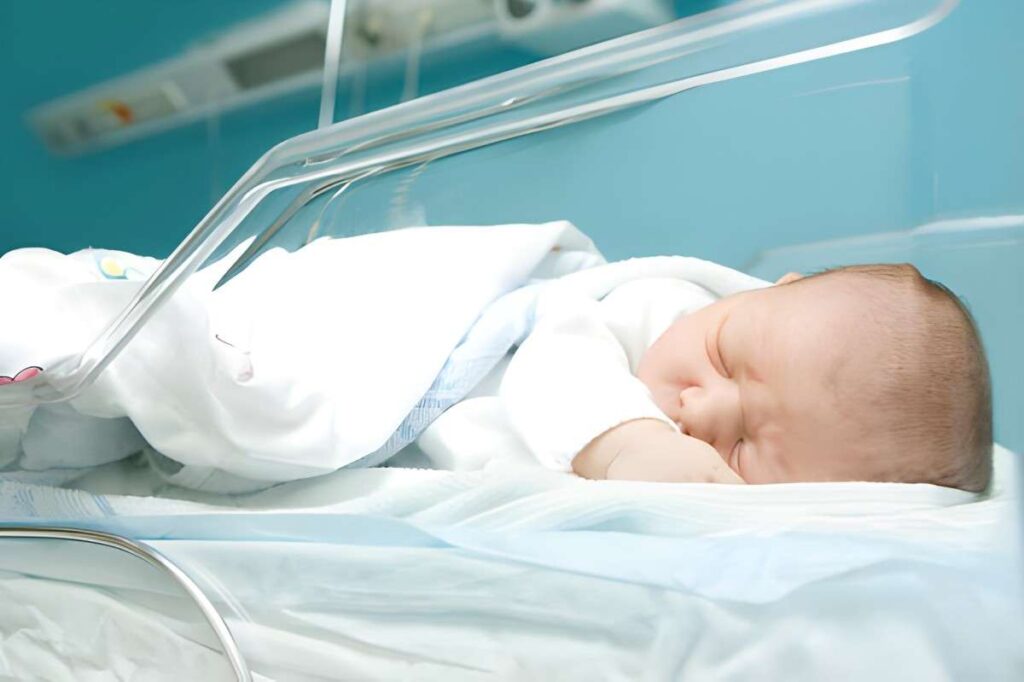
Infants who require specialized care in the Neonatal Intensive Care Unit (NICU) face a higher risk of hearing deficits than those in the well-baby nursery. The combination of prematurity, low birth weight, and critical illness creates a vulnerable state for the auditory system.
One primary concern involves Ototoxic Medications. In life-saving situations, doctors must use specific antibiotics, such as Gentamicin, to combat severe neonatal sepsis. While effective against bacteria, these drugs can accumulate in the inner ear fluid and destroy the delicate hair cells. Similarly, loop diuretics used to manage lung fluid in premature infants can potentiate this damage.
Severe jaundice (hyperbilirubinemia) poses a distinct threat to the auditory pathways. When bilirubin levels exceed the blood-brain barrier's capacity, the substance can deposit in the brainstem nuclei responsible for hearing.
Logic Calculation: High Bilirubin + Immature Blood-Brain Barrier = Auditory Neuropathy Spectrum Disorder (ANSD).
In ANSD, the cochlea may function normally, but the signal transmission between the ear and the brain is disorganized. This requires specialized AABR testing to identify.
Structural and Craniofacial Anomalies
Anatomical variations in the development of the head and neck can lead to conductive or sensorineural hearing loss. Conductive hearing loss occurs when sound waves cannot physically reach the inner ear due to a blockage or malformation of the ear canal or middle ear bones.
The Logic of OAE and AABR Screening
Universal Newborn Hearing Screening (UNHS) protocols ensure that every infant receives an assessment before hospital discharge. We utilize two primary technologies to screen for hearing deficits, each targeting a different part of the auditory system.
Otoacoustic Emissions (OAE)
OAE testing measures the "echo" produced by the outer hair cells in the cochlea when stimulated by sound. A small probe in the ear canal delivers a series of clicks. If the hair cells are healthy, they vibrate and produce a return signal. This test is fast and non-invasive but can be affected by fluid in the middle ear or a noisy environment.
Automated Auditory Brainstem Response (AABR)
AABR is a more comprehensive test that measures the electrical activity of the auditory nerve and brainstem in response to sound. Sensors placed on the baby's head track the neural signal. This is the gold standard for NICU infants because it can identify Auditory Neuropathy, which an OAE would miss.
Environmental and Maternal Health Factors
Maternal health during pregnancy plays a significant role in the development of the fetal auditory system. Chronic conditions and certain environmental exposures can disrupt the delicate timeline of ear maturation, which begins as early as the fifth week of gestation.
Maternal Diabetes: Poorly controlled gestational or pre-existing diabetes can lead to metabolic imbalances that affect the oxygenation of fetal tissues. This hypoxia can damage the metabolic activity of the cochlea.
Substance Exposure: Maternal use of certain substances, including alcohol or tobacco, is associated with lower birth weight and a higher prevalence of hearing deficits. These substances restrict blood flow and introduce toxins that can interfere with the formation of the cranial nerves.
Coordinating Care in
As we move through the current year, the integration of genetic testing and early intervention services has never been more seamless. If a hearing loss is confirmed, the medical team expands to include audiologists, otolaryngologists, speech-language pathologists, and early intervention specialists.
Early identification—ideally by one month of age—allows for intervention to begin by six months. Whether the family chooses hearing aids, cochlear implants, or visual communication methods like American Sign Language, the goal remains the same: ensuring the child has full access to language during the critical "brain-building" years of early childhood.