21st-century learning in elementary education emphasizes developing skills beyond traditional academics, including creativity, collaboration, communication, critical thinking, and digital literacy. Music education is uniquely positioned to nurture these competencies in young learners. By integrating modern pedagogical strategies, technology, and project-based learning into the elementary music classroom, teachers can engage students holistically while developing essential cognitive, social, and emotional skills. This article explores best practices, activities, and strategies for implementing 21st-century learning in elementary music classrooms.
1. Core 21st-Century Skills in Music Education
Music education supports a wide array of 21st-century competencies:
| Skill | Description | Application in Music Classroom |
|---|---|---|
| Creativity | Generating original ideas and musical expressions | Composing melodies, improvisation, sound design |
| Collaboration | Working with peers to achieve a shared goal | Group performances, ensemble work, peer feedback |
| Communication | Expressing ideas clearly through verbal and non-verbal means | Performing, discussing interpretations, presenting music projects |
| Critical Thinking | Analyzing music, patterns, and rhythms | Music analysis, comparing genres, composing with constraints |
| Digital Literacy | Using technology for music creation and performance | Digital audio workstations, music apps, online collaboration |
| Cultural Awareness | Understanding and appreciating diverse musical traditions | Exploring global music, folk songs, and instruments |
| Social-Emotional Learning (SEL) | Developing empathy, teamwork, and emotional expression | Songwriting about feelings, collaborative improvisation |
2. Integrating Technology in the Music Classroom
Technology enhances creativity and engagement in music education:
- Digital Composition Tools: Programs like GarageBand or Chrome Music Lab allow students to compose and arrange music digitally.
- Interactive Apps: Rhythm trainers, virtual instruments, and ear training apps develop foundational skills.
- Recording and Playback: Students record performances for self-assessment and peer feedback.
- Virtual Collaboration: Online platforms enable students to collaborate on music projects remotely.
Table 1: Technology-Enhanced Music Activities
| Activity | Tools/Software | Skills Developed |
|---|---|---|
| Compose a Digital Song | GarageBand, Soundtrap | Creativity, digital literacy, composition |
| Rhythm and Beat Games | Chrome Music Lab | Timing, critical thinking, engagement |
| Virtual Choir Recording | Zoom, Google Meet | Collaboration, communication, performance skills |
| Soundscapes for Stories | Audio editing software | Creativity, storytelling, technical skills |
3. Project-Based Learning in Music
Project-based learning (PBL) encourages students to explore music deeply and connect it with real-world contexts:
- Class Concerts: Students organize and perform a concert, learning planning, teamwork, and presentation skills.
- Music and Culture Projects: Research and present on traditional music from different countries, integrating social studies with music.
- Soundtrack Creation: Students create music for a short film or story, combining creativity with technical skills.
Benefits of PBL in Music:
- Encourages active engagement and ownership of learning
- Develops problem-solving and critical thinking
- Integrates interdisciplinary skills (literacy, technology, history)
4. Collaborative Learning in Music
Collaboration is central to ensemble performance and group projects:
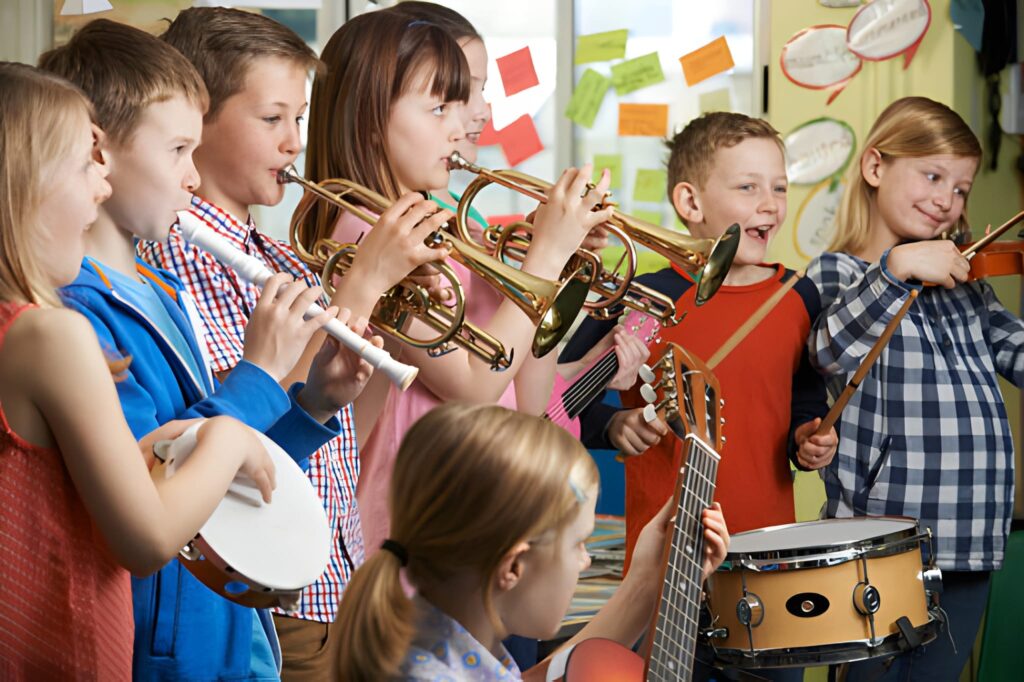
- Instrument Ensembles: Students play in small groups, coordinating rhythm, pitch, and dynamics.
- Songwriting Teams: Groups collaborate to compose lyrics and melodies.
- Peer Feedback Sessions: Students evaluate each other’s performances constructively.
Example Activity Table: Collaborative Music Projects
| Activity | Objective | Skills Developed |
|---|---|---|
| Percussion Ensemble | Synchronize rhythms in a group | Collaboration, timing, communication |
| Songwriting Group | Compose and perform an original song | Creativity, teamwork, critical thinking |
| Peer Critique | Review class performances | Constructive feedback, active listening, empathy |
5. Creativity and Improvisation
Improvisation fosters critical thinking and self-expression:
- Rhythm Improvisation: Students create their own rhythms over a base beat.
- Melody Composition: Compose a short melody using classroom instruments.
- Sound Exploration: Experiment with classroom objects to create new sounds.
6. Assessment and Reflection
21st-century music classrooms emphasize formative assessment and reflection:
- Self-Assessment: Students record performances and reflect on their progress.
- Peer Feedback: Encourages constructive evaluation and teamwork.
- Portfolios: Collect compositions, recordings, and reflections to showcase learning.
Comparison Table: Traditional vs 21st-Century Music Education
| Feature | Traditional Classroom | 21st Century Classroom |
|---|---|---|
| Teaching Approach | Teacher-centered, rote learning | Student-centered, exploratory, project-based |
| Technology Use | Limited, mainly instruments | Integrated: apps, DAWs, virtual collaboration |
| Assessment | Performance-based only | Formative, peer/self-assessment, portfolios |
| Creativity | Focused on replication | Encouraged through composition, improvisation |
| Collaboration | Limited | Central to learning, ensemble-focused |
| Cultural Exposure | Mostly Western music | Global music traditions, multicultural awareness |
7. Social-Emotional Learning through Music
Music naturally develops emotional intelligence and empathy:
- Emotional Expression: Writing songs about feelings or experiences.
- Group Dynamics: Learning teamwork, patience, and conflict resolution.
- Mindfulness Activities: Using music for relaxation and focus exercises.
Example SEL Activity: Students compose a song expressing a shared classroom value, such as kindness or teamwork, then perform it collaboratively.
8. Best Practices for 21st-Century Elementary Music Education
- Student-Centered Instruction: Tailor activities to student interests and abilities.
- Interdisciplinary Integration: Connect music with literacy, history, math, and technology.
- Active Learning: Encourage hands-on composition, improvisation, and performance.
- Technology Integration: Use digital tools for creation, collaboration, and assessment.
- Collaboration and Peer Learning: Foster teamwork through ensembles and projects.
- Reflective Practice: Incorporate self-assessment and portfolio development.
- Cultural Inclusivity: Introduce music from diverse cultures to build global awareness.
Conclusion
21st-century learning in the elementary music classroom transforms students from passive recipients of instruction into active creators, collaborators, and critical thinkers. By integrating technology, project-based learning, collaborative projects, creativity, and social-emotional learning, educators can cultivate skills that extend beyond music. This approach nurtures well-rounded, confident, and innovative young learners who are equipped not only to perform music but to apply critical thinking, creativity, and teamwork in all areas of life.