At nine years old, children are typically in middle childhood, a stage characterized by steady physical growth, refined motor skills, expanding cognitive abilities, and increasing social awareness. Understanding growth charts and developmental milestones at this age is crucial for parents, educators, and healthcare professionals. This helps ensure children are meeting age-appropriate benchmarks and receiving proper support for healthy development. This article provides detailed insights into physical growth, cognitive development, emotional and social milestones, nutrition, and health considerations for 9-year-olds, along with tables and charts for reference.
Physical Growth at 9 Years
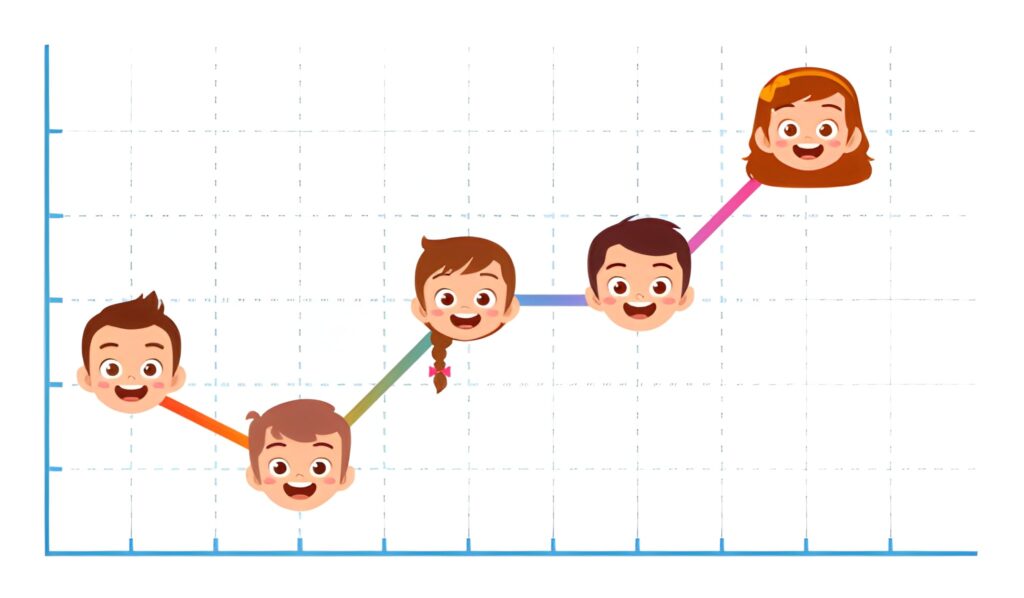
Physical growth at nine is slower and steadier compared to infancy and early childhood, but significant changes still occur. Children begin to show early signs of prepubertal growth spurts, which vary by sex. Growth charts are essential tools for tracking height, weight, and body mass index (BMI) percentiles.
| Parameter | Boys (Average) | Girls (Average) | Notes |
|---|---|---|---|
| Height | 52 in (132 cm) | 51 in (130 cm) | Individual variation is normal; genetics plays a major role. |
| Weight | 63 lbs (28.5 kg) | 62 lbs (28 kg) | BMI should be monitored to assess healthy growth. |
| BMI | 18–19 | 18–19 | BMI percentile charts help identify underweight, normal, overweight, or obese ranges. |
Growth Percentiles
Percentiles indicate how a child’s measurements compare to peers. For example, a child in the 50th percentile for height is taller than 50% of children their age.
| Measurement | 5th Percentile | 50th Percentile | 95th Percentile |
|---|---|---|---|
| Height (Boys) | 47 in (119 cm) | 52 in (132 cm) | 57 in (145 cm) |
| Height (Girls) | 46 in (117 cm) | 51 in (130 cm) | 56 in (143 cm) |
| Weight (Boys) | 50 lbs (22.7 kg) | 63 lbs (28.5 kg) | 78 lbs (35.4 kg) |
| Weight (Girls) | 49 lbs (22.2 kg) | 62 lbs (28 kg) | 76 lbs (34.5 kg) |
Motor Development
By age nine, children have refined gross and fine motor skills. They engage in more complex physical activities, sports, and coordinated tasks.
- Gross Motor Skills: Running, jumping, climbing, and balancing with improved agility. Participating in team sports develops coordination, endurance, and strategic thinking.
- Fine Motor Skills: Writing legibly, drawing with detail, using scissors accurately, typing on keyboards, and completing intricate craft projects.
| Motor Skill | Typical Proficiency at 9 Years | Observations |
|---|---|---|
| Running/jumping | Coordinated, can adjust speed | Improved stamina and rhythm |
| Ball skills | Catching, throwing, kicking accurately | Can participate in team games |
| Handwriting | Neat and legible | Can write multi-paragraph texts |
| Craft skills | Cutting, pasting, and assembling | Shows creativity and precision |
Cognitive Development
Cognitive growth at this age is marked by advanced reasoning, problem-solving, and understanding abstract concepts.
- Logical Thinking: Children can understand cause and effect, classify objects, and solve multi-step problems.
- Memory and Attention: Improved working memory allows children to follow complex instructions and retain learned information.
- Academic Skills: Reading comprehension, mathematical problem-solving, and writing become more sophisticated.
| Cognitive Domain | Skills at 9 Years | Examples |
|---|---|---|
| Logical reasoning | Can solve word problems | Math operations with multiple steps |
| Attention span | 20–40 minutes on tasks | Can complete homework independently |
| Memory | Remembers sequences, events | Recalls story details, school lessons |
| Creativity | Problem-solving, storytelling | Writes stories or creates inventions |
Language and Communication
At nine, children demonstrate advanced language skills:
- Vocabulary: Expands significantly; understands figurative language, idioms, and humor.
- Expression: Can organize thoughts clearly in spoken or written form.
- Social Communication: Uses language to negotiate, persuade, and explain feelings.
Social and Emotional Development
Emotional intelligence develops further, with children forming deeper friendships and understanding social norms:
- Recognizes and manages their own emotions.
- Shows empathy toward peers.
- Understands fairness, rules, and cooperation.
- Begins to develop self-esteem based on achievements and peer interactions.
Nutrition and Health
A balanced diet supports continued growth, cognitive development, and physical activity.
| Nutritional Component | Recommended Intake | Notes |
|---|---|---|
| Fruits and Vegetables | 1.5–2 cups each per day | Provides essential vitamins and minerals |
| Grains | 5–6 oz per day | Focus on whole grains |
| Protein | 4–5 oz per day | Lean meat, poultry, fish, beans, eggs |
| Dairy | 2.5 cups per day | Supports bone growth through calcium and vitamin D |
| Water | 5–7 cups per day | Maintains hydration, especially during physical activity |
Sleep Patterns
Children at age nine generally require 9–11 hours of sleep per night. Adequate sleep supports physical growth, cognitive function, and emotional regulation. Consistent bedtime routines and limited screen time before bed improve sleep quality.
Comparison: 7-Year vs. 9-Year Development
| Development Area | 7 Years | 9 Years | Key Differences |
|---|---|---|---|
| Height | 48–50 in | 51–52 in | Steady growth, approaching prepubertal changes |
| Weight | 50–55 lbs | 62–63 lbs | Weight gain corresponds with growth and activity levels |
| Motor Skills | Basic coordination | Refined coordination | Better agility and balance for sports |
| Cognitive Skills | Concrete thinking | Logical and abstract thinking | Can solve multi-step problems |
| Emotional Skills | Beginning empathy | Enhanced empathy | Better peer relationships and conflict resolution |
Safety Considerations
Children at nine engage in more physical and social activities, so safety measures are essential:
- Helmets and protective gear during sports and biking.
- Supervision in potentially hazardous environments.
- Teaching road safety, online safety, and responsible behavior.
Conclusion
Nine-year-old children experience steady physical growth and significant cognitive, social, and emotional development. Growth charts and percentile data help caregivers track progress and identify potential concerns. Encouraging healthy nutrition, regular physical activity, adequate sleep, and emotional support ensures children thrive during this pivotal stage. Monitoring development through pediatric visits and providing a nurturing environment fosters confidence, learning, and lifelong healthy habits.