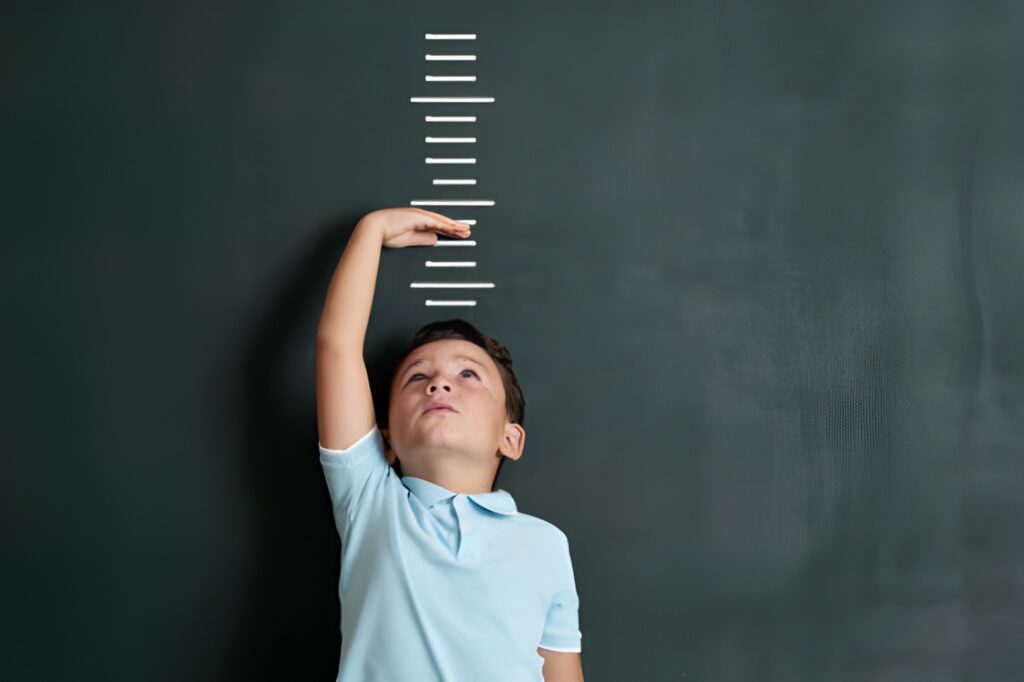
A child growth chart is a vital tool for monitoring a child’s development from infancy through adolescence, helping caregivers, pediatricians, and educators ensure children are meeting age-appropriate milestones and identifying potential health concerns. Growth is multidimensional, encompassing physical measurements like height, weight, and head circumference, as well as motor skills, cognitive abilities, language development, and social-emotional growth. Physical growth is measured in height, weight, and head circumference and is typically tracked using standardized growth charts that provide age- and sex-specific percentiles. For example, a child in the 50th percentile for height is taller than 50% of children their age. Typical growth measurements are shown in the table below.
| Age | Boys Height (in/cm) | Boys Weight (lbs/kg) | Girls Height (in/cm) | Girls Weight (lbs/kg) |
|---|---|---|---|---|
| Birth | 20 in (50 cm) | 7.5 lbs (3.4 kg) | 19.7 in (50 cm) | 7.2 lbs (3.3 kg) |
| 6 Months | 26 in (66 cm) | 16 lbs (7.3 kg) | 25.5 in (65 cm) | 15.5 lbs (7 kg) |
| 12 Months | 29.5 in (75 cm) | 21.5 lbs (9.8 kg) | 29 in (74 cm) | 20.5 lbs (9.3 kg) |
| 2 Years | 34 in (86 cm) | 28 lbs (12.7 kg) | 33.5 in (85 cm) | 27 lbs (12.3 kg) |
| 5 Years | 43 in (109 cm) | 40 lbs (18.1 kg) | 42.5 in (108 cm) | 39 lbs (17.7 kg) |
| 9 Years | 52 in (132 cm) | 63 lbs (28.5 kg) | 51 in (130 cm) | 62 lbs (28 kg) |
| 12 Years | 59 in (150 cm) | 88 lbs (40 kg) | 59 in (150 cm) | 91 lbs (41 kg) |
| 16 Years | 67 in (170 cm) | 136 lbs (61.7 kg) | 64 in (163 cm) | 125 lbs (56.7 kg) |
Growth charts use percentiles to compare children of the same age and sex, with common percentiles including the 5th, 10th, 25th, 50th, 75th, 90th, and 95th. Motor development is another essential aspect, divided into gross motor skills like running, jumping, and climbing, and fine motor skills like writing, drawing, and manipulating objects. Typical motor milestones are listed in the table below.
| Age | Gross Motor Skills | Fine Motor Skills |
|---|---|---|
| 6 Months | Rolls over, sits with support | Reaches for objects, rakes objects with hands |
| 12 Months | Stands independently, walks with help | Pincer grasp emerges, feeds self small items |
| 2 Years | Runs, climbs stairs with support | Builds towers of 4+ blocks, scribbles with crayon |
| 5 Years | Hops, balances on one foot | Draws simple shapes, uses scissors |
| 9 Years | Skips, plays team sports | Writes legibly, draws detailed objects |
| 12 Years | Improved coordination in sports | Can type efficiently, crafts with precision |
| 16 Years | Full adult-like coordination | Refined manual skills, athletic specialization |
Cognitive and language development progress alongside physical growth. Children demonstrate increasing problem-solving abilities, memory, and verbal expression as they age. The table below outlines typical milestones.
| Age | Cognitive Milestones | Language Milestones |
|---|---|---|
| 6 Months | Recognizes familiar faces, explores objects | Babbling begins, responds to tone of voice |
| 12 Months | Understands object permanence, follows simple commands | Says simple words like “mama” or “dada” |
| 2 Years | Solves simple problems, identifies colors/shapes | Uses two- to three-word sentences, vocabulary ~200–300 words |
| 5 Years | Begins logical thinking, understands time concepts | Full sentences, storytelling, asks questions |
| 9 Years | Solves multi-step problems, understands abstract concepts | Uses complex sentences, understands idioms, engages in debates |
| 12 Years | Can plan and strategize, critical thinking emerges | Writes essays, expresses nuanced ideas |
| 16 Years | Advanced reasoning, problem-solving | Sophisticated verbal and written communication |
Social and emotional development is equally important. Children develop emotional intelligence and social skills through interactions with caregivers, peers, and their environment.
| Age | Social Milestones | Emotional Milestones |
|---|---|---|
| 6 Months | Recognizes caregivers, social smile | Enjoys social play, expresses joy/distress |
| 12 Months | Seeks social interaction, stranger anxiety | Shows attachment, separation anxiety |
| 2 Years | Parallel play with peers | Experiences temper tantrums, beginning empathy |
| 5 Years | Cooperative play, understands sharing | Self-concept emerges, better emotional regulation |
| 9 Years | Strong friendships, teamwork | Empathy increases, handles conflicts better |
| 12 Years | Peer groups important, leadership skills | Self-esteem tied to achievement and relationships |
| 16 Years | Complex social understanding, identity formation | Increased emotional independence and self-reflection |
Regular monitoring of growth is recommended through pediatric visits, balanced nutrition, daily physical activity, cognitive stimulation through reading and problem-solving, and emotional and social support. Comparing steady growth with rapid or explosive growth phases shows differences in height/weight surges, motor skill leaps, sudden cognitive development, and social-emotional adjustments, which may require additional support from caregivers. Growth charts provide a framework for understanding these changes and guiding interventions when necessary. Proper monitoring ensures children achieve their full potential across all developmental domains.