12 Weeks Pregnant: Navigating the Essential First Trimester Screening
Specialist Guidance on Fetal Development, Diagnostic Tests, and Health Milestones
Article Overview
Reaching 12 weeks of gestation marks a profound moment in any pregnancy journey. It signifies the end of the first trimester—a period defined by rapid, fundamental development and, often, intense maternal symptoms. The phrase "12 weeks pregnancy test" typically refers not to the simple act of peeing on a stick, but to a critical suite of **diagnostic screenings and assessments** performed by healthcare providers. This milestone confirms viability, evaluates fetal anatomy, and assesses risk for certain chromosomal conditions. We will explore the vital biological events occurring now, break down the function of the First Trimester Screening, and offer expert guidance on navigating the transition into the second trimester.
The 12-Week Milestone: Entering the Second Trimester
The completion of the 12th week traditionally marks a significant transition. The risk of miscarriage drops considerably, which often brings a wave of relief and confidence. Furthermore, the embryo officially graduates to a **fetus**. This shift reflects that the fundamental body structures are now fully formed, and the focus changes from creation to growth and maturation.
Baby's Development: A Critical Transformation
By 12 weeks, the fetus measures approximately $2.1$ to $2.5$ inches (about $5.5$ to $6.3$ centimeters) from crown to rump, roughly the size of a lime. The body systems that began forming in earlier weeks are now functional:
- Organ Development: Kidneys start producing urine and the liver begins performing its core functions.
- Nerves and Reflexes: The nerve connections are sophisticated enough that the fetus can curl its fingers and toes, though you cannot feel these movements yet.
- Fetal Heart Rate (FHR): The heart beats rapidly, usually between $120$ and $160$ beats per minute.
- Facial Structure: Features are clearly defined, including a profile, tiny eyelids, and ears placed in their final position.
Did You Know?
At 12 weeks, your uterus has grown to the size of a grapefruit and often rises out of the pelvic cavity. For many mothers, this marks the point where the pregnancy is externally visible, even if subtle.
Essential Testing: The 12-Week Pregnancy "Test"
The most important "tests" performed around 12 weeks are part of the **First Trimester Screening (FTS)**. This is a non-invasive, risk-assessment tool used to determine the probability of the fetus having certain chromosomal conditions, primarily Down syndrome (Trisomy 21) and Trisomy 18 (Edwards syndrome).
It is vital to understand that this is a screening, not a diagnostic test. A high-risk result does not mean the fetus definitely has a condition, only that the risk is elevated. Conversely, a low-risk result does not guarantee the absence of all issues.
Component 1: The Nuchal Translucency (NT) Scan
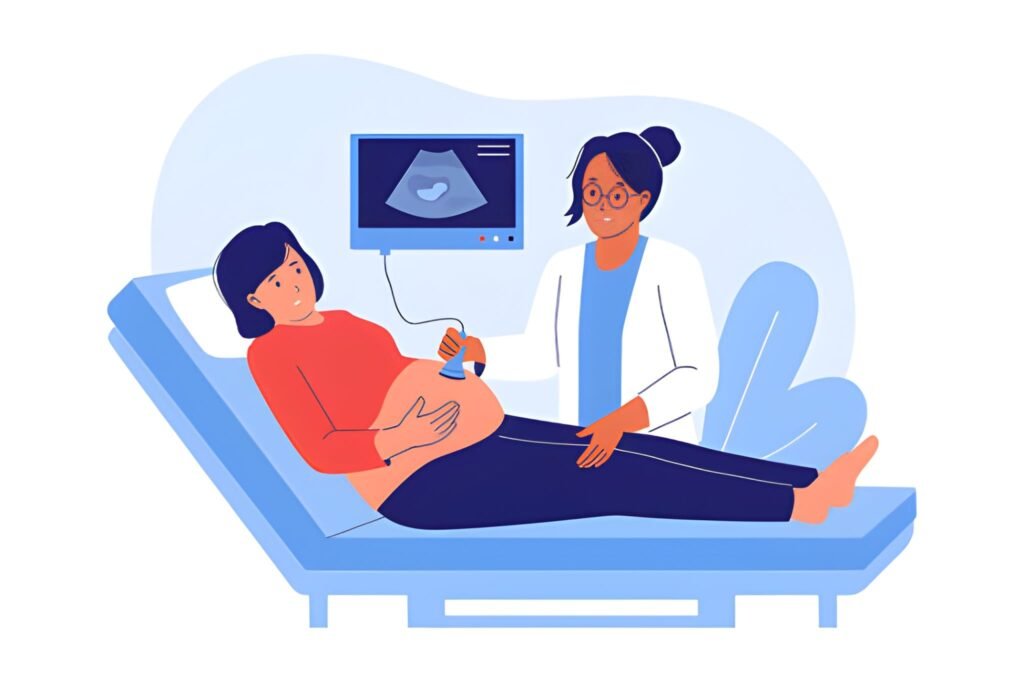
The NT scan is a specialized ultrasound performed between $11$ weeks and $13$ weeks and $6$ days of gestation. This scan measures the fluid-filled space at the back of the fetal neck—the Nuchal Translucency.
- The Measurement: Excessive fluid collection (a thick NT measurement) is statistically associated with a higher risk for chromosomal abnormalities and certain congenital heart defects.
- Fetal Dating: The scan also provides the most accurate dating of the pregnancy by measuring the Crown-Rump Length (CRL), ensuring the pregnancy is within the correct timeframe for the screening.
Component 2: The Biochemical Blood Test
The second part of the FTS involves a maternal blood draw, which measures two specific pregnancy-related proteins produced by the placenta. These hormone levels are then synthesized with the NT measurement.
The two primary biomarkers assessed are:
- Pregnancy-Associated Plasma Protein-A (PAPP-A): Levels of this protein are often low in pregnancies affected by Down syndrome.
- Free Beta-Human Chorionic Gonadotropin (Free Beta-hCG): High levels of this subunit of the pregnancy hormone are often seen in Down syndrome cases.
A computer algorithm combines the mother's age, the NT measurement, and the two hormone levels to generate a statistically calculated risk ratio. For example, a result of "1 in 10,000" signifies a very low risk.
Screening Components Interactive Tool
Learn how the three core data points are combined for the final risk assessment:
A baseline risk factor.
Fetal measurement (Ultrasound).
PAPP-A and Free Beta-hCG (Blood).
These three inputs generate a:
Diagnostic Follow-Up: If the risk ratio is high (often defined as 1 in 300 or less), your physician will discuss confirmatory diagnostic testing, such as **Chorionic Villus Sampling (CVS)** (done around 10-13 weeks) or **Amniocentesis** (done after 15 weeks). Non-Invasive Prenatal Testing (NIPT), a separate blood test, is also widely used for initial screening and confirmation.
Optional Test: Non-Invasive Prenatal Testing (NIPT)
NIPT is another powerful screening tool available starting around 10 weeks. This test analyzes fragments of the baby's DNA circulating in the mother’s blood (called cell-free DNA).
- Accuracy: NIPT offers significantly higher detection rates for Trisomies 13, 18, and 21 compared to FTS, often approaching 99%.
- Availability: While initially reserved for high-risk pregnancies (e.g., advanced maternal age), NIPT is now often offered as a primary screening choice for all pregnant women due to its high accuracy and non-invasive nature.
Mother's Body: Physical and Emotional Shifts
As you conclude the first trimester, many mothers report a notable improvement in the more challenging early symptoms. The placenta is now fully formed and takes over hormone production from the corpus luteum, which helps stabilize hormone levels.
Physical Relief and New Energy
For many, 12 weeks heralds the famous "second trimester glow."
- Nausea Improvement: Morning sickness typically subsides or lessens considerably as hCG levels plateau and estrogen stabilization occurs.
- Energy Return: The profound fatigue of the first trimester often begins to lift, giving you renewed energy.
- Fainting/Dizziness: Your blood volume has increased significantly by now, which, coupled with low blood pressure, can cause occasional dizziness. Hydration is key to managing this.
- Uterine Growth: Your uterus is expanding out of the pelvis. You may notice less pressure on your bladder, leading to fewer trips to the bathroom, but your growing belly may become more apparent.
Emotional Stability and Mental Clarity
The intense mood swings often associated with the early weeks tend to stabilize as progesterone levels become more consistent. Furthermore, receiving good results from the 12-week screening often provides significant psychological relief, allowing mothers to connect with the pregnancy more confidently and start planning.
Understanding Healthy Weight Gain
Weight gain expectations differ based on pre-pregnancy Body Mass Index (BMI). Specialist guidelines emphasize that steady, appropriate weight gain supports fetal development and maternal health.
| Pre-Pregnancy BMI Category | Recommended Total Weight Gain (lbs) | Typical Gain in First Trimester (lbs) |
|---|---|---|
| Underweight (BMI < 18.5) | 28–40 lbs | 5–7 lbs |
| Normal Weight (BMI 18.5–24.9) | 25–35 lbs | 1–5 lbs |
| Overweight (BMI 25.0–29.9) | 15–25 lbs | 1–3 lbs |
| Obese (BMI $\ge$ 30.0) | 11–20 lbs | 0.5–2 lbs |
Source: Adapted from the Institute of Medicine (IOM) and ACOG guidelines for U.S. populations. Always discuss specific goals with your provider.
Preparing for Trimester Two: Specialist Planning
With the first trimester complete, you transition into the safest and most comfortable period of pregnancy—the second trimester. Now is the time to optimize your lifestyle and plan for key milestones.
Diet and Nutrition Adjustment
As nausea subsides, ensure you reintroduce a balanced diet rich in whole foods. While the fetus's growth accelerates, your caloric needs only increase moderately. You do not truly "eat for two."
Calorie needs typically increase by approximately $340$ extra calories per day in the second trimester. If your typical daily caloric intake was $2000$ calories, the required caloric intake in the second trimester (RCI) is calculated: \text{RCI} = 2000 \text{ calories} + 340 \text{ calories} = 2340 \text{ calories} Focus on complex carbohydrates, lean protein, and healthy fats. Continue taking prenatal vitamins, ensuring adequate intake of iron, calcium, and Folic acid.
Exercise and Safety
The second trimester is the ideal time to establish a consistent, low-impact exercise routine. Activities like swimming, walking, and prenatal yoga are excellent choices. Avoid any activity that involves a high risk of abdominal trauma or overheating. Maintaining fitness helps manage weight, improves sleep, and prepares your body for labor.
Summary and Confident Transition
The 12-week mark is less about a single "test" and more about an important health evaluation that concludes the delicate first trimester. The First Trimester Screening, composed of the NT ultrasound and blood work, provides valuable information regarding fetal development and risk assessment. By this milestone, the major developmental phase is complete, symptoms often ease, and you enter a phase of sustained growth and relative comfort. Use this renewed energy to focus on self-care, consistent nutrition, and preparing confidently for the beautiful journey of the middle trimester.