
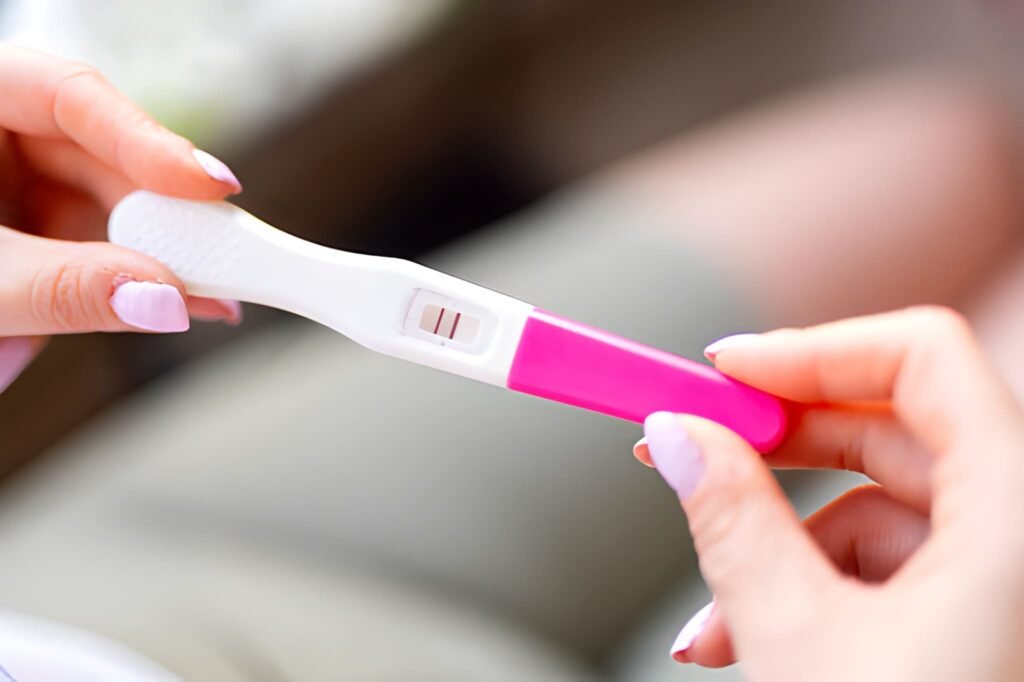
14 DPO: The Gold Standard for Pregnancy Testing and Interpreting Results
The date of 14 days past ovulation (14 DPO) carries immense significance in the reproductive cycle. It is the typical length of the luteal phase—the time between ovulation and the expected start of menstruation. Testing at this exact marker is considered the most reliable non-clinical method for confirming or ruling out a pregnancy. At 14 DPO, any embryo that has successfully implanted has had ample time to produce the Human Chorionic Gonadotropin (hCG) hormone at levels that virtually all home pregnancy tests (HPTs) can detect. This detailed guide explores the biological science that makes 14 DPO the definitive testing day and clarifies how to interpret the results with confidence.
Why 14 DPO is the Definitive Testing Date
The reliability of the 14 DPO date is rooted in the consistency of the luteal phase. While the first half of the menstrual cycle (the follicular phase, before ovulation) can vary widely in length, the luteal phase remains fixed for most women, typically lasting 12 to 16 days. A duration of 14 days is the most common and is used by manufacturers and clinicians as the standard reference for a missed period.
The Implantation to Detection Timeline
For a pregnancy test to be accurate, two biological events must conclude:
- Implantation Completion: The process of the embryo attaching to the uterine wall (implantation) occurs between 6 DPO and 12 DPO. By 14 DPO, this event is complete in all viable pregnancies.
- Hormone Accumulation: After implantation, the developing placenta (trophoblast) begins releasing hCG. The hormone needs approximately two to four days to accumulate in the bloodstream and filter into the urine at detectable concentrations.
The 14 DPO mark provides a safety margin. It ensures that even if implantation occurred late (12 DPO), there has still been sufficient time (48 hours) for hCG levels to rise above the detection threshold of nearly all commercial HPTs.
hCG Levels and Test Reliability at 14 DPO
At 14 DPO, the hCG levels in a non-conceived cycle fall below 5 mIU/mL, which is considered negative. In a cycle resulting in pregnancy, the hCG levels are substantially higher, providing high confidence in the test result.
In a viable pregnancy, the average hCG level at 14 DPO often falls between **25 mIU/mL and 100 mIU/mL**. Since most sensitive home pregnancy tests detect levels as low as 10 mIU/mL to 25 mIU/mL, a negative test at this point is considered highly reliable.
Maximizing Accuracy: Testing Technique
To ensure the maximum accuracy at 14 DPO, proper testing technique is essential. You must always use the **first morning urine**. After several hours of sleep, the urine is concentrated, and the hCG present has not been diluted by fluid intake. Testing later in the day, especially after drinking water or coffee, risks diluting the hormone and potentially yielding a false negative, even at this reliable stage.
Interpreting the Positive Result: Faint Line Confidence
At 14 DPO, any discernible line on a home pregnancy test, no matter how faint, confirms a chemical pregnancy. The faintness of the line simply relates to the concentration of hCG in that specific urine sample, not the viability of the pregnancy itself.
- Line vs. Evaporation Line: A true positive line appears within the manufacturer’s specified read time (usually 3 to 5 minutes) and possesses color. An evaporation line is colorless, appears only after the time limit, and is caused by residual moisture. Trust only the line that appears within the time limit.
- Next Step: Do not rely on sequential HPTs to track line darkness. The definitive next step is to contact your healthcare provider to schedule a quantitative serum Beta hCG blood test. This test measures the exact number and allows the clinic to monitor the essential **doubling time** over 48 hours to confirm the pregnancy is progressing healthily.
Interpreting the Negative Result: Ruling Out Pregnancy
If you have tracked ovulation accurately, a negative HPT at 14 DPO is extremely reliable. It confirms that the hormone hCG has not reached a detectable level, making pregnancy highly improbable.
Understanding the False Negative Exception
The only exception to the rule occurs when there is a significant tracking error, leading to an inaccurate DPO calculation. If your menstrual period does not begin by 16 DPO (two days after the expected date), it warrants a retest. Potential reasons for a period delay despite a true negative result include:
- Late Ovulation: You ovulated much later than you thought, shortening the follicular phase and delaying the entire cycle.
- Stress or Illness: High physical or emotional stress can delay the start of menstruation.
- Hormonal Imbalance: An underlying issue preventing the progesterone crash necessary to trigger the period.
If you receive a negative test at 14 DPO, you should stop active tracking, try to relax, and wait for your period to start. If the period is delayed past 16 DPO, consult your doctor.
Period or Pregnancy? Symptoms at the 14 DPO Crossover
At 14 DPO, the physical symptoms of impending menstruation and early pregnancy are essentially identical due to the high levels of **progesterone** in the body. Progesterone causes bloating, breast tenderness, fatigue, and mild cramping as it prepares the uterine lining.
| Symptom Aspect | Likely Signal for Menstruation | Likely Signal for Pregnancy |
|---|---|---|
| Cramping Progression | Cramps intensify, becoming moderate to severe just before or with the start of the flow. | Cramping remains mild, dull, or intermittent, and the flow is delayed. |
| Breast Changes | Tenderness peaks mid-luteal phase and may lessen as the period approaches. | Tenderness persists, increases, or the areola may darken/veins become prominent. |
| Vaginal Flow | Onset of heavy, bright red flow with typical clotting. | No flow, or very minimal light pink/brown spotting (implantation bleeding). |
Never rely on symptoms alone at 14 DPO. Use the test result as the objective biological truth, and treat the physical feelings as benign side effects of the progesterone hormone.
Navigating Ambiguity: Delayed Ovulation and Long Luteal Phases
If you use an ovulation tracking method (like basal body temperature or ovulation predictor kits), you know your DPO precisely. However, for those tracking only by date, the 14 DPO mark may be inaccurate.
Some women naturally have a 15- or 16-day luteal phase. If this is your normal pattern, wait until 16 DPO to test. Your period is only truly "late" after your typical luteal phase duration has passed.
If you track BBT, a temperature that remains elevated past 14 DPO is a very strong preliminary indicator of pregnancy, regardless of cramping. If the temperature drops, it signals the progesterone crash and the impending period, even before the flow starts.
If you pass 16 DPO with negative tests, stop testing and schedule an appointment. Your cycle requires professional evaluation to identify the cause of the delay, which is likely not pregnancy but a hormonal fluctuation or external factor.
Next Steps: Consulting Your Healthcare Provider
The 14 DPO test serves as the crucial pivot point in your cycle. Your course of action should be clear based on the result:
Action Plan for a Positive Result
Call your provider and inform them of your positive HPT and your 14 DPO date. They will order a quantitative Beta hCG blood test. This is done for two primary reasons: 1) to confirm the numerical hormone level and establish a baseline, and 2) to schedule a repeat test 48 hours later to ensure the level is doubling appropriately—the best predictor of a healthy, viable early pregnancy.
Action Plan for a Negative Result
Discontinue any further HPT use and anticipate the start of your period. If menstruation does not begin within 48 hours of the expected date, track your symptoms and schedule a clinical evaluation if the delay extends significantly.
By relying on the high-accuracy testing available at 14 DPO, you move past the uncertainty of symptom-watching and gain the objective clarity needed to plan your next steps, whether that involves prenatal care or preparing for the next cycle.



