The Private Revolution: Home Pregnancy Tests in the 1980s
The 1980s marked a crucial period in the history of home pregnancy testing. While the first commercially available kits, such as **e.p.t. (early pregnancy test)**, appeared in the late 1970s, the technology, speed, and ease-of-use saw significant refinement throughout the '80s, fundamentally changing how women experienced the start of pregnancy.
From Chemistry Set to Stick: The Evolution of Technology
All home pregnancy tests work by detecting the presence of **human chorionic gonadotropin (hCG)** in urine. The tests of the 1980s were based on immunoassay technology but rapidly improved over the decade.
Early 80s: The Complex Kit Format
In the early 1980s, the most common tests were multi-step kits that resembled miniature chemistry sets. Using a brand like e.p.t. often involved:
- Collecting urine in a specialized container.
- Mixing the urine sample with pre-measured solutions and freeze-dried reagents (sometimes derived from sheep's blood).
- Transferring the mixture to a test tube or vial.
- Waiting for up to two hours for the result to appear.
Reading the Result: The result was often determined by observing whether a "doughnut-like ring" formed at the bottom of the tube (positive) or if the urine settled evenly (negative). The process was messy, prone to user error, and demanded precision that added to the anxiety of the wait.
Late 80s: The Dawn of the Lateral Flow Device
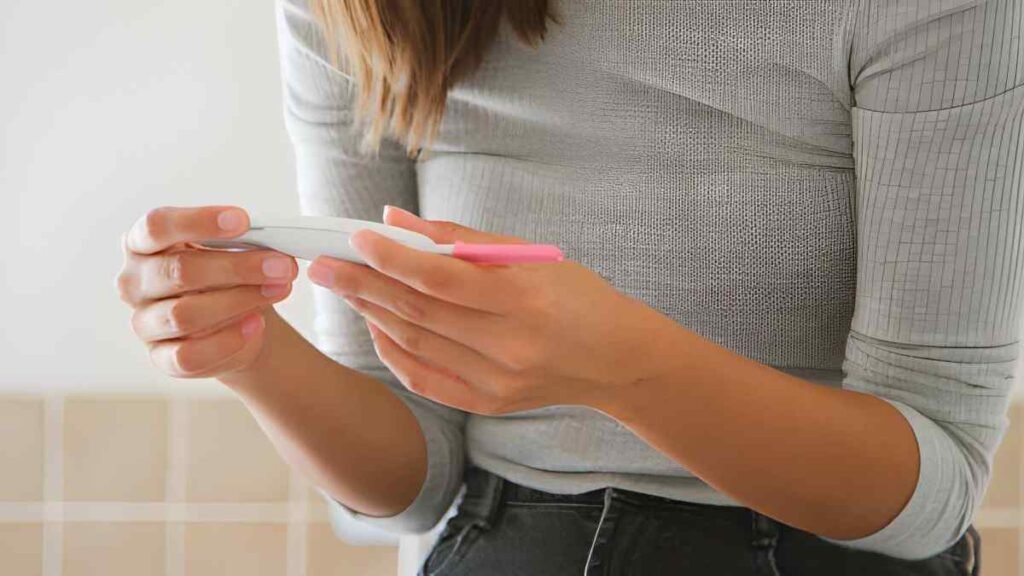
The biggest breakthrough occurred late in the decade. In **1988**, brands like **Clearblue** introduced the world's first lateral flow test—the "pee-on-a-stick" format that is still dominant today. This revolutionized the user experience:
- It was a single-step, "one-step" process.
- The need for measuring, mixing, and transferring chemicals was eliminated.
- Results, typically displayed as a **thin blue line** or a plus/minus sign, appeared much faster, often in three to thirty minutes, compared to the earlier two-hour wait.
A Shift in Privacy and Control
The rise of the home pregnancy test offered a degree of privacy and control previously impossible. Before the 1970s, women had to visit a doctor for confirmation, often involving the infamous "rabbit test" (injecting urine into an animal) or waiting weeks for lab results.
Social and Cultural Impact
In the 1980s, the home test became a mainstream cultural trope. Advertisements promoted it as a tool for autonomy and liberation, allowing a woman to know the status of her body in the privacy of her own home, without immediate medical involvement. The test moment itself became highly dramatic, frequently depicted in popular television shows and films of the era (e.g., *The Golden Girls* or *Degrassi Junior High*).
Accuracy and Reliability
Although the early kits were cumbersome, they were surprisingly accurate, often reporting reliability exceeding $90\%$ when used correctly. However, the high potential for user error (incorrect timing, wrong measurements) meant real-world reliability was lower than current tests.
The late 80s lateral flow tests were much more reliable because the user simply had to urinate on the absorbent tip. The test structure itself minimized errors, leading to the highly accurate $99\%$ reliability claim, which persists today.
1980s vs. Modern Tests
While the fundamental mechanism (detecting hCG) is the same, modern tests are vastly superior due to advances in antibody technology and design:
- Speed: Modern tests yield results in 1–3 minutes, compared to 30 minutes to 2 hours in the 80s.
- Digital Output: Digital tests (which appeared later) offer unambiguous results ("Pregnant" or "Not Pregnant"), eliminating the need to decipher faint lines common in the 80s.
- Sensitivity: Today's "early detection" tests can detect lower levels of hCG than the standard 80s test, allowing for testing several days before a missed period.
The 1980s tests, with their evolving design, set the stage for the personal, immediate, and private diagnostic experience that women rely on today.
© | Historical Perspectives on Reproductive Health.