A Look Back at Family Planning Technology
The 1990s Pregnancy Test: Nostalgia, Science, and the Dawn of Digital Detection
Table of Contents
The Era of Change: 1990 to 1999
The 1990s represented a period of rapid evolution for home medical testing. The decades prior required lengthy, complex processes—the "test tube" era. By the 90s, the design evolved into the compact, plastic sticks widely recognized today. This shift fundamentally altered the experience of trying to conceive, moving the moment of diagnosis from the clinic to the bathroom cabinet.
During this era, tests became more user-friendly, offering higher rates of reliability than previous generations. This enhanced accessibility meant women gained unprecedented control and immediacy in family planning decisions. The key change was minimizing the guesswork and maximizing the speed of the result.
Key Players and Packaging
Brands like e.p.t. and Clearblue dominated the American market. The packaging often featured clinical white designs with bright, primary color accents—a hallmark of late 20th-century consumer medicine. The aesthetic, while simple by today's standards, symbolized certainty and medical validation. Consumers were primarily drawn to claims of accuracy on the day of a missed period, representing the gold standard of the time.
The Technology of the Decade: Lateral Flow Immunoassay
The science behind the 1990s test remains the same core technology used today: the lateral flow immunoassay. This chemical process detects the presence of human Chorionic Gonadotropin (hCG)—the pregnancy hormone—in urine.
The Mechanism of the Line
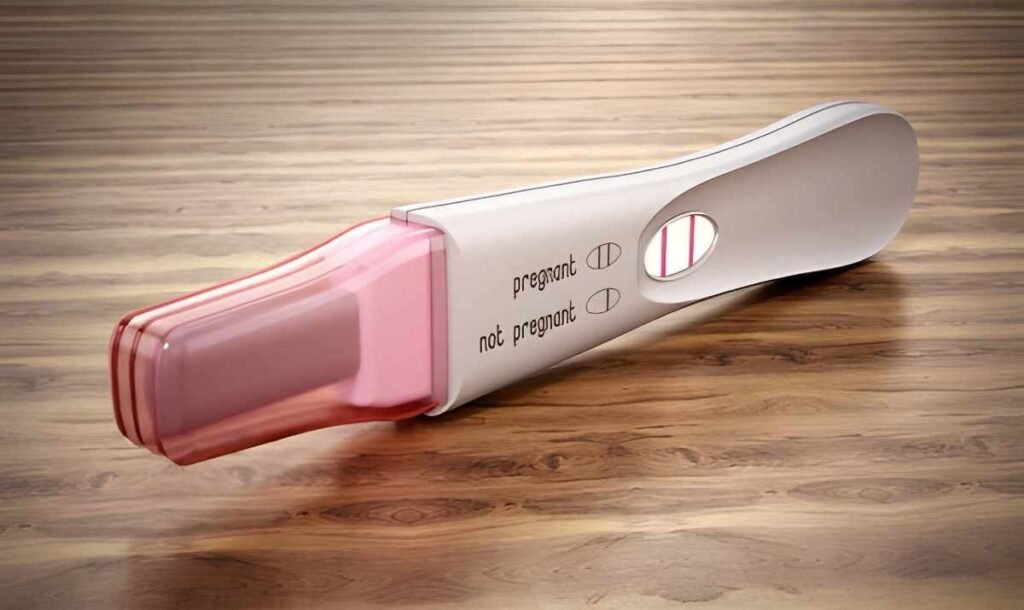
When urine is applied to the absorbent end of the stick, it travels laterally up a strip containing specific antibodies. These antibodies are bound to a colored dye and are designed to capture hCG molecules. The urine passes two key zones:
- The Test Line (T-line): Contains fixed antibodies that capture the hCG-dye complexes, forming the visible result line.
- The Control Line (C-line): Captures any unbound dye, confirming the test is working correctly, regardless of the result.
In the 90s, the T-line was often faint, narrow, or slightly blurred, requiring careful interpretation. This ambiguity contributed to the nervous ritual of holding the stick up to the light, a common experience for those testing during this period.
Accuracy and Sensitivity: How They Stacked Up
While the 1990s test was remarkably accurate on the **day of a missed period** (DPO 14-16), its sensitivity was considerably lower than the ultra-early detection tests available today. This required significantly more patience from the user.
Median Detection Day: Then vs. Now
Modern tests can detect hCG levels as low as 10 mIU/mL, offering detection up to six days before a missed period. In contrast, many of the 90s standard tests required hormone levels closer to 50 mIU/mL or sometimes even 100 mIU/mL to produce a clear, reliable positive line.
| Metric | 1990s Standard Test (Estimate) | Modern Ultra-Sensitive Test |
|---|---|---|
| Minimum Sensitivity (mIU/mL) | 50 to 100 | 10 to 25 |
| Recommended Testing Day | 16 DPO (2 days after missed period) | 10 DPO (4-6 days before missed period) |
| Detection Confidence at 14 DPO | Moderate (Risk of false negative) | High (99% or higher) |
This difference is critical to understanding the emotional landscape of testing in the 90s. If a woman had late implantation, or if her cycle was slightly longer, she might receive a discouraging negative result on the day her period was due, only to test positive days later. The required patience was a built-in feature of the technology's lower sensitivity.
Interactive: Detecting the Difference
The visual difference between a high-sensitivity and a low-sensitivity test result at the same DPO highlights the technological leap. Use the selector below to visualize how the appearance of the result line changed based on the test sensitivity, assuming an hCG level of 30 mIU/mL (a common level around 13 DPO).
HCG Level: 30 mIU/mL (13 DPO Estimate)
Current Test Level: **25 mIU/mL**. At 30 mIU/mL, the line is clearly visible.
The Cultural Shift: Testing in the 90s
The 90s cemented the home pregnancy test as a cultural icon, marking the end of the public speculation and the beginning of the highly private, individual diagnostic moment. This privacy fueled a new dynamic in reproductive health.
The Two-Week Wait vs. The Two-Day Wait
For those trying to conceive (TTC), the wait was often longer than the modern "two-week wait." Because of the lower sensitivity, testing was delayed, pushing the diagnostic moment closer to the five-week mark of gestation. This forced a certain detachment—a need to hold excitement or anxiety for several extra days. The anticipation was intense, but the need to wait until the "missed period" was a universally accepted reality.
Cultural Impact: The home test demystified the earliest stages of pregnancy. It empowered women to be the first to know, shifting authority from male doctors or mothers-in-law to the individual consumer, a significant step in the autonomy of women's health care decisions.
Privacy and Cost: Socioeconomic Factors
While the accessibility of the 90s test was a boon, cost and social context still dictated usage, particularly within the US audience. In the early 90s, tests were relatively expensive, often priced between $10 and $20 per test—a significant expenditure compared to modern multi-packs.
The Cost of Confirmation
The high cost meant repeated testing—a common practice today—was economically prohibitive for many families, especially those with lower incomes. This elevated the stakes of each test, creating intense pressure to wait until the most accurate possible day. Access to cheap, bulk test strips, common online now, was non-existent. Testing often remained a single-use event.
The design also evolved for privacy. Early 90s tests required a beaker or cup, involving steps that were difficult to conceal. By the late 90s, the design minimized the amount of urine required and the size of the device, catering to a generation that valued discretion, especially for teenagers and young adults navigating family planning.
The Digital Dawn: Late 90s Innovations
The biggest technological shift came at the very end of the decade with the introduction of the first digital home pregnancy tests. These tests still used the same lateral flow technology but introduced an electronic reader to interpret the result line.
This innovation was revolutionary because it eliminated the need to interpret a faint line, thus removing the ambiguity that plagued the earlier tests. The appearance of "Pregnant" or "Not Pregnant" on a digital screen offered psychological relief and certainty that the analog lines could never achieve. This move towards binary, text-based results foreshadowed the widespread reliance on digital and automated consumer health technology that defines our modern approach.
Legacy and Safety: Looking Back
The legacy of the 1990s pregnancy test is not just its functionality, but its role in normalizing and privatizing the earliest stage of maternal health. They established the standard of accuracy and ease-of-use that manufacturers continue to build upon.
Test Reliability Over Time
The chemical stability of these tests improved dramatically throughout the 90s. Manufacturers focused heavily on shelf-life and ensuring reliable results even when stored outside ideal conditions. Safety, always a top priority, involved non-toxic dyes and physically contained antibodies, posing minimal risk to the user. The primary risk remained user error, such as improper urine collection or reading the result outside the designated timeframe.
The 1990s test represents a foundational moment: the period when the test stick became a familiar, trusted household object. It ushered in the age of immediate personal knowledge, forever changing the private anticipation of motherhood.