Confirming the Start: The First Way to Pregnancy Detection
When trying to conceive, the wait for certainty is often the longest part of the journey. The phrase "1st way pregnancy" encompasses not just a test, but the overall sequence of methods used to confirm pregnancy, moving from the privacy of your bathroom to the definitive confirmation in a clinical setting. Understanding these methods—and their timing—is essential for making informed decisions early in pregnancy. Every detection method hinges on one central biological indicator: the hormone Human Chorionic Gonadotropin, or **hCG**.
This comprehensive guide, designed by a child and mother specialist, breaks down the three primary stages of confirmation, explaining how each test works, its optimal timing, and the clinical significance of the results. This knowledge empowers you to confidently navigate your early prenatal care.
Table of Contents
1. The Biological Foundation: Understanding hCG
Human Chorionic Gonadotropin (hCG) is commonly referred to as the "pregnancy hormone" for a clear reason: it is produced almost exclusively by the cells that form the placenta after a fertilized egg successfully implants in the uterine wall. The detection of this hormone is the **first way** pregnancy is medically confirmed.
The Critical Role of hCG in Early Pregnancy
Once implantation occurs (typically 6 to 12 days after ovulation, or 6-12 DPO), hCG enters the bloodstream. Its primary function is signaling the corpus luteum (the remnant of the follicle that released the egg) to continue producing progesterone. Progesterone is the hormone responsible for maintaining the thick, nutrient-rich uterine lining, thereby preventing menstruation. This continuous signaling function is why a missed period is often the first visible sign of pregnancy.
2. Method One: The At-Home Urine Test (The First Step)
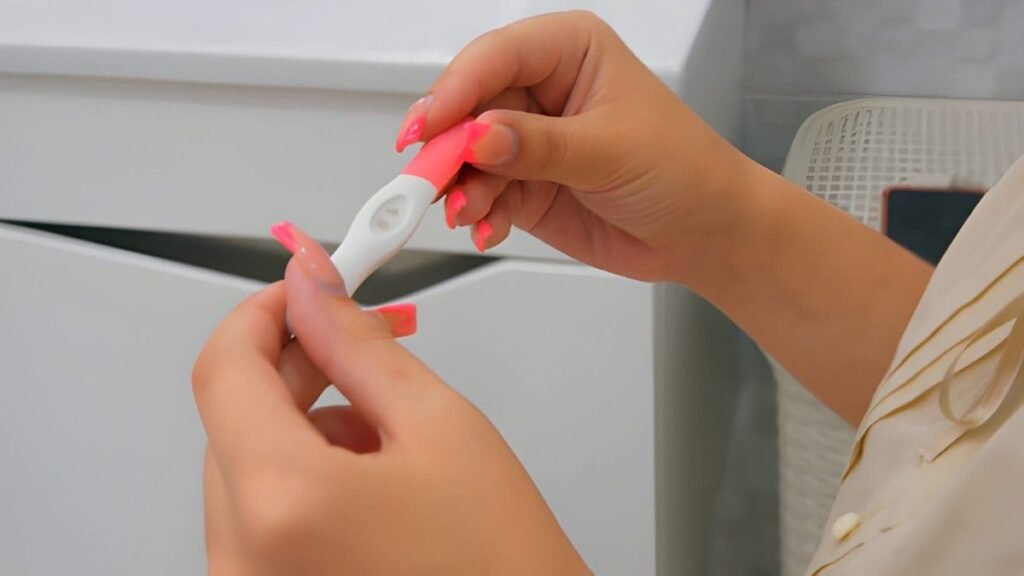
The at-home urine test is the most accessible and widely used "first way" many women confirm pregnancy. It is a qualitative test, meaning it simply detects the presence of hCG in the urine at or above a specific concentration threshold (measured in milli-international units per milliliter, or mIU/mL).
Understanding Test Sensitivity and Timing
Home pregnancy tests (HPTs) vary greatly in sensitivity. Early detection tests can detect hCG as low as 10 to 25 mIU/mL, allowing testing to occur several days before the expected period. However, clinical recommendation always favors waiting until the day of the expected period, or preferably a few days after, for maximum accuracy.
Maximizing Accuracy:
- First Morning Urine (FMU): Urine is most concentrated upon waking, containing the highest level of hCG. Testing with FMU, especially before the missed period, minimizes the chance of a false negative.
- Read Instructions Precisely: Each test brand has a specific reaction time (usually 3 to 5 minutes) and proper technique (midstream or dip). Reading the result outside the instructed window can lead to inaccurate interpretation.
3. Method Two: Quantitative Blood Test (The Definitive Confirmation)
The blood test is the definitive confirmation tool and is often performed in a doctor's office or lab. There are two types, but the **Quantitative Beta-hCG test** provides the most valuable data.
The Power of the Quantitative Test
Unlike the qualitative urine test, the quantitative blood test measures the *exact* concentration of hCG in the blood. This test has several advantages and clinical uses:
- Earliest Detection: Blood tests are more sensitive and can often detect hCG as low as 5 mIU/mL, sometimes confirming pregnancy as early as 7 to 10 days post-ovulation.
- Viability Assessment: By performing serial hCG measurements 48 hours apart (known as Beta doubling time), clinicians can assess the viability of the pregnancy. A doubling rate outside the normal range may signal an ectopic pregnancy or impending miscarriage.
- Gestation Estimation: The hCG level can provide a rough estimate of the gestational age in the very first weeks, especially when combined with the date of the last menstrual period (LMP).
4. Method Three: Early Diagnostic Ultrasound (The Visualization)
While blood and urine tests detect the chemical presence of pregnancy, the early diagnostic ultrasound provides the physical confirmation—the **visualization** of the pregnancy and its location. This is typically done between 6 and 8 weeks of gestation.
What the Ultrasound Confirms and When
The ultrasound also definitively confirms the pregnancy's location (intrauterine), ruling out an ectopic pregnancy, where the fertilized egg implants outside the uterus.
5. Timing is Everything: A DPO and Gestational Week Guide
Understanding when to use each method minimizes anxiety and maximizes accuracy. Pregnancy is counted from the first day of the last menstrual period (LMP).
| Gestation (Approx.) | Days Post Ovulation (DPO) | Recommended Confirmation Method |
|---|---|---|
| Week 3 (Early) | 8 - 10 DPO | High-Sensitivity HPT (Earliest possible) or Quantitative Blood Test. |
| Week 4 (LMP Due) | 14 - 16 DPO | Standard HPT (Most reliable at-home method). Retest if negative. |
| Week 5 | 21 DPO | Blood Test/Clinical Urine Test for confirmation. Pregnancy should be strongly established. |
| Week 6 - 8 | 28 - 42 DPO | Diagnostic Ultrasound for viability and location (heartbeat expected). |
Managing Uncertainty and False Results
While modern tests are highly accurate, interpretation requires patience and an understanding of potential errors:
- False Negative (Most Common): Occurs when the test is taken too early, and hCG has not built up sufficiently in the urine. Late ovulation or late implantation are common causes. Retesting 48 to 72 hours later usually resolves this.
- False Positive (Very Rare): Can occur if the test is read long after the prescribed time (an "evaporation line"), or due to certain fertility medications containing hCG, or in the rare event of a chemical pregnancy (a very early miscarriage).
The process of confirming pregnancy, whether through a quick urine test or a detailed ultrasound, is the first critical step in prenatal care. By recognizing hCG as the underlying signal and using each diagnostic method at its most effective time, you ensure an accurate, timely start to your journey as an expectant mother.