The Biological Impossibility and the Clinical Reality
4 DPO Positive Pregnancy Test: The Clinical Reality of Exogenous hCG
Table of Contents
- The Biological Truth: No Implantation Yet
- The Primary Cause: Exogenous hCG (The Trigger Shot)
- The Science of Half-Life: Cleansing the System
- Other Scenarios: Test Errors and Misdating
- The Action Plan: Testing and Clinical Follow-Up
- Interactive: hCG Half-Life Calculator
- Navigating the Wait: Emotional Management
The Biological Truth: No Implantation Yet
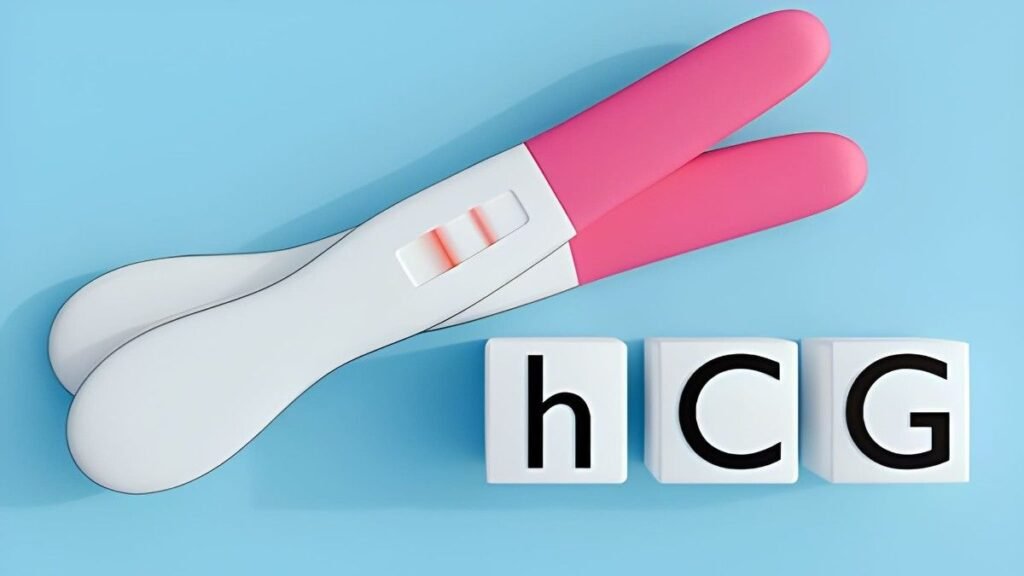
A positive pregnancy test at 4 DPO (4 Days Past Ovulation) is, biologically, premature. The test detects the pregnancy hormone, Human Chorionic Gonadotropin (hCG). This hormone is produced only after the **blastocyst** (the developing embryo) has successfully completed **implantation** into the uterine wall.
At 4 DPO, the blastocyst has typically just entered the uterine cavity and is still floating freely, preparing to adhere. Implantation is a complex process that takes time, occurring in a window of 6 DPO to 12 DPO, with the average occurring around 8 to 10 DPO. Since the hCG hormone is the only trigger for a positive result, and hCG production has not yet begun naturally, a positive test at 4 DPO signals that the hormone source is external or the result is misleading.
The Primary Cause: Exogenous hCG (The Trigger Shot)
For individuals undergoing fertility treatments such as IUI (Intrauterine Insemination) or IVF (In Vitro Fertilization), a positive test at 4 DPO is almost certainly detecting residual hCG from the **trigger shot**.
The trigger shot (often Ovidrel, Pregnyl, or Novarel) is an injection of synthetic hCG given to induce final egg maturation and ovulation. Since hCG is directly injected into the maternal system, it circulates and is detectable in urine and blood immediately. By 4 DPO, the body is simply processing the injected hormone. This is considered a **false positive** because the test is detecting the medication, not a viable, established pregnancy.
Key Distinction: Implantation vs. Injection
Natural hCG from a pregnancy starts at zero and rises. Exogenous hCG starts at a high dose (e.g., 5,000–10,000 IU) and falls. A true positive can only occur once the naturally rising pregnancy hormone surpasses the falling medication hormone.
The Science of Half-Life: Cleansing the System
Understanding the concept of **half-life** is essential for interpreting results after a trigger shot. The half-life of injected hCG is approximately 28 to 36 hours. This means that every 1.5 days, the concentration of the medication hormone in the blood is reduced by half.
The typical recommendation is to wait 10 to 14 days after the trigger shot before testing to ensure the exogenous hCG has completely cleared the system. Testing before this "wait period" means the result is unreliable and can lead to emotional confusion and stress.
HCG Detection Thresholds
If a user received a standard 10,000 IU trigger shot:
| Days Post-Trigger Shot (DPO) | Approximate Residual hCG (IU) | Test Reliability |
|---|---|---|
| 4 DPO | ~1,250 – 2,500 IU | Positive (False Positive likely) |
| 7 DPO | ~150 – 625 IU | Positive (Still unreliable) |
| 10 DPO | ~20 – 100 IU | Ambiguous (Fading line expected) |
| 14 DPO | < 5 IU | Reliable (Likely Negative or True Positive) |
Other Scenarios: Misdating and Evaporation Lines
If the mother did not use fertility medications, a positive test at 4 DPO indicates one of two less common situations:
- Miscalculated Ovulation: You ovulated much earlier than assumed, placing you at 8 DPO or later. If your cycle tracking was inaccurate, you could be in the true implantation window. You are not 4 DPO; you are simply misdated.
- Faint Positive Error: The test is exhibiting an **evaporation line** (a faint, colorless line that appears after the reading time window) or a **dye run artifact**. True false positives are extremely rare, but errors in reading or low-quality tests can lead to misinterpretation of a very faint line.
The Action Plan: Testing and Clinical Follow-Up
A positive test at 4 DPO, especially after a trigger shot, requires a disciplined, clinical testing approach rather than relying on single home results.
Retesting Strategy: Waiting for the "True" Signal
The most common fertility clinic strategy is called **testing out the trigger**. This involves taking a highly sensitive test daily to watch the line gradually fade as the injected hormone leaves the system.
- Fading Line: If the line fades from 4 DPO to 7 DPO, it confirms the test is detecting the medication.
- Re-Darkening Line: If the line fades and then starts to get darker again after 9 DPO, this is the first evidence of the body's **natural hCG** production taking over, signaling a probable successful pregnancy.
- Wait for Beta: The true definitive answer comes from the clinic's scheduled quantitative Beta hCG blood test, usually performed between 14 DPO and 16 DPO.
When to Call Your Clinic
If you are undergoing fertility treatment, **call your clinic immediately** to report the positive test, even if it is expected to be a false positive. They will confirm your testing schedule and advise you on when to come in for the definitive blood test. This ensures they have full context for your next steps.
Interactive: hCG Half-Life Calculator
Use this calculator to see how much of your initial trigger shot dosage is theoretically remaining at 4 DPO, illustrating why your test is positive.
Calculate Approximate Residual hCG
Enter the dose and days to calculate the residual hCG.
Navigating the Wait: Emotional Management
The emotional rollercoaster triggered by a positive test at 4 DPO is intense. It is crucial to anchor the emotional response in the scientific reality of the process.
- Manage Expectations: Remind yourself that a positive result before 6 DPO is expected medication residue. The focus remains on the viability check after 9 DPO.
- Focus on Self-Care: Direct energy away from the test stick and toward activities that manage the significant stress of the "Two Week Wait," such as gentle walking, relaxation techniques, and spending time with supportive partners.
- Trust the Process: Rely on the schedule provided by your fertility clinic. Their planned Beta test is the only truly definitive measure of success.
Conclusion: Scientific Patience is Key
A positive pregnancy test at 4 DPO is almost certainly the detection of exogenous hCG from a fertility treatment trigger shot, not a biologically established pregnancy. Since implantation has not yet occurred, this result must be treated with scientific patience. The confident action is to avoid immediate celebration, follow the clinical protocol of testing out the trigger, and patiently wait for the scheduled quantitative Beta hCG blood test from your healthcare provider, which will provide the final, definitive confirmation.