43 Weeks Pregnant: Post-Term Risks, Intensive Monitoring, and Delivery Management
Guidance for pregnancies extending past the clinical safety window of 42 weeks.
Article Roadmap
Defining Post-Term Pregnancy and Clinical Urgency
A standard pregnancy lasts 40 weeks, or 280 days, from the last menstrual period (LMP). Clinically, any pregnancy that extends beyond **42 weeks (294 days)** is classified as **Post-Term**. The period between 41 weeks and 42 weeks is known as **Late-Term**. By 43 weeks, the pregnancy has reached a rare and high-risk status, necessitating immediate medical intervention to prevent complications.
The Importance of Accurate Dating
A true post-term diagnosis relies entirely on accurate dating established during the first trimester via ultrasound. If dating is uncertain, the pregnancy may not truly be 43 weeks, but the provider must manage it as such until proven otherwise.
The Elevated Risk: Stillbirth
The primary reason for mandatory intervention after 42 weeks is the **rising risk of stillbirth**. While the overall risk remains low in absolute terms, data shows the risk increases substantially after 41 weeks. By 43 weeks, the risk has more than doubled compared to 40 weeks, outweighing the minor risks associated with labor induction.
Fetal Risks Beyond 42 Weeks: Placental Aging
The risks to the baby in a post-term pregnancy are largely attributed to placental insufficiency and continued, excessive growth (macrosomia).
Placental Insufficiency and Distress
The placenta is designed to function for approximately 40 weeks. After this time, it begins a natural aging process, which can lead to reduced efficiency in its core function: transferring oxygen and nutrients to the baby and removing waste.
- Oligohydramnios: The volume of amniotic fluid rapidly decreases. Low fluid levels increase the risk of **umbilical cord compression** during contractions, which can deprive the baby of oxygen.
- Fetal Compromise: The baby may show signs of chronic stress, leading to poor tolerance of labor contractions (intrapartum asphyxia).
Complications from Overgrowth
If the placenta remains functional, the baby continues to grow, leading to a risk of macrosomia (birth weight over 4,000 to 4,500 grams).
- Shoulder Dystocia: The large size of the baby increases the risk that the baby’s shoulder will get stuck behind the mother's pubic bone during vaginal delivery, a dangerous complication.
- Meconium Aspiration: Post-term babies are more likely to pass their first stool (meconium) in utero. If the baby inhales meconium-stained amniotic fluid during labor, it can cause severe respiratory problems (meconium aspiration syndrome).
Maternal Complications and Delivery Risks
A prolonged gestation also increases the mother's risk profile during delivery and postpartum recovery.
Delivery Complications
The presence of a larger baby combined with the necessary induction process increases the likelihood of:
- Operative Delivery: Increased reliance on assisted delivery (forceps or vacuum extraction) and a significantly higher rate of Cesarean section (C-section), sometimes doubling the baseline risk.
- Birth Trauma: Higher risk of severe vaginal and perineal tearing due to the large fetal size.
- Postpartum Hemorrhage: The fatigued uterus may not contract effectively after birth, increasing the risk of excessive bleeding.
Intensive Antenatal Surveillance at 43 Weeks
At 43 weeks, expectant management (waiting for spontaneous labor) is generally ceased unless specific clinical and personal circumstances dictate otherwise. Continuous, intensive monitoring is the immediate focus.
Testing Protocol
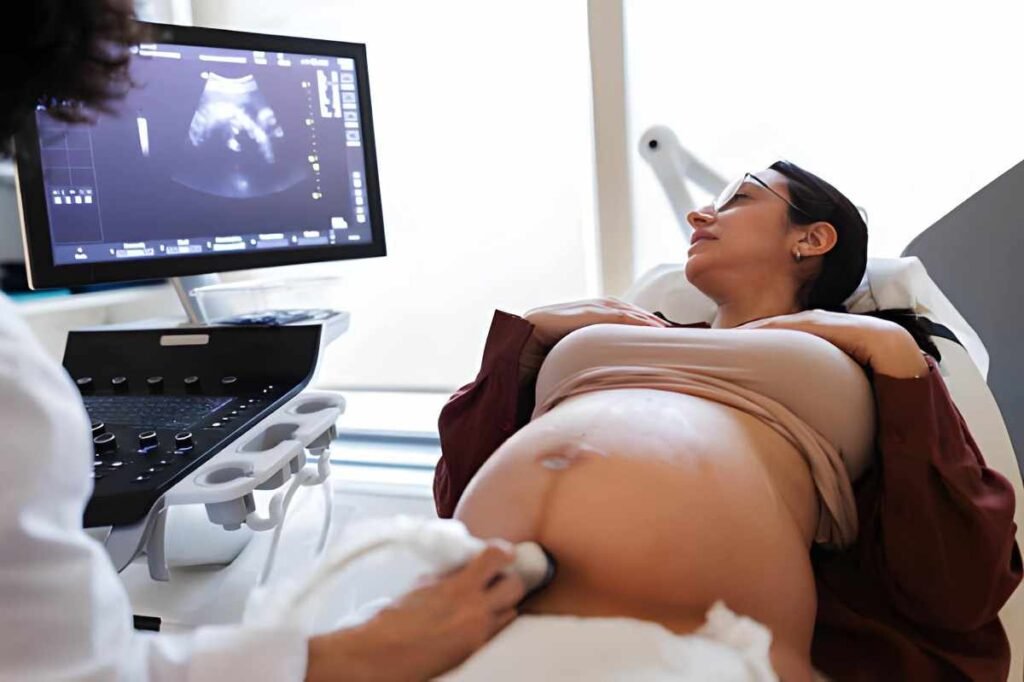
Monitoring is typically performed daily or twice weekly and includes a combination of non-invasive tests to evaluate fetal oxygenation and growth:
| Test | Frequency at 43 Weeks | Purpose |
|---|---|---|
| Nonstress Test (NST) | Twice weekly or daily | Measures fetal heart rate response to movement (a sign of oxygenation). |
| Biophysical Profile (BPP) | Twice weekly or daily | Ultrasound assessment of fetal movement, breathing, tone, and amniotic fluid volume. |
| Amniotic Fluid Index (AFI) | Included in BPP/Ultrasound | Measures amniotic fluid levels; oligohydramnios is a strong indicator of fetal compromise. |
Clinical Threshold for Intervention
If any test (especially the BPP or AFI) returns a non-reassuring score, or if the baby's movements decrease, the risks of continuing the pregnancy are deemed too high. At 43 weeks, abnormal surveillance results mandate **immediate delivery**.
Mandatory Delivery Management: Induction of Labor
Given the heightened risks, medical guidelines universally recommend **Induction of Labor (IOL)** at 43 weeks.
The Induction Process
Induction success depends heavily on the **Bishop Score**, an assessment of the cervix's readiness (dilation, effacement, position). Methods used include:
- Cervical Ripening: Medications (like prostaglandins, administered as a gel or insert) or mechanical devices (like a balloon catheter) are used to soften and thin the cervix.
- Amniotomy: Artificially rupturing the membranes ("breaking the water") to accelerate labor, if the cervix is favorable.
- Oxytocin Administration: Administering synthetic oxytocin intravenously to stimulate strong, regular uterine contractions.
Continuous Fetal Monitoring
Once labor begins (whether induced or spontaneous), continuous electronic fetal monitoring is often mandated for post-term pregnancies to detect early signs of fetal distress due to reduced placental function or cord compression.
Logistical and Emotional Planning
The emotional and logistical strain of reaching 43 weeks is immense, compounding the physical discomfort with anxiety and external pressure.
Managing Emotional Fatigue and Stress
Mothers at 43 weeks report high levels of anger, frustration, and fear regarding the baby's well-being. It is vital to communicate these feelings to the support team. If the mother has declined induction previously, the medical team must still provide non-judgmental, clear information on the rising risks to ensure the decision is fully informed. Prioritizing rest and mental health support (counseling) is essential during this acute waiting period.
Socioeconomic Impact of Prolonged Stay
The requirement for twice-weekly, or sometimes daily, antenatal surveillance at 43 weeks drastically increases the costs of care and the logistical burden on the family. These non-delivery related checks require time off work and transportation. In the U.S., these intensive monitoring protocols, including NSTs and BPPs, are typically covered by insurance due to the high-risk status, but patients must ensure their benefits cover the frequent lab work and specialist time to avoid unexpected financial hits during this stressful final stage.