First Trimester Organ Development
7 Weeks Pregnancy: The Power of the Fetal Heartbeat and Early Growth
The 7th week of pregnancy marks the height of the first trimester's transformative power. The embryo, though still small (about the size of a blueberry), is growing exponentially, and the process of organogenesis—the formation of every major organ system—is well underway. This week is often the timing for the crucial **viability ultrasound**, confirming the pregnancy's location, measuring its growth, and documenting a strong fetal heartbeat. This guide details the critical developmental milestones, the intensifying maternal symptoms driven by soaring hormones, and the necessary lifestyle adjustments to protect the rapidly developing embryo.
Table of Contents
Embryonic Development: Structural Refinement
At 7 weeks, the embryo is growing at a rate of about a millimeter per day. The major focus shifts from simply forming structures to connecting and refining them.
Key Organogenesis Milestones
- Limb Development: Tiny hand and foot plates emerge, although they appear paddle-like or webbed. The primitive arms and legs begin to lengthen and segment.
- Facial Features: The beginnings of eyes, nose, and ear structures are visible. The umbilical cord, the lifeline connecting the embryo to the placenta, is clearly forming.
- Nervous System: The main parts of the brain (forebrain, midbrain, hindbrain) are differentiating. The neural tube, which must be fully closed by now, is forming the basic spinal cord and central nervous system structure.
Size and Growth Rate
At 7 weeks, the embryo's Crown-Rump Length (CRL) typically measures between 5 and 9 millimeters. The speed of growth is so uniform that the CRL measurement at this stage provides the **most accurate dating** for the entire pregnancy, often superseding the date calculated from the last menstrual period (LMP).
Fetal Heart Rate: The Viability Indicator
The heart began beating around 6 weeks, but at 7 weeks, the rate accelerates dramatically, serving as a powerful indicator of the pregnancy's health.
Expected Heart Rate Benchmarks
The primitive heart tube rapidly increases its rhythm during this period to circulate blood efficiently through the tiny body.
- Expected Range: The fetal heart rate (FHR) typically ranges between 110 and 130 beats per minute (bpm), and often accelerates toward 140 bpm.
- Clinical Significance: Once a heartbeat is detected at 7 weeks, the risk of miscarriage drops significantly. A strong, measurable FHR is the primary confirmation of viability.
Maternal Symptoms and Hormonal Peaks
The maternal experience at 7 weeks is characterized by peak hormonal effects, particularly the rapid doubling of hCG and the high levels of progesterone.
Common Intensifying Symptoms
- Severe Nausea and Vomiting: Often peaking around this time, morning sickness is directly correlated with the exponential surge in hCG levels.
- Hypersensitivity: Increased sensitivity to smells (olfactory aversion) and taste (metallic or bitter) is common. These aversions serve to protect the embryo from potential toxins during the critical organogenesis phase.
- Exhaustion: Profound fatigue continues as the body dedicates immense energy to building the placenta and supporting the hormonal environment.
- Breast Changes: Increased sensitivity, darkening of the areolae, and visibility of veins are caused by progesterone and estrogen preparing the mammary glands.
The 7-Week Ultrasound Checkpoints
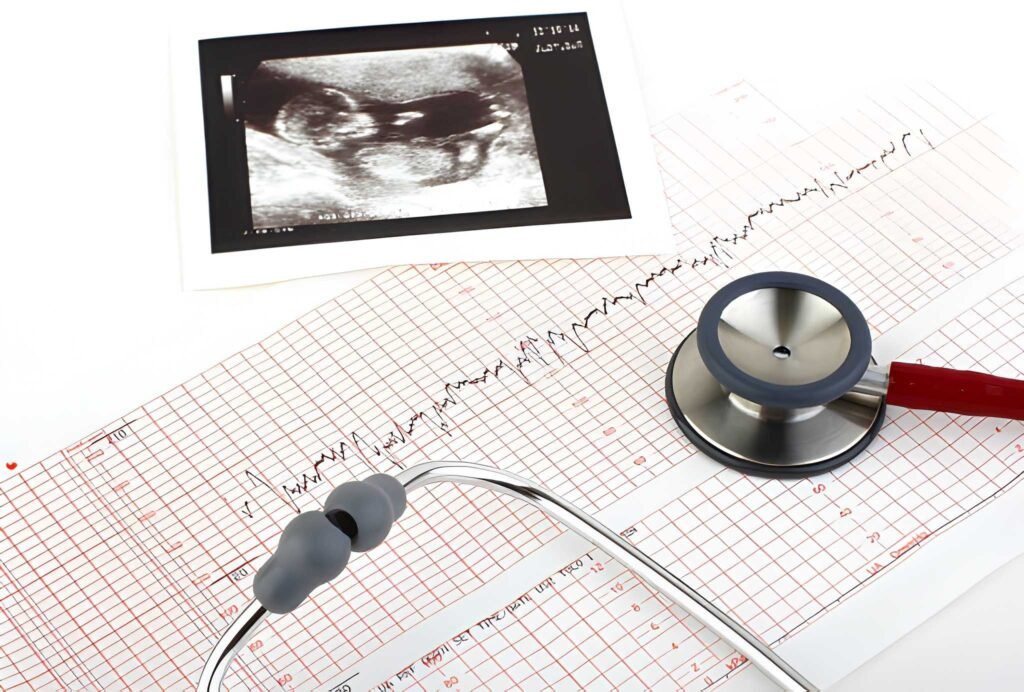
The viability ultrasound at 7 weeks utilizes the transvaginal approach for optimal clarity of the small structures.
Key Ultrasound Checkpoints
| Structure Monitored | Expected Finding at 7 Weeks | Clinical Significance |
|---|---|---|
| Gestational Sac (GS) | Clearly visible, often 10–18 mm diameter. | Confirms intrauterine location (ruling out ectopic). |
| Yolk Sac (YS) | Distinct, round structure inside the GS. | Confirms normal development, not a blighted ovum. |
| Fetal Pole (FP) | Measures 5–9 mm (CRL). | Allows for accurate dating of the pregnancy. |
| Heartbeat (FHR) | Rhythmic flutter detected, rate 110–130+ bpm. | The strongest indicator of a viable pregnancy. |
Interactive Tool: Heart Rate Viability Check
7-Week Fetal Heart Rate Assessment
Enter the FHR reading (in bpm) from your ultrasound report to analyze viability status at 7 weeks.
Essential Safety and Supplementation
Protecting the embryo during the vulnerable stage of organogenesis requires strict adherence to safety guidelines.
Focus on Folic Acid and Teratogen Avoidance
- Folic Acid: Continue the daily 400 mcg minimum intake. This ensures the final integrity of the neural tube structure.
- Medication and Toxin Review: Reconfirm with your provider that all prescription and over-the-counter medications are safe. Avoid all alcohol, nicotine, and illicit drugs, as the embryo is hyper-vulnerable to teratogens (agents causing congenital defects).
- Hydration and Nutrition: Prioritize small, frequent, nutrient-dense meals to manage nausea and prevent dehydration, which can be exacerbated by vomiting.
The 7th week is a powerful illustration of rapid development, marked by the pivotal confirmation of the fetal heartbeat. By diligently managing the peak symptoms and adhering to essential safety precautions, expectant parents confidently move forward, grounded in the knowledge of the embryo's successful growth and viability.