Music education in elementary schools provides more than just exposure to instruments and songs—it plays a crucial role in cognitive, emotional, and social development. A well-designed curriculum introduces students to fundamental musical concepts, performance skills, creativity, and appreciation for diverse musical traditions. This article examines the structure, components, benefits, and practical implementation of a typical elementary school music education curriculum, providing insights for educators, parents, and policymakers.
Purpose of Elementary Music Education
Music education aims to develop students’ musical skills, cultural awareness, and self-expression while supporting broader academic and social development. Research indicates that participation in music programs enhances language development, memory, spatial-temporal reasoning, and collaboration skills in children (Hallam, 2010).
Core Components of a Typical Curriculum
| Component | Description | Learning Outcomes |
|---|---|---|
| Music Fundamentals | Rhythm, melody, harmony, dynamics, tempo, and notation | Students read basic sheet music, understand musical symbols, and identify elements of music |
| Vocal Training | Singing, pitch control, tone quality, and vocal health | Develops vocal skills, listening, and ear training |
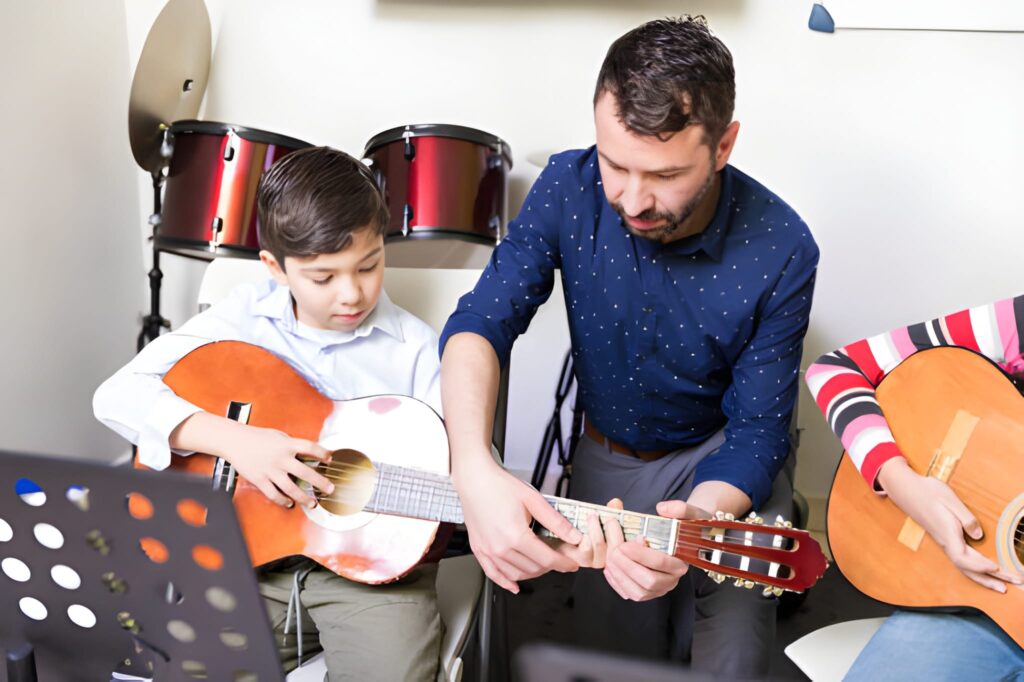
| Instrumental Skills | Introduction to classroom instruments (xylophones, recorders, percussion) | Builds fine motor skills, rhythm, and coordination |
| Listening and Analysis | Exposure to diverse musical genres and composers | Enhances musical appreciation, critical listening, and cultural awareness |
| Music Composition and Creativity | Creating original melodies or rhythms using instruments or digital tools | Encourages creative thinking, problem-solving, and expression |
| Performance and Ensemble Work | Group singing, small ensembles, and class concerts | Promotes teamwork, confidence, and presentation skills |
| Music and Movement | Integrating dance, rhythm exercises, and body movement | Supports kinesthetic learning, coordination, and engagement |
Grade-Level Progression
A typical music curriculum progresses through developmentally appropriate stages across grades K-6:
| Grade | Focus | Activities |
|---|---|---|
| Kindergarten | Introduction to sound, rhythm, and simple songs | Singing nursery rhymes, clapping rhythms, using simple percussion instruments |
| Grade 1 | Pitch, tempo, and steady beat | Singing simple melodies, using recorders, rhythmic games |
| Grade 2 | Music notation and basic ensemble skills | Reading simple sheet music, group rhythm exercises, small performances |
| Grade 3 | Instrument proficiency and music appreciation | Learning xylophones, exploring musical genres, listening journals |
| Grade 4 | Composition and creativity | Creating short compositions, digital music tools, exploring cultural music traditions |
| Grade 5 | Ensemble performance and theory | Participating in choir or band, understanding musical form, performing for audiences |
| Grade 6 | Advanced performance and analysis | Preparing concert pieces, improvisation, music history study, peer collaboration |
Integration with Other Subjects
Music education can be integrated with core subjects to create interdisciplinary learning experiences:
- Mathematics: Counting beats, understanding rhythm patterns, fractions in note values.
- Language Arts: Writing song lyrics, analyzing music-themed literature.
- Social Studies: Exploring cultural and historical contexts of music.
- Science: Studying sound waves, acoustics, and instrument construction.
Assessment in Music Education
Assessment combines formal and informal methods, focusing on skill development, creativity, and participation:
- Performance Assessment: Evaluating solo or group performances for accuracy, expression, and technique.
- Written Assignments: Music journals, worksheets on notation, rhythm exercises.
- Creative Projects: Compositions, improvisation tasks, multimedia presentations.
- Participation and Engagement: Observing classroom behavior, collaboration, and practice habits.
Benefits of Music Education in Elementary School
- Cognitive Development: Enhances memory, attention, and spatial-temporal skills.
- Emotional Growth: Encourages self-expression, emotional regulation, and confidence.
- Social Skills: Promotes collaboration, empathy, and teamwork in ensembles.
- Cultural Awareness: Exposes students to diverse musical traditions, fostering inclusivity.
- Academic Support: Correlation with improved literacy, numeracy, and overall academic achievement.
Case Study: Implementing a Music Curriculum in a Suburban Elementary School
A suburban elementary school implemented a comprehensive K-6 music curriculum. Key features included weekly music classes, small group instrumental sessions, and annual concerts. Outcomes after three years:
| Metric | Before Implementation | After Implementation | Improvement |
|---|---|---|---|
| Student Music Literacy | 55% | 80% | +25% |
| Ensemble Participation | 40% | 75% | +35% |
| Creative Composition Skills | 30% | 65% | +35% |
Teachers reported higher engagement, improved confidence, and a greater sense of community among students.
Challenges and Considerations
- Resource Availability: Access to instruments, sheet music, and technology varies across schools.
- Teacher Expertise: Certified music educators with specialized training are critical for effective instruction.
- Time Allocation: Balancing music with core academic subjects requires careful scheduling.
- Equity: Ensuring all students have access to instruments and performance opportunities is essential.
Future Directions in Elementary Music Education
- Digital Tools: Incorporating music composition software, interactive apps, and virtual instruments.
- Cross-Cultural Curriculum: Expanding exposure to global musical traditions.
- STEAM Integration: Linking music with technology, engineering, and math through rhythm and sound experiments.
- Community Partnerships: Collaborating with local musicians, orchestras, and cultural organizations for enriched learning experiences.
Conclusion
A typical elementary school music education curriculum balances foundational skills, creative expression, and performance opportunities while supporting cognitive, social, and emotional growth. By integrating music into the broader curriculum and providing diverse learning experiences, educators foster lifelong appreciation, engagement, and understanding of music in young learners. Music education is not merely an enrichment activity—it is a critical component of holistic development that shapes confident, creative, and culturally aware individuals.