Academic best practices in elementary education form the foundation for lifelong learning, shaping not only students’ cognitive abilities but also their social, emotional, and ethical development. Elementary education—typically encompassing grades 1 through 5 or 6—serves as a critical period where children acquire essential literacy, numeracy, critical thinking, and problem-solving skills. Educators, policymakers, and parents recognize that implementing evidence-based best practices in this stage can significantly improve student outcomes, reduce learning gaps, and prepare children for secondary education and beyond. This article explores academic best practices in elementary education in detail, highlighting teaching strategies, classroom management techniques, assessment methods, and socio-emotional learning approaches.
Understanding the Importance of Best Practices in Elementary Education
Best practices refer to instructional strategies, classroom techniques, and institutional policies that consistently lead to positive learning outcomes. In elementary education, these practices address the holistic development of children. Effective implementation ensures:
- Enhanced Academic Achievement: Students develop proficiency in reading, writing, mathematics, and sciences.
- Equitable Learning Opportunities: Children from diverse socioeconomic and cultural backgrounds receive quality education.
- Social and Emotional Growth: Children develop collaboration, communication, and empathy skills.
- Teacher Effectiveness: Educators utilize research-backed methods that optimize learning.
Core Components of Academic Best Practices
- Curriculum Design and Alignment
A well-structured curriculum aligns educational content with developmental stages, state or national standards, and real-world skills. Best practices in curriculum design include:
- Scope and Sequence Planning: Gradual progression from foundational to advanced concepts ensures mastery of core subjects.
- Integration of Interdisciplinary Learning: Connecting subjects like science, mathematics, and language arts encourages critical thinking.
- Cultural Relevance: Lessons incorporate students’ backgrounds to enhance engagement and understanding.
| Component | Best Practice | Example |
|---|---|---|
| Literacy | Phonics-based instruction | Systematic teaching of letter-sound relationships in early grades |
| Mathematics | Concrete-pictorial-abstract approach | Students first manipulate objects, then draw representations, before solving symbolic equations |
| Science | Inquiry-based learning | Hands-on experiments to explore scientific concepts |
| Social Studies | Experiential learning | Field trips, role plays, and simulations of historical events |
- Effective Teaching Strategies
Research in educational psychology emphasizes instructional strategies that cater to varied learning styles and cognitive development. Key strategies include:
- Active Learning: Students participate in discussions, projects, and problem-solving activities rather than passive listening.
- Differentiated Instruction: Teaching adapts to students’ abilities, learning pace, and interests, promoting inclusivity.
- Collaborative Learning: Group work enhances communication, leadership, and teamwork skills.
- Formative Assessment Integration: Continuous feedback guides instruction and identifies areas for improvement.
Comparative Table of Teaching Strategies
| Strategy | Description | Benefits | Implementation Tips |
|---|---|---|---|
| Direct Instruction | Teacher-led structured lessons | Clear expectations, efficient coverage of curriculum | Use brief, focused sessions with guided practice |
| Project-Based Learning | Student-centered projects addressing real-world problems | Encourages creativity, critical thinking, and collaboration | Assign clear objectives, provide resources, facilitate reflection |
| Storytelling & Read-Alouds | Oral storytelling or reading literature aloud | Enhances vocabulary, comprehension, and listening skills | Incorporate discussion questions and student participation |
| Flipped Classroom | Instructional content delivered at home, practice in class | Maximizes active learning time | Provide accessible digital resources, ensure parental support |
- Classroom Management Best Practices
Effective academic outcomes rely heavily on classroom environment. Best practices in management foster safety, respect, and engagement:
- Positive Behavioral Interventions and Supports (PBIS): Reinforcing positive behavior while addressing misconduct constructively.
- Structured Routines: Clear schedules reduce anxiety and improve attention.
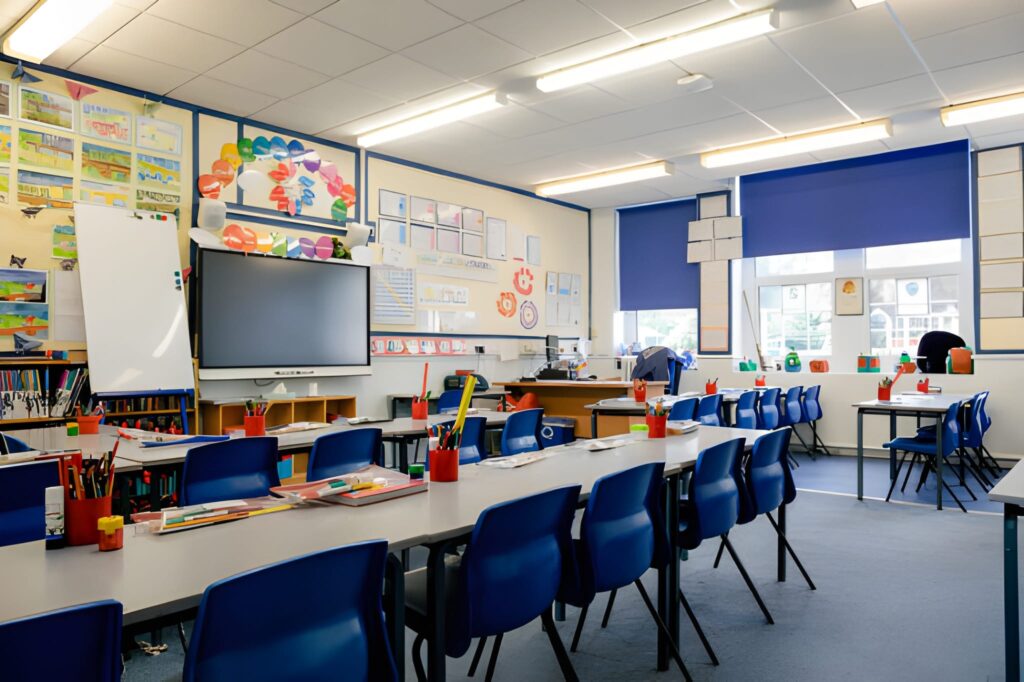
- Engaging Physical Environment: Colorful, organized, and resource-rich classrooms enhance learning.
- Student Autonomy: Allowing choices in activities increases motivation and ownership of learning.
- Assessment and Feedback
Continuous assessment helps teachers adjust instruction and supports student growth. Key practices include:
- Formative Assessments: Quizzes, observations, and discussions guide ongoing learning.
- Summative Assessments: Periodic exams or projects measure mastery of curriculum standards.
- Portfolio Assessment: Collection of student work showcases progress and encourages reflection.
- Peer and Self-Assessment: Students evaluate themselves and classmates to foster critical thinking and responsibility.
| Assessment Type | Purpose | Frequency | Implementation Example |
|---|---|---|---|
| Formative | Monitor understanding | Weekly | Exit tickets, mini-quizzes |
| Summative | Evaluate mastery | Quarterly | Standardized tests, final projects |
| Portfolio | Track growth | Semester | Writing samples, art projects, math journals |
| Peer/Self | Promote reflection | Bi-weekly | Peer review of essays, self-assessment charts |
- Incorporating Technology in Learning
Digital literacy and educational technology enhance academic engagement. Effective practices include:
- Interactive Learning Platforms: Applications like Khan Academy or ABCmouse reinforce concepts through gamified exercises.
- Virtual Collaboration Tools: Platforms enable group work, even in hybrid or remote learning contexts.
- Assistive Technology: Supports students with learning disabilities through speech-to-text software, audiobooks, or visual aids.
- Data Analytics: Teachers track performance trends and personalize instruction using learning management systems (LMS).
- Socio-Emotional Learning (SEL) Integration
SEL is critical in elementary education. Academic best practices incorporate SEL by:
- Encouraging emotional literacy: Students learn to recognize and express feelings appropriately.
- Promoting empathy and collaboration: Group activities teach perspective-taking.
- Integrating mindfulness and stress management: Short daily exercises improve focus and resilience.
Comparative Table: Academic vs. SEL-Focused Approaches
| Aspect | Academic-Focused | SEL-Focused | Integrated Approach |
|---|---|---|---|
| Goal | Mastery of curriculum | Emotional and social development | Holistic student growth |
| Methods | Lectures, worksheets, exams | Role play, reflection circles | Project-based learning with SEL reflection |
| Assessment | Test scores, grades | Behavioral observations, self-report | Combination of academic and social-emotional metrics |
Global Perspectives on Academic Best Practices
Different countries provide insight into effective practices:
- Finland: Emphasizes student-centered, play-based learning, minimal standardized testing, and highly trained teachers.
- Singapore: Focus on mastery learning, differentiated instruction, and consistent teacher coaching.
- United States: Blended learning, data-driven instruction, and inclusive education policies.
- Japan: Emphasizes moral education, collaborative problem solving, and student responsibility for classroom environment.
Evidence-Based Outcomes
Research supports that these best practices improve student achievement:
- Students in classrooms with differentiated instruction scored 15–20% higher in mathematics and reading than peers in traditional classrooms.
- Schools with integrated SEL programs report a 10% decrease in behavioral issues and a 12% increase in academic performance.
- Technology-enhanced learning improves engagement, with students showing 25% faster mastery of key concepts in literacy and numeracy.
Challenges in Implementing Academic Best Practices
Despite the proven effectiveness, several barriers exist:
| Challenge | Description | Mitigation Strategies |
|---|---|---|
| Teacher Training Gaps | Insufficient preparation in modern pedagogical methods | Continuous professional development, mentorship programs |
| Resource Inequity | Lack of textbooks, technology, and classroom materials | Government and NGO funding, community support programs |
| Class Size | Large student populations reduce personalized attention | Co-teaching, peer tutoring, differentiated instruction |
| Parental Engagement | Low involvement in student learning | Parent workshops, home-school communication platforms |
Case Study: Project-Based Learning in the U.S.
In a Midwestern elementary school, project-based learning (PBL) in science classes increased student engagement and comprehension. Students designed experiments to understand ecosystems, presented findings to peers, and maintained journals. Outcomes included:
- 30% improvement in standardized science test scores.
- Increased collaboration skills measured through peer evaluations.
- Higher retention of knowledge compared to traditional instruction methods.
Future Directions and Policy Recommendations
To sustain academic best practices in elementary education, stakeholders should:
- Invest in Teacher Development: Prioritize ongoing professional growth and mentorship programs.
- Enhance Curriculum Relevance: Integrate real-world applications, interdisciplinary learning, and cultural contexts.
- Leverage Technology Effectively: Ensure equitable access and train teachers in digital pedagogy.
- Promote Holistic Assessment: Balance academic testing with portfolio, SEL, and peer/self-assessment.
- Foster Community and Parental Engagement: Encourage partnerships between schools, families, and local organizations.
Conclusion
Academic best practices in elementary education are essential for nurturing knowledgeable, socially responsible, and resilient learners. Evidence-based strategies—ranging from differentiated instruction and project-based learning to technology integration and SEL incorporation—enhance learning outcomes and foster holistic development. While challenges such as resource inequity, teacher training gaps, and large class sizes persist, consistent implementation of best practices, combined with policy support and community engagement, can create an educational environment where every child thrives. Ultimately, investing in best practices at the elementary level lays the foundation for a lifelong love of learning, critical thinking, and active citizenship.