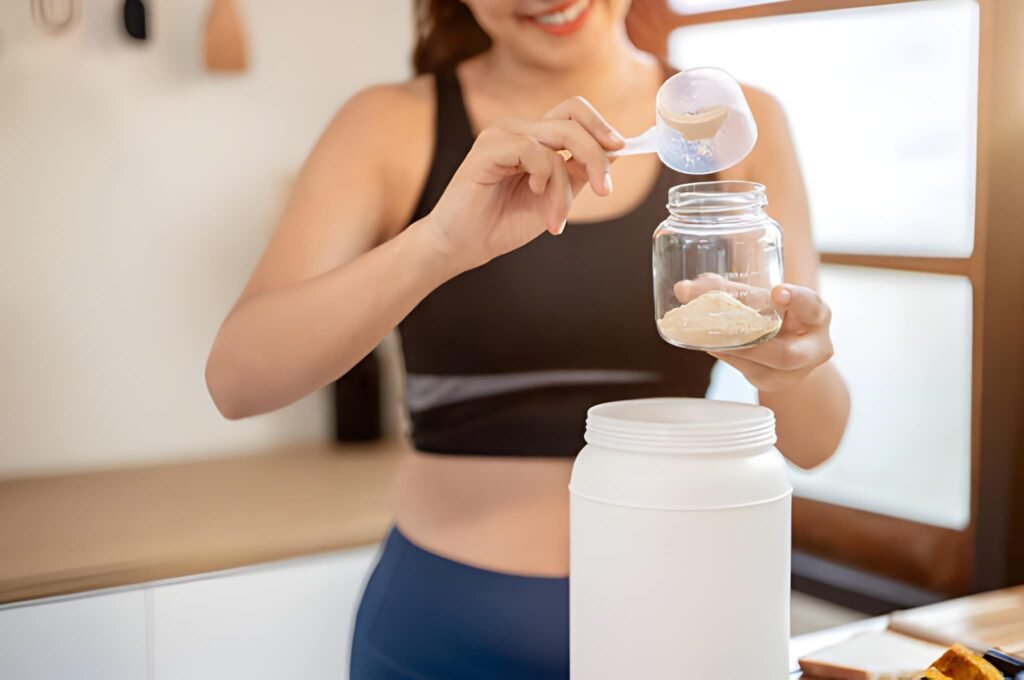
Active Performance: Navigating Pre-Workout Supplements During Lactation
A clinical review of pharmacological stimulants, metabolic additives, and infant neurodevelopmental safety in
Pharmacological Stimulants and Milk Transfer Kinetics
Postpartum recovery increasingly involves a return to vigorous physical activity. For many nursing parents, pre-workout supplements provide the required energy to maintain performance while managing the fatigue of sleep deprivation. However, the multi-ingredient nature of these products requires a sophisticated analysis of how individual components cross the lactocytes.
The primary ingredient in most pre-workouts is caffeine anhydrous, a concentrated, dehydrated form of caffeine. Unlike the steady release found in coffee, caffeine anhydrous enters the maternal bloodstream rapidly. Because caffeine is a small, water-soluble molecule with low protein binding, it diffuses easily from maternal plasma into breast milk. While an adult body clears caffeine efficiently, the neonatal liver lacks the enzyme cytochrome P450 1A2, which is responsible for caffeine metabolism.
Amino Acid Synthesis: Beta-Alanine and L-Citrulline
Beyond stimulants, pre-workouts feature amino acids designed to improve blood flow and muscular endurance. Beta-Alanine is famous for causing "paresthesia," or the tingling sensation on the skin. This compound increases muscle carnosine levels. While beta-alanine is naturally occurring in poultry and fish, the high-dose concentrations in supplements have limited clinical data regarding lactation safety.
L-Citrulline serves as a precursor to arginine, enhancing nitric oxide production and vasodilation. For the nursing parent, improved vasodilation can theoretically support blood flow to the mammary tissues. However, the infant's exposure to these isolated, high-dose amino acids must be weighed against the lack of long-term neurodevelopmental studies.
| Ingredient | Standard Dose | Safety Status (Lactation) | Potential Infant Impact |
|---|---|---|---|
| Caffeine Anhydrous | 150mg - 300mg | Caution | Irritability, disrupted sleep cycles, poor feeding. |
| Beta-Alanine | 1.6g - 3.2g | Unknown | Limited data; potential for maternal skin irritation. |
| Creatine Monohydrate | 3g - 5g | Likely Safe | Naturally present in milk; high safety profile. |
| L-Citrulline | 6g - 8g | Likely Safe | Bypasses liver; used for cardiovascular health. |
Creatine Monohydrate and Mitochondrial Energy
Creatine remains one of the most researched supplements in the world. It facilitates the rapid regeneration of ATP (adenosine triphosphate), the primary energy currency of the cells. Human milk naturally contains creatine, as it is vital for infant brain development and muscular growth.
For the breastfeeding parent, creatine monohydrate supplementation is generally considered safe. It does not appear to shift the composition of breast milk in a way that would overwhelm the infant's kidneys. Maintaining high-quality creatine stores may even assist the mother in maintaining lean muscle mass during a period where high caloric expenditure for milk production can lead to muscle wasting if protein intake is insufficient.
Stimulant Dosage: The Calculation of Risk
Most health organizations, including the American Academy of Pediatrics (AAP), recommend limiting caffeine intake to 200mg to 300mg per day during lactation.
Safety Calculation Framework
To determine if your pre-workout fits within safety parameters, utilize this logic:
Daily Limit: 300 mgPre-Workout Serving: 225 mg (Caffeine Anhydrous)
Residual Morning Coffee: 95 mg
Total Intake: 320 mg
Result: EXCEEDED
Specialist Advice: If you utilize a pre-workout, you must account for all other sources of stimulants (soda, tea, chocolate) to prevent over-stimulating the infant's developing central nervous system.
The FDA Regulation and Contamination Gap
The most significant risk associated with pre-workout supplements in the United States is the regulatory status. Under the Dietary Supplement Health and Education Act (DSHEA) of 1994, the FDA does not approve supplements for safety or efficacy before they reach consumers.
Many pre-workouts utilize "proprietary blends," where the exact amount of each ingredient is hidden. For a breastfeeding parent, this is a major clinical red flag. Without knowing the exact dosage of stimulants or additives, it is impossible to predict the Relative Infant Dose (RID). Furthermore, independent laboratory testing frequently finds unlisted stimulants or heavy metals in pre-workout powders, which can have long-term developmental consequences for a nursing baby.
Avoid these. Labels listing "Performance Matrix" or "Energy Blend" without milligram counts for each ingredient are unsafe for lactation planning.
Sucralose and Acesulfame Potassium are common. While considered safe, some infants show increased sensitivity to maternal intake of high-intensity sweeteners.
Monitoring Infant Physiological Stability
Because every infant's metabolic rate is unique, the parent must act as the primary observer. If you choose to use a pre-workout, monitor the nursing dyad for the following signs over a 48-hour period.
Infants sensitive to caffeine often struggle to reach deep sleep phases. If your baby becomes "wired" but tired, or if their nap duration decreases significantly following your supplement use, the caffeine levels in your milk may be too high for their current liver maturity.
Stimulants can increase gastrointestinal motility. In some infants, this manifests as increased fussiness, arching of the back (reflux), or a sudden change in stool frequency. If these symptoms appear, discontinue the supplement for 3 days to verify the cause.
While rare in dietary amounts, excessive stimulant transfer can cause a noticeable increase in the infant's heart rate or "jittery" limb movements. This requires immediate cessation of the supplement and consultation with a pediatrician.
Third-Party Verification: Verifying Purity
If you decide that a pre-workout is necessary for your fitness goals, you must mitigate the risk of contamination. Only utilize products that undergo rigorous third-party testing.
Look for the NSF Certified for Sport or Informed Choice seals. These certifications ensure that the product has been tested for banned substances and contaminants like lead, mercury, and arsenic. For a nursing parent, this verification is non-negotiable, as heavy metals can accumulate in breast milk and interfere with infant neurological development.
Specialist Summary and Maternal Action Plan
In conclusion, pre-workout supplements are a "proceed with caution" category during lactation. While individual ingredients like creatine and citrulline are generally safe, the high concentrations of stimulants and the risk of contamination present real challenges for the nursing dyad.
As a specialist, I advocate for a "low and slow" strategy. Prioritize whole-food energy sources—like complex carbohydrates and adequate protein—before relying on pharmacological boosts. If you do choose a supplement, follow these safety benchmarks to protect your recovery and your baby's growth.
- Choose products with full label transparency (no proprietary blends).
- Verify the NSF Certified for Sport seal on the tub.
- Limit total daily caffeine to 200mg if your infant is under 6 months.
- Consume the pre-workout immediately after a nursing session to allow for a clearance window.
- Monitor your infant for 48 hours for signs of irritability or sleep disruption.
- Consider a "stim-free" (stimulant-free) pre-workout as a safer alternative.
By balancing your fitness performance with clinical vigilance, you can support your athletic goals without compromising the integrity of your milk supply. Fitness is a marathon, and the safety of your nursing relationship remains the primary metric of success.