In the early stages of a child’s life, every interaction contributes significantly to their developmental trajectory. Early learning toys provide more than simple entertainment; they are essential tools that stimulate cognitive, motor, and social skills, laying the foundation for lifelong learning. Amazon offers a vast marketplace of such toys, catering to a wide range of developmental needs, age groups, and parental preferences. Choosing the right toy can help guide a child through critical milestones in early childhood, supporting skills from problem-solving to emotional intelligence.
Early childhood, typically defined as the period from birth to eight years, is a critical phase for brain development. During this time, children’s brains are highly receptive to stimuli, making it an optimal period for learning. Theories by renowned psychologists such as Jean Piaget and Lev Vygotsky emphasize the importance of active engagement, exploration, and social interaction in learning. Toys, when thoughtfully chosen, can provide these vital experiences while fostering creativity, independence, and confidence. Cognitive development, fine and gross motor skills, language acquisition, socialization, and early STEM exposure can all be nurtured through play-based learning.
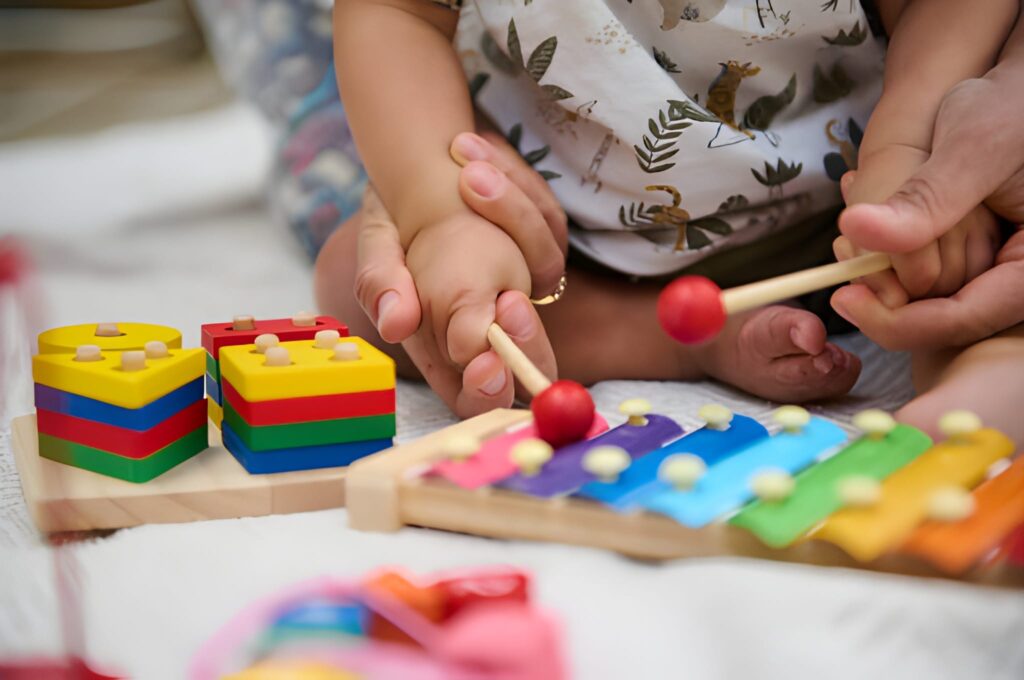
Amazon’s catalog of early learning toys can be categorized based on the specific skills they aim to develop. Cognitive development toys include shape sorters, which enhance problem-solving skills and shape recognition, and building blocks, which foster spatial awareness and creativity. Puzzles are another essential category, promoting memory, attention span, and concentration. Toys aimed at motor skill development include push and pull toys that encourage walking and coordination, stacking rings to refine hand-eye coordination, and multi-activity cubes that provide tactile and visual stimulation to develop fine motor skills. Language and social skills toys include interactive books that promote vocabulary acquisition, role-play sets that encourage empathy and social interaction, and musical instruments that introduce rhythm, auditory processing, and expressive skills. STEM-focused toys, such as magnetic tiles, coding kits, and beginner science kits, spark curiosity and introduce foundational concepts in engineering, mathematics, and logical thinking.
Selecting the right early learning toy involves considering both the child’s age and developmental stage. For infants aged 0-12 months, toys with contrasting colors, varied textures, and simple cause-and-effect features are ideal. For toddlers aged 1-3 years, toys that encourage exploration, problem-solving, and pretend play are most effective. Preschoolers aged 3-5 years benefit from more complex puzzles, building sets, and creative role-play toys that support reasoning, teamwork, and language development. Beyond age, parental engagement is also crucial; children learn more effectively when guided and encouraged to explore their toys interactively rather than passively.
Some of the top-rated early learning toys on Amazon, based on user reviews, popularity, and developmental benefits, include the Fisher-Price Laugh & Learn series for infants, which combines interactive songs, buttons, and lights to teach vocabulary and cause-and-effect understanding. The Melissa & Doug Shape Sorting Cube uses colorful wooden shapes to improve fine motor skills and spatial recognition. The VTech Sit-to-Stand Learning Walker helps toddlers develop gross motor skills while offering detachable play panels for cognitive stimulation. For slightly older children, magnetic building tiles and STEM activity kits encourage creativity, problem-solving, and foundational engineering concepts. The variety of choices ensures that parents can select toys tailored to their child’s interests and developmental needs while supporting a holistic approach to growth.
Research underscores the importance of play in early learning. According to the American Academy of Pediatrics, play supports cognitive, social, emotional, and physical development. Children who engage in regular, structured, and unstructured play develop better problem-solving abilities, enhanced social skills, and improved language acquisition. A 2022 study published in Early Childhood Research Quarterly found that children exposed to developmentally appropriate educational toys exhibited measurable improvements in executive function and fine motor coordination compared to peers with less access to such resources. These findings highlight the tangible benefits of choosing high-quality early learning toys, like those available on Amazon, as tools to support holistic growth.
Affordability and accessibility are additional advantages of Amazon as a marketplace for early learning toys. Parents can compare a wide array of products, read verified reviews, and filter options based on age, price, and educational focus. Many toys are available with Prime shipping, allowing families to receive developmental resources quickly, which is particularly beneficial for parents seeking immediate educational support for their children. Price points vary widely, from simple $10 stacking toys to more complex $100 STEM kits, ensuring options exist for different budgets without compromising developmental value.
When evaluating early learning toys, quality and safety should be a priority. Toys for children under three should be free from small parts to prevent choking hazards, made from non-toxic materials, and constructed to withstand frequent handling. Amazon provides detailed product specifications, including age recommendations, material safety certifications, and customer feedback, enabling informed purchasing decisions. Reviews often highlight the durability and educational impact of toys, offering insights beyond marketing descriptions. Parents can leverage this information to select products that maximize developmental benefit while ensuring safety and longevity.
The role of early learning toys extends beyond individual skill development; they also foster family bonding. Playing together encourages communication, empathy, and turn-taking, reinforcing both cognitive and socio-emotional growth. For example, a parent and child building a tower with blocks can discuss shapes, colors, and sequences, blending educational content with meaningful interaction. Role-play scenarios using kitchen sets or dolls allow children to emulate real-life experiences while parents model problem-solving, sharing, and emotional regulation. Toys thus serve as catalysts for both independent and guided learning experiences.
In conclusion, Amazon early learning toys represent a rich resource for parents seeking to support their children’s growth across multiple domains. By providing opportunities for cognitive stimulation, motor skill refinement, language development, social interaction, and early STEM exposure, these toys go beyond mere entertainment to offer foundational learning experiences. Selecting age-appropriate, safe, and developmentally aligned toys, coupled with active parental involvement, ensures that playtime contributes meaningfully to a child’s holistic development. As research continues to highlight the value of play in early childhood, investing in thoughtful educational toys remains a practical and impactful strategy for nurturing confident, curious, and capable learners.