Early Childhood Development Quiz

Comprehensive Early Childhood Development Quiz: Assessing Growth, Learning, and Milestones

Early childhood development (ECD) is a dynamic and complex process that encompasses physical, cognitive, social, and emotional growth from birth through approximately eight years of age. Understanding this developmental journey is crucial for educators, caregivers, and parents, as early experiences profoundly influence lifelong learning, behavior, and health. One effective way to evaluate knowledge and understanding […]


Comprehensive Early Childhood Development Quiz: Assessing Growth, Learning, and Milestones Read More »

Two-Year Degree in Early Childhood Development

Two-Year Degree in Early Childhood Development: Preparing Educators for Impactful Careers

A two-year degree in Early Childhood Development (ECD) is typically an Associate of Science (AS) or Associate of Applied Science (AAS) program designed to prepare students for careers working with young children, from birth to age eight. This program provides foundational knowledge in child development, learning theories, and instructional strategies, while also offering practical experience

Two-Year Degree in Early Childhood Development: Preparing Educators for Impactful Careers Read More »

Early Childhood Educator Teaches Children

What an Early Childhood Educator Teaches Children

Early childhood educators play a critical role in laying the foundation for lifelong learning. Working with children from birth to around age eight, these educators provide guidance across multiple domains of development—cognitive, social-emotional, physical, and language. Their teaching goes beyond academics to include social skills, creativity, and emotional regulation, ensuring holistic growth during formative years.

What an Early Childhood Educator Teaches Children Read More »

Two Types of Long-Term Memory in Early Childhood

Two Types of Long-Term Memory in Early Childhood

Long-term memory is critical in early childhood, as it enables children to store and retrieve knowledge, experiences, and skills over extended periods. Understanding the types of long-term memory helps caregivers and educators support learning, language development, and problem-solving. Two primary types of long-term memory—episodic memory and semantic memory—play key roles in a child’s cognitive development.

Two Types of Long-Term Memory in Early Childhood Read More »

Two Effective Teaching Models for Introducing Fractions in Early Childhood

Two Effective Teaching Models for Introducing Fractions in Early Childhood

Introducing fractions in early childhood lays the foundation for mathematical reasoning and problem-solving. At this stage, children benefit from hands-on, visual, and experiential learning strategies that make abstract concepts concrete. Two widely used teaching models—the Concrete-Representational-Abstract (CRA) Model and the Part-Whole Model—effectively support young learners in understanding fractions. 1. Concrete-Representational-Abstract (CRA) ModelOverview: The CRA model

Two Effective Teaching Models for Introducing Fractions in Early Childhood Read More »

2-Hour Reframe Stress Workshop for Early Childhood Teachers

2-Hour Reframe Stress Workshop for Early Childhood Teachers

Early childhood educators face high levels of stress due to long hours, emotional labor, classroom management challenges, and balancing administrative duties with teaching. A structured 2-hour workshop can help teachers identify stressors, develop coping strategies, and reframe their perspectives to promote well-being and resilience. This workshop emphasizes practical, evidence-based techniques that can be applied both

2-Hour Reframe Stress Workshop for Early Childhood Teachers Read More »

Examples of Animism in Early Childhood Development

Examples of Animism in Early Childhood Development

Animism is a concept from Jean Piaget’s theory of cognitive development, describing the tendency of young children—typically in the preoperational stage (ages 2–7)—to attribute life-like qualities, feelings, and intentions to inanimate objects. This way of thinking reflects children’s imaginative and egocentric understanding of the world. Observing animism can provide insight into children’s cognitive and emotional

Examples of Animism in Early Childhood Development Read More »

Two Prominent Career Opportunities in Early Childhood Education

Two Prominent Career Opportunities in Early Childhood Education

Early childhood education (ECE) is a dynamic and rewarding field, offering multiple career pathways for individuals passionate about nurturing the growth and development of young children. Professionals in this field contribute not only to the academic readiness of children but also to their social, emotional, and physical well-being. Among the diverse roles in ECE, two

Two Prominent Career Opportunities in Early Childhood Education Read More »

First-Year Early Childhood Education Course

First-Year Early Childhood Education Courses: Building a Strong Foundation for Future Educators

The first year of an early childhood education (ECE) program lays the groundwork for understanding child development, learning theories, teaching strategies, and professional practices. These courses equip students with the knowledge and practical skills needed to foster cognitive, social, emotional, and physical development in young children. The curriculum is typically structured to balance theory, observation,

First-Year Early Childhood Education Courses: Building a Strong Foundation for Future Educators Read More »

First Week of School Lesson Plans for Early Childhood

First Week of School Lesson Plans for Early Childhood: Engaging Activities for a Smooth Transition

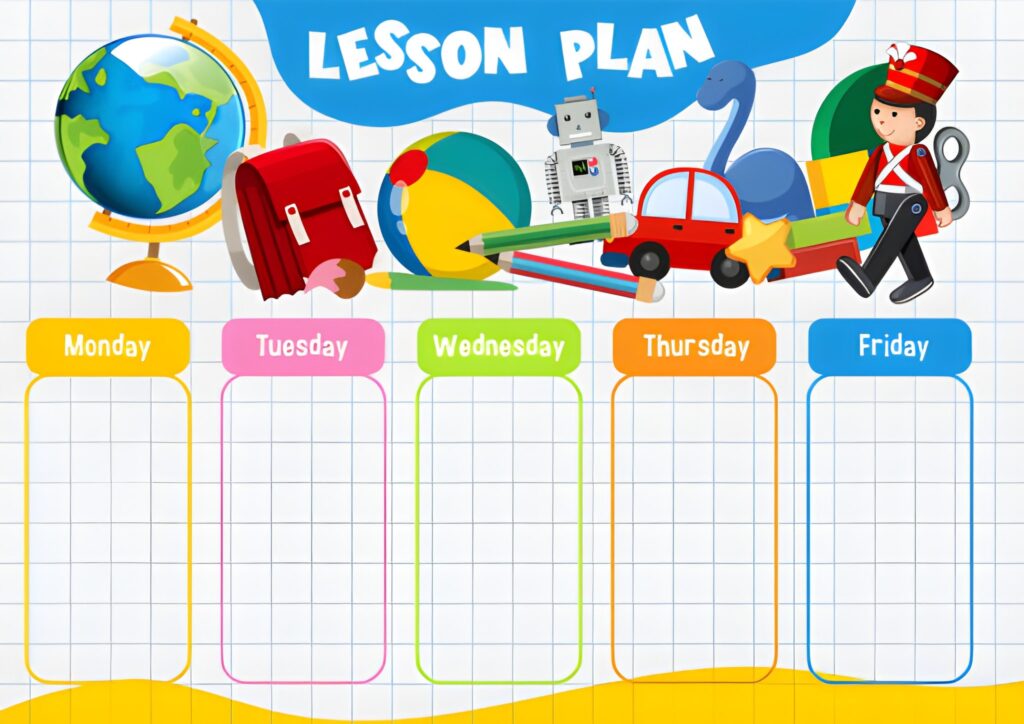
The first week of school is critical for setting the tone for the rest of the academic year in early childhood classrooms. Children aged 3–5 are experiencing new routines, social interactions, and learning environments. Well-structured lesson plans during this period help ease separation anxiety, foster social skills, and introduce classroom expectations while supporting cognitive, physical,

First Week of School Lesson Plans for Early Childhood: Engaging Activities for a Smooth Transition Read More »