Newborn

Brief History of Newborn Screening in the United States

A Brief History of Newborn Screening in the United States: From Discovery to Modern Advances

Newborn screening (NBS) is one of the most successful public health initiatives in the United States, designed to detect potentially serious conditions in infants before symptoms appear. Early diagnosis through NBS allows timely intervention, often preventing irreversible damage, lifelong disability, or even death. The evolution of newborn screening in the United States is a story […]

A Brief History of Newborn Screening in the United States: From Discovery to Modern Advances Read More »

Feeding Patterns, Growth, and Development

A Breast-Fed Newborn Baby Generally Nurses: Understanding Feeding Patterns, Growth, and Development

Breastfeeding is widely recognized as the optimal form of nutrition for newborns. It provides a perfect balance of nutrients, antibodies, and bioactive compounds essential for growth, immunity, and neurodevelopment. One of the critical aspects of successful breastfeeding is understanding how frequently a breast-fed newborn nurses, the duration of each feeding session, and the patterns that

A Breast-Fed Newborn Baby Generally Nurses: Understanding Feeding Patterns, Growth, and Development Read More »

Breakthrough in Premature Newborn Technology

A Breakthrough in Premature Newborn Technology: Transforming Neonatal Care

Premature birth, defined as birth before 37 weeks of gestation, affects nearly one in ten infants in the United States each year. These infants, often weighing less than 5.5 pounds, face heightened risks of respiratory distress, infections, developmental delays, and other life-threatening complications. Advances in neonatal care over the last several decades have dramatically improved

A Breakthrough in Premature Newborn Technology: Transforming Neonatal Care Read More »

Bond Between Mother and Newborn

Bond Between Mother and Newborn: Importance, Mechanisms, and Strategies for Strengthening Attachment

The bond between a mother and her newborn is one of the most profound relationships in human development. This early attachment influences the infant’s emotional, cognitive, and social development, while also impacting maternal mental health and well-being. Establishing a strong bond begins immediately after birth and continues through daily interactions, caregiving, and emotional attunement. Understanding

Bond Between Mother and Newborn: Importance, Mechanisms, and Strategies for Strengthening Attachment Read More »

ABO Blood Type Incompatibility in Newborns

ABO Blood Type Incompatibility in Newborns: Pathophysiology, Clinical Features, and Management

ABO blood type incompatibility is a common cause of neonatal jaundice and hemolysis in the first days of life. It occurs when a mother’s blood type is O and the newborn inherits either A or B antigens from the father. Maternal anti-A or anti-B IgG antibodies can cross the placenta and lead to hemolysis of

ABO Blood Type Incompatibility in Newborns: Pathophysiology, Clinical Features, and Management Read More »

A&D Vitamin Oil for Newborns

A&D Vitamin Oil for Newborns: Uses, Benefits, and Safety Considerations

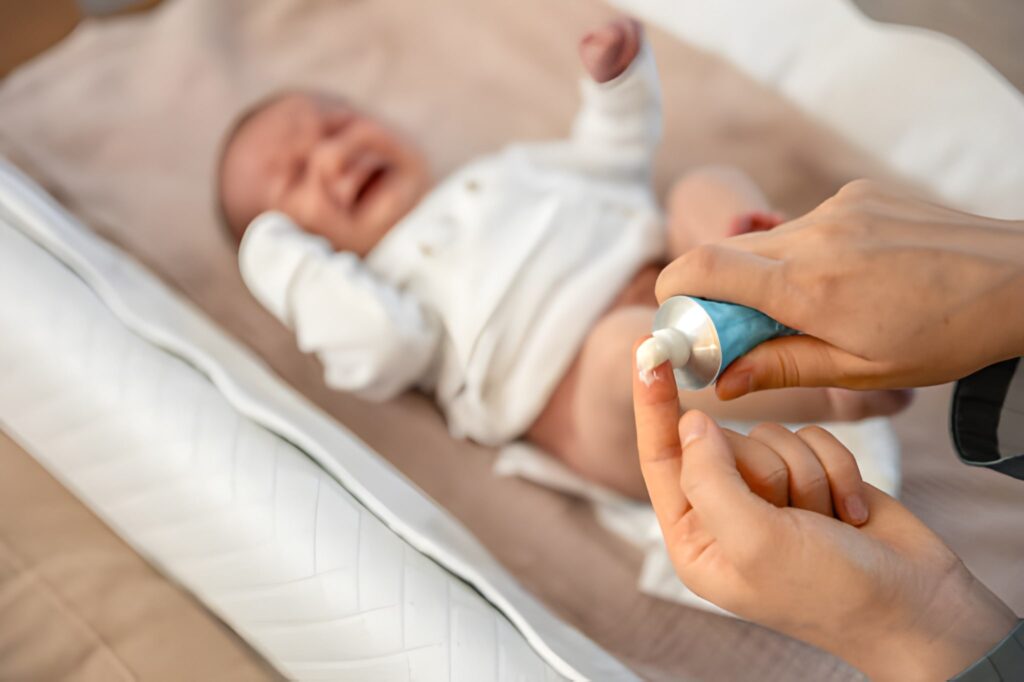
Newborn skin is delicate, thin, and highly permeable, making moisturization and protection essential in the first weeks of life. A&D Vitamin Oil is a commonly used topical emollient formulated with vitamins A and D in an oil base. It is marketed for moisturizing, massaging, and protecting the newborn’s skin. While widely used in neonatal care,

A&D Vitamin Oil for Newborns: Uses, Benefits, and Safety Considerations Read More »

A&D Ointment Use in Newborns

A&D Ointment Use in Newborns: Benefits, Safety, and Clinical Considerations

Skin care is a fundamental aspect of newborn care, as the neonatal skin is immature, thin, and more susceptible to dryness, irritation, and infection. A&D ointment, a commonly used emollient, has been widely recommended for newborns to prevent diaper rash, moisturize dry skin, and protect delicate skin from friction or irritation. Understanding its composition, appropriate

A&D Ointment Use in Newborns: Benefits, Safety, and Clinical Considerations Read More »

5-Day-Old Newborn Brought to the Emergency Department

A 5-Day-Old Newborn Brought to the Emergency Department: Assessment, Common Presentations, and Management

The first week of life is a vulnerable period for newborns. A 5-day-old infant presenting to the emergency department (ED) requires careful evaluation because even subtle signs can indicate serious illness. At this age, infants are transitioning from intrauterine dependence to independent physiological regulation, and they have limited reserves to respond to infection, metabolic disturbances,

A 5-Day-Old Newborn Brought to the Emergency Department: Assessment, Common Presentations, and Management Read More »

34-Week Gestational Age Newborn

A 34-Week Gestational Age Newborn: Clinical Features, Care, and Outcomes

A newborn born at 34 weeks gestation is considered late preterm, accounting for a significant portion of preterm births. While these infants are closer to term, they remain physiologically immature, with vulnerabilities in respiratory function, thermoregulation, feeding, and neurological development. Understanding the needs and challenges of a 34-week gestational age newborn is crucial for healthcare

A 34-Week Gestational Age Newborn: Clinical Features, Care, and Outcomes Read More »

27-Week Preterm Newborn Receiving Phototherapy

A 27-Week Preterm Newborn Receiving Phototherapy: Clinical Management, Risks, and Outcomes

Premature infants, especially those born at 27 weeks of gestation, face numerous physiological challenges, one of which is hyperbilirubinemia. Phototherapy is a cornerstone treatment for neonatal jaundice, helping reduce bilirubin levels and prevent complications such as kernicterus. At 27 weeks, the infant’s liver, gastrointestinal system, and neurological regulation are immature, making bilirubin metabolism inefficient. In

A 27-Week Preterm Newborn Receiving Phototherapy: Clinical Management, Risks, and Outcomes Read More »