Fifth Disease (Parvovirus B19) in Pregnancy: Risks, Diagnosis, and Fetal Monitoring
A guide to clinical protocols and management when exposed to the common childhood virus.
Article Roadmap
Parvovirus B19 and Fifth Disease: The Infection Background
Fifth Disease, or Erythema Infectiosum, is caused by the human Parvovirus B19. It is a common, generally mild viral illness characterized in children by a distinctive "slapped cheek" facial rash, followed by a lacy rash on the body. While often asymptomatic or presenting as mild cold symptoms in adults, infection during pregnancy carries specific risks due to the virus's mechanism of action.
Transmission and Symptoms
The virus spreads via respiratory droplets (coughing or sneezing) and is highly contagious, especially in crowded settings like schools or daycare centers. An infected person is most contagious before the rash appears, making prevention challenging.
- Symptoms in Children: Low-grade fever, headache, cold symptoms, followed by the characteristic red cheek rash.
- Symptoms in Adults: Often asymptomatic, or presents as flu-like symptoms followed by joint pain and swelling (arthropathy) in the hands, wrists, and knees.
Critical Viral Mechanism
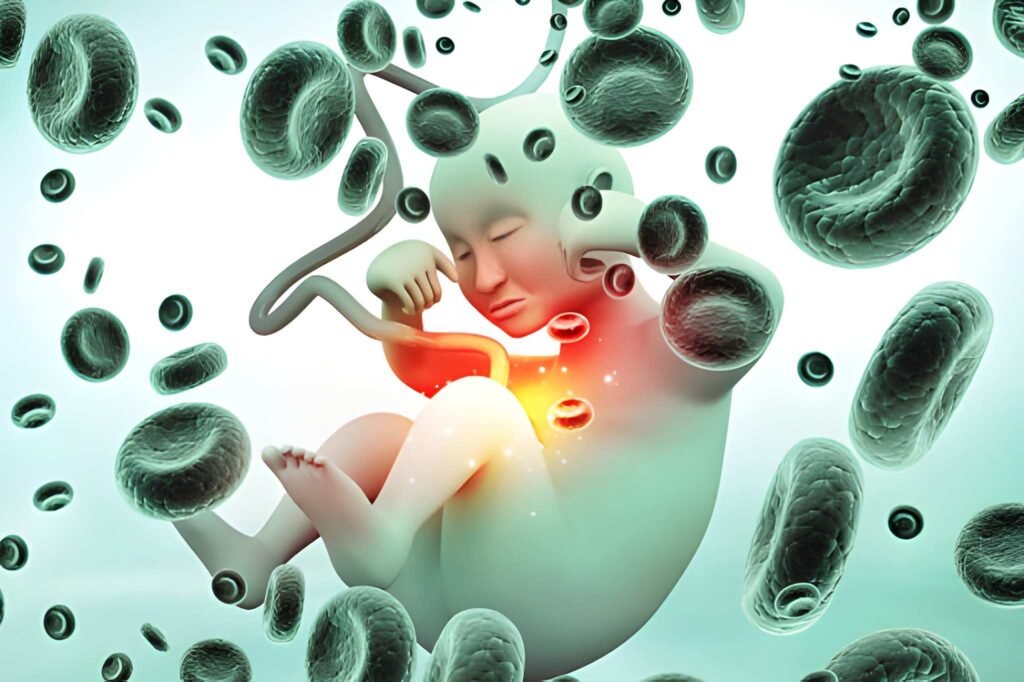
Parvovirus B19 selectively infects and destroys rapidly dividing cells, most notably the erythroid progenitor cells (red blood cell precursors) in the bone marrow. In a healthy adult, this causes temporary anemia. In a developing fetus, this process can lead to severe complications.
Maternal Immunity and Infection Risk
The first step in clinical management following exposure is determining the mother's immune status. Most adults have already been exposed to Parvovirus B19 and possess protective immunity.
Serology Testing: IgG and IgM
A blood test checks for two types of antibodies (immunoglobulins) to determine past exposure and current infection status:
| IgG Status | IgM Status | Interpretation | Fetal Risk |
|---|---|---|---|
| Positive (+) | Negative (-) | Immune (Past Infection) | No risk; mother and fetus are protected. |
| Negative (-) | Negative (-) | Susceptible (Non-Immune) | At risk of acute infection; requires repeat testing. |
| Negative (-) | Positive (+) | Acute/Recent Infection | Confirmed maternal infection; requires fetal monitoring. |
Note: Approximately 65% of pregnant women in the U.S. are already IgG positive and immune.
Fetal Risks and the Critical Window
If the mother contracts a primary Parvovirus B19 infection during pregnancy, the virus can cross the placenta (vertical transmission), posing risks to the fetus. The risk of serious adverse outcomes is highest during the first half of pregnancy.
The Critical Window: Weeks 9–20
The most significant risk period is roughly weeks 9 through 20 of gestation. This aligns with the time when the fetus relies heavily on the erythroid progenitor cells for blood production.
Primary Fetal Complications
- Severe Fetal Anemia: The virus attacks the red blood cell precursors, leading to a profound drop in the fetal red blood cell count.
- Hydrops Fetalis: Severe anemia can cause the fetal heart to work overtime, leading to heart failure and severe fluid accumulation in two or more body cavities (e.g., abdomen, skin, chest). Hydrops is a life-threatening complication with a mortality rate that can reach 50% if untreated.
- Fetal Loss: The overall risk of fetal loss (miscarriage or stillbirth) following acute maternal infection is estimated at 5% to 10%, with the highest mortality observed following the development of hydrops.
Maternal Diagnosis and Follow-up Testing
When a pregnant woman is exposed to a confirmed case of Fifth Disease or develops symptoms, the diagnosis proceeds in two phases to confirm infection status and transmission risk.
Phase 1: Initial Serology and IgG Avidity
Initial blood tests check for IgG and IgM. If both are negative, the patient is susceptible and must be retested in four weeks. If IgM is positive, recent infection is confirmed. In equivocal cases, the IgG Avidity test can help determine if the infection is truly recent (low avidity) or older (high avidity).
Phase 2: Monitoring for Seroconversion
If the mother is susceptible (IgG negative) and exposed, the serology test is repeated four weeks later. This checks for seroconversion (the development of IgG antibodies), which confirms that the mother contracted the infection, even if she was asymptomatic.
Intensive Fetal Monitoring Protocols
If acute maternal infection is confirmed, the focus immediately shifts to intensive fetal surveillance to detect the onset of anemia, which usually occurs 3 to 12 weeks after maternal infection.
Middle Cerebral Artery Doppler (PSV-MCA)
Monitoring for fetal anemia is primarily non-invasive, performed using Doppler ultrasound to measure the Peak Systolic Velocity of the Middle Cerebral Artery (PSV-MCA).
- Mechanism: Anemia forces the fetus to increase blood flow to the brain, which increases the velocity detected by the Doppler.
- Protocol: Serial ultrasounds and PSV-MCA measurements are typically performed weekly or bi-weekly for 8 to 12 weeks following confirmed maternal infection.
- Intervention Threshold: A PSV-MCA measurement exceeding 1.5 times the median (MoM) for that gestational age strongly suggests moderate to severe fetal anemia and triggers referral to a maternal-fetal medicine specialist.
Treatment of Hydrops Fetalis
If severe anemia or hydrops is confirmed, the fetus can be treated in utero with an intrauterine blood transfusion (IUT). This is a complex procedure performed via cordocentesis (fetal blood sampling from the umbilical cord vein) and is highly effective at reversing anemia and hydrops, significantly improving the baby's survival and long-term neurological prognosis.
Treatment, Prevention, and Access to Specialized Care
There is currently no vaccine or specific antiviral drug available for Parvovirus B19. Management focuses on prevention and early intervention if infection occurs.
Prevention Strategies
- Hygiene: Practicing rigorous hand hygiene, especially after contact with children, is the best preventative measure.
- Exposure Management: Pregnant individuals who are non-immune and work in high-risk environments (like schools or daycares) should discuss the degree of exposure and risk mitigation strategies with their occupational health provider and obstetrician.
Socioeconomic Access to MFM Specialists
In the U.S., managing a confirmed Parvovirus infection requires consultation with a Maternal-Fetal Medicine (MFM) specialist for high-level monitoring (serial PSV-MCA Dopplers and potential IUT).
- Referral Complexity: Accessing these MFM specialists, especially for uninsured or underinsured patients, can be logistically challenging and financially costly.
- Cost of Monitoring: The frequent specialized ultrasounds required for the 8 to 12-week monitoring window represent a significant financial burden that is essential to prevent fetal demise. Patients should communicate with hospital financial counselors to understand coverage for this mandatory, high-risk surveillance.
Early communication with a healthcare provider following any known exposure is the most protective step a mother can take, ensuring the specialized monitoring required for optimal fetal outcomes begins immediately.