Physical education (PE) in elementary schools plays a vital role in fostering the physical, cognitive, social, and emotional development of children. A well-rounded PE curriculum goes beyond simple exercise; it teaches fundamental motor skills, promotes lifelong healthy habits, encourages teamwork, and enhances mental well-being. In elementary education, four main areas form the foundation of effective physical education programs: motor skills development, fitness and health, games and sports, and personal and social responsibility. This article explores these four areas, their significance, classroom applications, and strategies for integration.
1. Motor Skills Development
Motor skills development is the foundation of all physical activity in children. It involves both gross and fine motor skills:
- Gross Motor Skills: Large muscle movements such as running, jumping, throwing, catching, balancing, and climbing.
- Fine Motor Skills: Small muscle movements such as writing, drawing, and manipulating small objects, often integrated into coordination-based PE activities.
Classroom Applications:
- Obstacle courses to practice balance, coordination, and agility
- Jump rope or hopscotch games for rhythm and timing
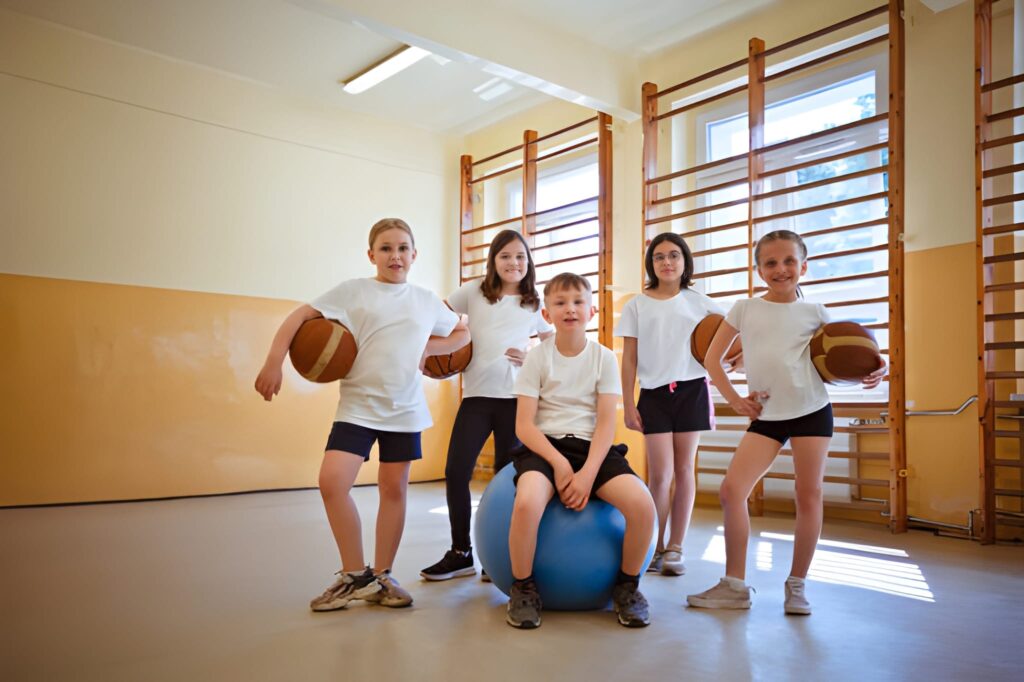
- Ball games to develop throwing, catching, and hand-eye coordination
Benefits:
- Improves overall physical coordination
- Supports academic performance through enhanced concentration and brain-body connection
- Builds confidence and self-efficacy in physical abilities
2. Fitness and Health
This area emphasizes the development of lifelong habits for cardiovascular health, muscular strength, endurance, flexibility, and overall wellness.
Classroom Applications:
- Aerobic activities such as running, dancing, and circuit training
- Strength and flexibility exercises using body weight or light equipment
- Nutrition and wellness education integrated with physical activity lessons
- Fun fitness challenges to engage students and track progress
Table 1: Sample Fitness Activities for Elementary Students
| Fitness Component | Activity | Skills Developed |
|---|---|---|
| Cardiovascular Endurance | Relay races, dancing | Heart and lung health, stamina |
| Muscular Strength | Bodyweight exercises (push-ups, squats) | Core and limb strength |
| Flexibility | Stretching routines, yoga | Range of motion, injury prevention |
| Coordination | Jump rope, balance exercises | Motor control, timing, agility |
3. Games and Sports
Introducing structured games and sports develops teamwork, strategy, and rule-following skills while reinforcing motor and fitness abilities.
Classroom Applications:
- Team sports such as soccer, basketball, or volleyball for collaboration and competition
- Individual sports such as gymnastics, track and field, or swimming for personal achievement and goal-setting
- Modified games to accommodate all skill levels, ensuring inclusivity and engagement
Benefits:
- Enhances social skills and cooperation
- Encourages healthy competition and sportsmanship
- Develops tactical and strategic thinking skills
4. Personal and Social Responsibility
Physical education also teaches students essential life skills such as self-discipline, respect, leadership, and empathy.
Classroom Applications:
- Rotating team leadership roles in group activities
- Peer mentoring in skill development exercises
- Reflection sessions on teamwork, fair play, and personal effort
- Goal-setting activities for personal fitness and skill improvement
Table 2: Personal and Social Responsibility Activities
| Activity | Objective | Skills Developed |
|---|---|---|
| Team Leadership Rotation | Encourage responsibility | Leadership, accountability |
| Peer Coaching | Students teach or support each other | Communication, collaboration, empathy |
| Goal-Setting Charts | Track fitness or skill progress | Self-motivation, perseverance |
| Reflection Circles | Discuss teamwork and effort | Social awareness, critical thinking |
Comparison Table: Emphasis of Each Area in Elementary PE
| Area | Focus | Sample Activity | Skills Developed |
|---|---|---|---|
| Motor Skills Development | Gross & fine motor coordination | Obstacle course | Balance, coordination, agility |
| Fitness and Health | Physical conditioning & wellness | Jump rope, circuit training | Strength, endurance, flexibility |
| Games and Sports | Teamwork, strategy, competition | Soccer, modified basketball | Cooperation, strategy, rule-following |
| Personal & Social Responsibility | Character development & social skills | Peer mentoring, reflection | Leadership, empathy, self-discipline |
Conclusion
A comprehensive physical education program in elementary school integrates motor skills development, fitness and health, games and sports, and personal and social responsibility. Each area contributes uniquely to a child’s holistic development, enhancing not only physical capabilities but also cognitive, social, and emotional skills. By focusing on these four areas, educators can create an engaging, inclusive, and effective PE curriculum that promotes lifelong physical activity, teamwork, and personal growth among young learners.