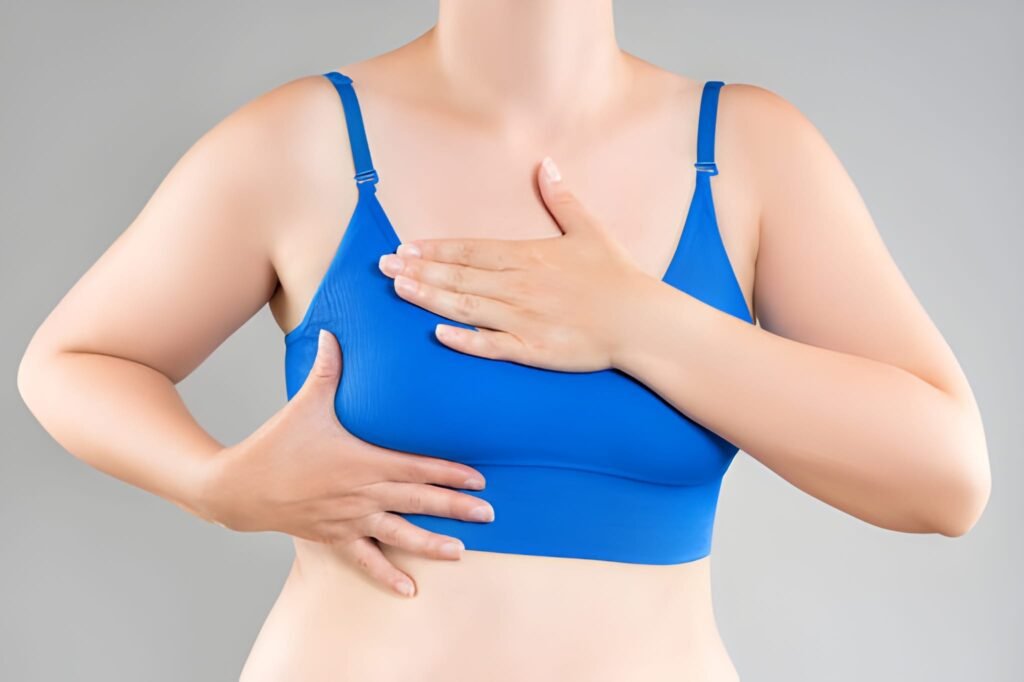
Maternal Aesthetics: The Truth About Breastfeeding and Breast Sagging
Separating biological reality from cultural myth in the postpartum journey
One of the most pervasive anxieties among expectant mothers involves the long-term physical legacy of breastfeeding. The cultural narrative suggests a direct, causal link between nursing an infant and the development of breast ptosis—more commonly known as sagging. This fear often weighs heavily on a mother's decision to initiate or continue breastfeeding, creating a conflict between her nutritional goals for her child and her personal body image.
As a child and mother specialist, I find it essential to approach this topic with clinical clarity and empirical evidence. The reality of breast changes is far more complex than the simple "breastfeeding causes sagging" trope. While the breasts certainly undergo dramatic transformations during the childbearing year, the act of lactation itself is rarely the primary culprit. Understanding the role of genetics, pregnancy hormones, and lifestyle factors allows mothers to make feeding choices based on facts rather than aesthetic myths.
Article Guide
1. The Anatomy of Change: Ligaments and Lactation 2. Pregnancy vs. Breastfeeding: What the Research Says 3. The Real Culprits: Factors That Influence Ptosis 4. Post-Lactation Involution: The "Deflated" Phase 5. Support and Prevention: Can You Slow the Process? 6. Psychological Perspective: Embracing the Mother-Body 7. Frequently Asked Specialist QuestionsThe Anatomy of Change: Ligaments and Lactation
To understand breast sagging, we must first look at the internal architecture of the breast. Unlike muscles, which can be strengthened and tightened, the breasts are comprised primarily of adipose (fat) tissue, mammary glands, and connective tissue. The primary structures responsible for maintaining the "lift" of the breast are Cooper’s Ligaments.
These ligaments are thin, fibrous bands that weave through the breast tissue and attach to the skin. During pregnancy, the body experiences a massive surge in hormones—primarily estrogen, progesterone, and prolactin—which signal the milk ducts to expand and the mammary glands to prepare for production. This expansion increases the weight and volume of the breast significantly, often by several cup sizes.
| Anatomical Component | Role in Breast Shape | Impact of Pregnancy |
|---|---|---|
| Cooper’s Ligaments | Internal supportive scaffolding | Stretched by increased volume and weight |
| Adipose Tissue | Provides soft volume and shape | Displaced by growing glandular tissue |
| Glandular Tissue | Produces and stores milk | Increases dramatically in density and mass |
| Skin Elasticity | External containment and lift | Stretched; potential for striae (stretch marks) |
The critical takeaway is that the stretching of Cooper’s Ligaments and the overlying skin happens during pregnancy, not necessarily during breastfeeding. By the time the baby is born and begins to nurse, the majority of the structural stretching has already occurred.
Pregnancy vs. Breastfeeding: What the Research Says
The most influential study on this topic was conducted by Dr. Brian Rinker and a team of plastic surgeons in 2008. They analyzed hundreds of patients who had undergone breast evaluations and compared those who had breastfed to those who had not. The findings were definitive and have been replicated in subsequent clinical observations.
Essentially, the "damage" to the internal support structures is a result of the rapid expansion and weight gain of the breasts during the nine months of gestation. Whether a mother chooses to utilize the milk produced by those glands or suppresses the supply immediately after birth does not undo the stretching that has already taken place.
The Real Culprits: Factors That Influence Ptosis
If breastfeeding isn't the primary cause of sagging, what is? Several lifestyle and biological factors play a much larger role in determining how a woman's breasts will settle after the childbearing years.
Each pregnancy subjects the ligaments to a cycle of expansion and contraction. The cumulative effect of multiple pregnancies is the strongest predictor of ptosis.
Smoking breaks down a protein in the skin called elastin. Elastin is what allows the skin to "snap back" after being stretched. Smokers experience significantly more sagging.
As we age, our skin naturally loses collagen and elasticity. Additionally, the strength of your connective tissue is largely determined by your genetic blueprint.
Women with a higher Body Mass Index (BMI) often have heavier breasts. Gravity exerts more force on heavier tissue, leading to more pronounced stretching over time.
Post-Lactation Involution: The "Deflated" Phase
Many mothers report that their breasts look most "saggy" immediately after they stop breastfeeding. This observation is often what fuels the myth. However, what these mothers are witnessing is a physiological process called involution.
When a mother weans her child, the milk-producing cells (alveoli) are no longer needed. The body naturally begins to break these cells down and shrink the glandular tissue. During this transition, the fat deposits that previously filled the breast haven't yet returned to take the place of the shrinking glands.
Interestingly, some women find that their breasts return to their pre-pregnancy size, while others find they remain slightly larger or become smaller. This is entirely dependent on how much fat tissue is redeposited into the area once the hormones stabilize.
Support and Prevention: Can You Slow the Process?
While you cannot fight gravity or genetics entirely, there are steps you can take during pregnancy and the postpartum period to support your breast tissue health.
Proper Bra Support: Wearing a well-fitted, supportive bra 24/7 during pregnancy and early lactation can reduce the strain on Cooper’s Ligaments. As the breasts gain weight, the bra takes on the load that the ligaments would otherwise have to carry alone.
Weight Management: Aiming for the recommended weight gain during pregnancy, rather than excessive gain, helps limit the over-stretching of the skin. Sudden, rapid fluctuations in weight are much harder on skin elasticity than gradual changes.
Hydration and Nutrition: Skin elasticity is supported by vitamin C, zinc, and adequate hydration. While topical creams might make the skin feel soft, true elasticity comes from the internal building blocks of collagen.
Exercise and the Pectorals
While exercise cannot change the breast tissue itself, strengthening the pectoral muscles (the muscles underneath the breast) can provide a firmer "base." Exercises like chest presses, push-ups, and planks can create a more lifted appearance by building the underlying foundation.
Psychological Perspective: Embracing the Mother-Body
As a specialist, I often see mothers mourning their "maiden" bodies. The transition into motherhood is a rite of passage that leaves physical markers. In many cultures, the changes in a woman's breasts were once seen as a badge of honor—a symbol of the life-giving capacity of the female body.
In the year , we live in an era of high-definition perfection, but the reality of the human body is one of ebb and flow. The softening of the breast tissue is often a result of the profound service the body has performed. If you find yourself struggling with body image, remember that your breasts have functioned exactly as nature intended.
If the physical changes cause significant distress, modern medicine offers options like mastopexy (breast lift) once childbearing is complete. However, many women find that with time, their breasts settle into a "new normal" that they learn to appreciate as a part of their maternal identity.
Frequently Asked Specialist Questions
No. The vacuum pressure of a pump is generally no different from the suction of an infant. Neither activity has been shown to cause structural damage to the ligaments or skin. The stretching of the skin is related to the volume of the milk inside, not the method used to remove it.
During pregnancy and lactation, yes. Because the breasts are significantly heavier than usual, gravity pulls on the ligaments even while you sleep. A soft, supportive sleep bra can provide constant support and reduce the cumulative stretching effect.
They will settle into a stable shape about a year after you finish nursing. While they may not be identical to your pre-pregnancy breasts (due to the permanent changes in the ligaments and skin), the "deflated" look is usually temporary as fat stores return to the tissue.
This is a common old wives' tale. While cold water might cause a temporary tightening of the skin due to restricted blood flow and muscle contraction (the "goosebump" effect), it has no long-term impact on the structural elasticity of the skin or ligaments.
Ultimately, the choice to breastfeed is a personal one that should be based on the health of the mother and the infant. Aesthetic concerns, while valid, should be viewed through the lens of actual science. If you choose not to breastfeed, do so for reasons that align with your lifestyle—but don't do it out of fear of sagging. Your body has already undergone the transformation of pregnancy; breastfeeding is simply the natural conclusion of that biological cycle.
Cherish the journey, support your body with good nutrition and movement, and give yourself the grace to evolve. You are more than your physical dimensions; you are a mother, and your body's story is one of strength and resilience.