The Scientific Limits of Early Home Testing
Testing 7 Days Early: Why Accuracy is Near Zero at 7 DPO and When to Expect Results
Table of Contents
7 Days Early: Understanding the 7 DPO Timeline
For most individuals with a typical 28-day menstrual cycle, testing 7 days before the expected period places the testing date at approximately **7 days past ovulation (7 DPO)**. This point is considered extremely early in the overall 14-day luteal phase, the period between ovulation and menstruation.
The Definition of Early Testing
Even ultra-sensitive tests marketed as "early detection" are generally referring to 4-6 days before the missed period, which corresponds to 10-12 DPO. At 7 DPO, the body is engaged entirely in the final preparation phase, and the necessary hormonal signal of pregnancy has not yet begun.
The Biological Barrier: No Implantation, No HCG
The single most important reason a test cannot be positive at 7 DPO is the biological requirement for **implantation** to occur before the pregnancy hormone is produced.
The Implantation Window
The earliest documented implantation occurs at **6 DPO**, but this is rare. The window for implantation runs from 6 DPO to 12 DPO, with the average implantation day being 9 DPO. At 7 DPO, the developing fertilized egg (now a blastocyst) is likely just arriving in the uterus or beginning the process of adhesion. It has not yet breached the uterine lining to connect with the maternal bloodstream.
Fundamental Truth: The Human Chorionic Gonadotropin (HCG) hormone—the target of all pregnancy tests—is produced by the cells that form the placenta. HCG production begins only **after** successful implantation. At 7 DPO, HCG levels are almost universally zero, rendering any home test futile.
The HCG Detection Gap: Implantation to Test Stick
Even if implantation miraculously occurred right at the start of 7 DPO, there is a delay before HCG can register on a test strip. HCG takes time to build up in the body and even longer to become concentrated enough in the urine.
The Doubling Time
After implantation, HCG levels double every **48 to 72 hours**. If a woman implants on 7 DPO, the earliest detection in the blood would be 9 DPO, and a reliable urine test positive would likely be closer to 10 or 11 DPO. Therefore, testing at 7 DPO is a waste of resources and emotional energy.
Interactive: HCG Detection Probability Chart
This chart shows the probability of detecting a pregnancy at various DPO marks, based on studies of viable pregnancies. This visual emphasizes why waiting yields certainty.
Detection Probability by Days Past Ovulation (DPO)
Symptom Reality: Progesterone vs. Pregnancy Signs
Many individuals are tempted to test early at 7 DPO because they feel physical changes—fatigue, breast soreness, or mild cramping. These are entirely normal **Progesterone Effects** of the luteal phase, common to every cycle after ovulation.
| Symptom Felt | Hormonal Cause at 7 DPO | Is it a Pregnancy Sign? |
|---|---|---|
| Breast Tenderness | Rising Progesterone | No, progesterone rises every cycle. |
| Fatigue/Tiredness | Progesterone's sedative effect | No, fatigue starts immediately post-ovulation. |
| Mild Cramping | Corpus Luteum activity / Uterine changes | No, implantation cramping is typically 9 DPO or later. |
Do not rely on subjective symptoms for a diagnostic result. The most valuable action now is to ignore the subjective feelings and wait for the objective hormonal signal.
The Certainty and Cost of a False Negative
Testing at 7 DPO provides a false sense of failure. Receiving a negative result when a pregnancy is still biologically possible increases the emotional distress of the two-week wait and is a waste of financial resources. For US audiences, where highly sensitive tests are costly, this represents unnecessary socioeconomic burden.
Prioritize Mental and Financial Wellness
Conserve your emotional and financial energy. Save the test for the time when the result will truly be meaningful and definitive (14 DPO). The negative result you see at 7 DPO is temporary, inconclusive, and misleading.
The Optimal Testing Protocol for Accuracy
If the urge to test early is overwhelming, commit to the earliest medically realistic test date, but always prepare for a definitive retest.
The Recommended Testing Schedule
- Absolute Minimum Test Day: 10 DPO. Use the most sensitive test brand available. If negative, remain hopeful.
- High Probability Test Day: 12 DPO. If negative, the chance of pregnancy is low, but still possible due to late implantation.
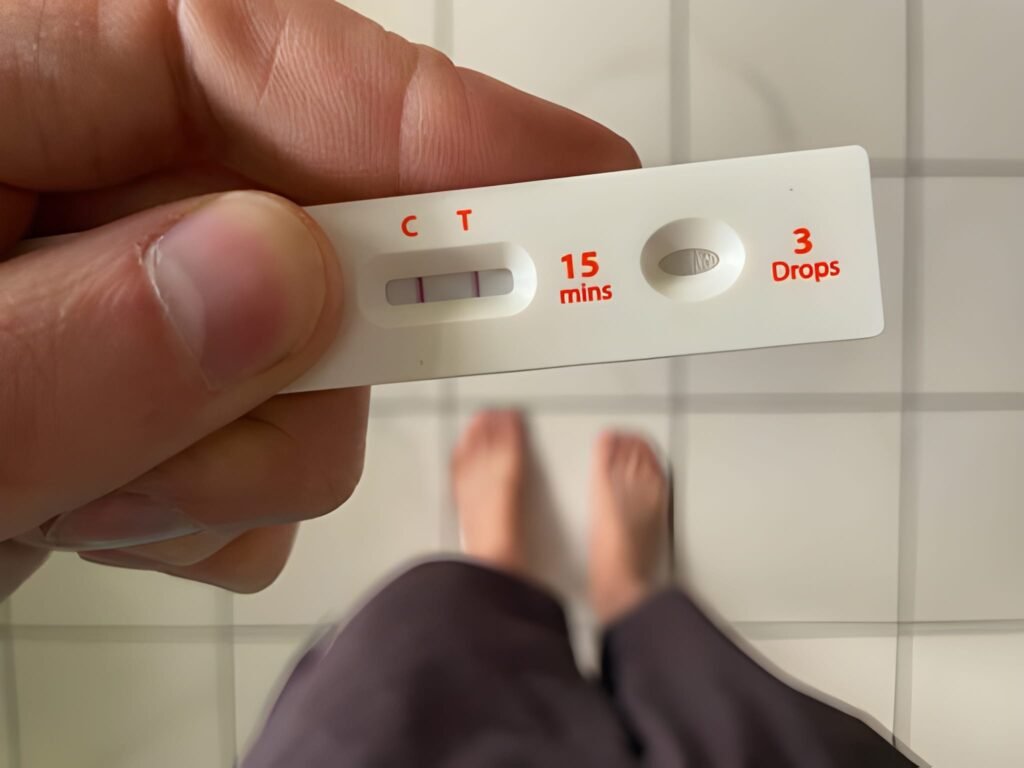
- The Definitive Day: 14 DPO. Test on the day of the expected period. A negative result here is generally conclusive (over 99% accurate).
Always use **First Morning Urine (FMU)** for maximum hormone concentration and eliminate the variable of dilution.
Managing Anxiety and Resource Allocation
Acknowledge the difficulty of the wait and focus on actions that support a healthy outcome, rather than those that seek premature certainty.
Constructive Waiting Strategies
- Maintain strict intake of **Folic Acid** (the most critical nutrient for early development).
- Practice **Active Distraction**—engage fully in hobbies, social events, or light exercise.
- Commit to resting and avoiding overexertion, ensuring the body conserves energy for the eventual task of sustaining the pregnancy.
Trust the biological timeline. The HCG signal will not be rushed by anticipation. Give yourself the grace to wait, knowing that the most definitive answer will arrive soon, precisely when the body is ready to provide it.