Contraception and Cycle Management
The 21-Day Oral Contraceptive Regimen: Usage, Mechanism, and Efficacy
Table of Contents
Defining the 21-Day Pill Regimen
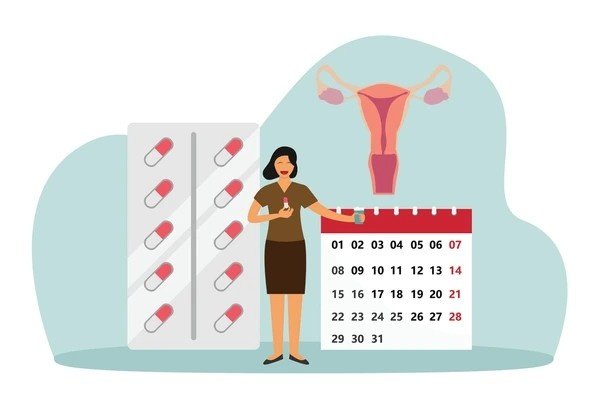
The 21-day oral contraceptive regimen refers to packs containing 21 active hormone pills (a combination of estrogen and progestin) followed by seven pill-free days. Historically, this was the foundational dosing schedule for combination oral contraceptives (COCs). During the seven-day hormone-free interval, the sudden withdrawal of hormones triggers a menstrual-like bleed, known as a withdrawal bleed.
This schedule ensures effective pregnancy prevention while replicating a natural-feeling menstrual cycle, which many women find psychologically reassuring. The regimen is straightforward and requires consistent, daily adherence to maintain its high level of efficacy.
Mechanism of Action: Preventing Conception
Combination oral contraceptives prevent pregnancy through three distinct, overlapping mechanisms. The inclusion of two synthetic hormones ensures maximum effectiveness, even if one protective mechanism is briefly compromised.
Primary Mechanism: Ovulation Suppression
The hormones in the 21-day pill regimen—primarily the estrogen component—work to suppress the body's natural release of Follicle-Stimulating Hormone (FSH) and Luteinizing Hormone (LH). This suppression prevents the ovaries from maturing and releasing an egg, which is the most definitive way to prevent pregnancy. Without ovulation, fertilization cannot occur.
Secondary Mechanism: Cervical Mucus Thickening
The progestin component alters the consistency of the cervical mucus, thickening it substantially. This thickened mucus creates a physical barrier at the cervix, making it nearly impenetrable for sperm, which prevents them from traveling up the reproductive tract to reach the fallopian tubes where fertilization would take place.
Tertiary Mechanism: Endometrial Alteration
The pills cause the uterine lining (endometrium) to become thin and inactive. If ovulation were somehow to occur and fertilization were successful, the altered endometrial environment would be unreceptive to implantation, reducing the likelihood of establishing a viable pregnancy.
Proper Usage and Adherence: The 21/7 Cycle
The typical 21-day pack is often sold as a 28-day pack, which includes seven reminder pills (placebos) for the hormone-free week. This practice helps users maintain the habit of taking a pill daily.
The Importance of Strict Adherence
The efficacy of the pill is highly dependent on user adherence. Perfect use—taking the pill at the same time every day without fail—results in a failure rate of less than 1 percent. Typical use, however, which accounts for missed or late pills, sees the failure rate rise to approximately 7 to 9 percent.
The active hormone pills must be taken for 21 consecutive days. Missing a pill, particularly at the beginning or end of the active pill cycle, jeopardizes the suppression of FSH and LH, increasing the risk of breakthrough ovulation and subsequent conception.
Action if a Pill is Missed
If a user misses only one active pill, the standard recommendation is to take the missed pill as soon as they remember and the next pill at the usual time (meaning two pills may be taken in one day). If two or more pills are missed, the user needs to use a backup contraceptive method (like condoms) for the next seven days and contact their healthcare provider for further guidance.
Beyond Contraception: Non-Aesthetic Benefits
While contraception is the primary use, the 21-day pill is frequently prescribed for several non-contraceptive health benefits related to cycle management and hormone regulation.
Improved Cycle Health
The pills provide precise control over the hormone levels, leading to:
- Cycle Regularity: Cycles become highly predictable, helping women manage scheduling and reduce anxiety.
- Reduced Bleeding: The duration and volume of menstrual bleeding typically decrease significantly, easing the burden of heavy periods (menorrhagia) and related anemia.
- Reduced Dysmenorrhea: Cramping and pain associated with menstruation often become milder or disappear entirely.
Other Clinical Benefits
Contraceptives have shown benefit in mitigating certain long-term health risks:
- Acne Reduction: Hormonal balance often clears up hormonally-driven acne.
- Ovarian Cysts: Pills reduce the formation of functional ovarian cysts.
- Cancer Risk Reduction: Long-term use lowers the lifetime risk of ovarian and endometrial cancers.
Potential Risks and Contraindications
While generally safe for the majority of users, COCs do carry certain risks, which mandate a thorough clinical history before prescription.
Serious, Though Rare, Vascular Risks
The most serious known risk is an increased chance of Venous Thromboembolism (VTE), including deep vein thrombosis (DVT) and pulmonary embolism (PE). This risk is primarily linked to the estrogen component and is generally very low in healthy, non-smoking individuals, but it increases significantly in the presence of certain risk factors:
- Age and Smoking: Women over the age of 35 who smoke should never use COCs due to a severely elevated VTE and cardiovascular risk.
- History: Personal or family history of blood clots, heart disease, or uncontrolled high blood pressure (hypertension).
- Migraines: Women who experience migraines with aura are advised against COCs due to the increased risk of stroke.
Interactive: Comparing Contraceptive Regimens
The 21-day cycle is one of several common schedules. Click the tabs to compare its structure and rationale against other regimens.
Standard 21-Day Regimen (21/7)
Pill Structure: 21 active pills, followed by 7 reminder/placebo pills or 7 hormone-free days.
Rationale: Closely mimics the natural 28-day menstrual cycle, providing monthly withdrawal bleeding which often provides reassurance to the user that pregnancy has not occurred.
Symptom Impact: Reliable cycle regulation; predictable, usually lighter bleeding.
Extended 24-Day Regimen (24/4)
Pill Structure: 24 active pills, followed by 4 reminder/placebo pills or 4 hormone-free days.
Rationale: The reduced hormone-free interval (4 days instead of 7) minimizes the risk of follicular development and breakthrough ovulation, increasing protection. It also reduces the duration and intensity of withdrawal symptoms (headaches, cramps) that occur during the break.
Symptom Impact: Higher protection; fewer withdrawal symptoms during the break week.
Continuous/Extended Cycle Use (e.g., 84/7 or continuous)
Pill Structure: 84 active pills followed by 7 hormone-free days, or no break week at all.
Rationale: Designed to minimize or eliminate withdrawal bleeding. Used for managing severe symptoms like endometriosis, migraines, or severe bleeding. It reduces the number of periods to four per year, or none.
Symptom Impact: Maximizes relief from cyclical symptoms; potential for unpredictable breakthrough bleeding (spotting) when first initiating use.
Socioeconomic Factors: Cost and Access
For American audiences, the accessibility and cost of the 21-day pill regimen are heavily influenced by federal policies. The Affordable Care Act (ACA) mandates that most private health insurance plans must cover all FDA-approved prescription contraceptives, including the pill, without co-pay or deductible. This has dramatically improved access for millions of women, making it a highly reliable and economically feasible birth control option.
However, challenges remain regarding adherence. Maintaining the financial and logistical ability to access refills, particularly for low-income or rural women, can compromise the pill's real-world efficacy. Programs like Title X family planning clinics play a critical role, providing counseling, exams, and subsidized or free oral contraceptives to ensure that financial barriers do not impede consistent adherence, thereby improving public health outcomes related to unintended pregnancy.
Conclusion: A Foundation of Contraceptive Choice
The 21-day oral contraceptive pill regimen remains a foundation of reproductive healthcare, offering exceptional efficacy when used correctly. Its primary mechanism relies on ovulation suppression and cervical barrier creation, providing reliable pregnancy prevention. Understanding the strict adherence requirements, managing the low but real vascular risks, and utilizing healthcare access resources ensure that the pill serves as a safe and effective tool for controlling reproductive timing and managing gynecological health throughout a woman's reproductive life.