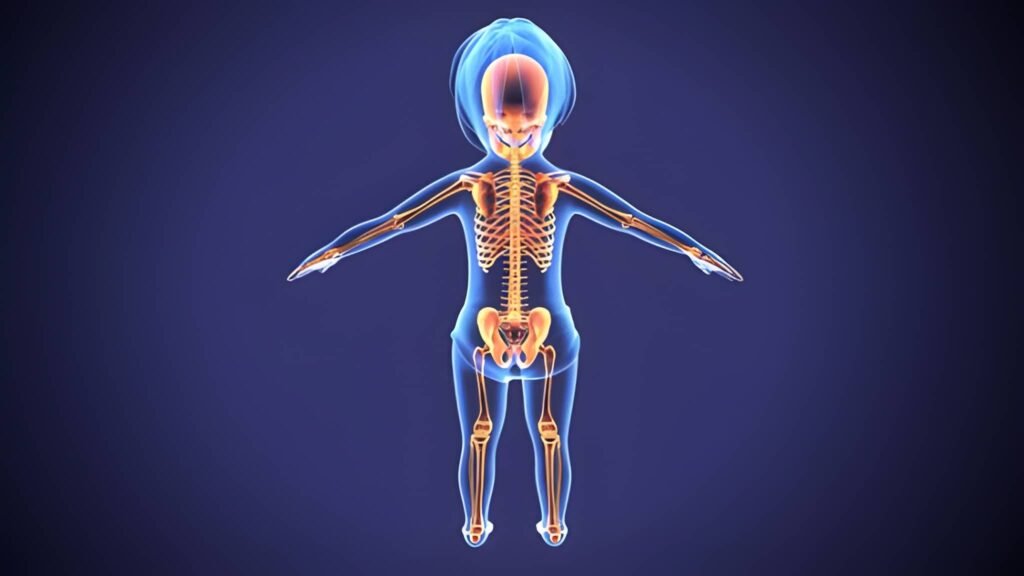
The Architecture of Infancy: Understanding the Newborn Skeleton
Exploring the unique composition of neonatal bones, the biological transition from cartilage to mineralized tissue, and the evolutionary purpose of a flexible frame.
The human skeleton is often perceived as a static, rigid cage of mineralized tissue. However, in the earliest stages of life, the skeletal system is a dynamic, evolving structure that bears little resemblance to the hardened frame of an adult. When a baby is delivered, their "bones" are largely not bones at all. Instead, the newborn skeleton is primarily composed of hyaline cartilage, a firm but flexible connective tissue that serves as the biological scaffolding for future mineralization.
Composition: Why Cartilage Dominates the Frame
Hyaline cartilage is the foundational material of the neonatal skeleton. While an adult’s bones are rich in calcium phosphate and hydroxyapatite, a newborn’s frame contains a higher proportion of water and collagen. This composition allows for extraordinary flexibility and durability, which are critical requirements for both the birthing process and the rapid growth spurt that occurs during the first year of life.
In , researchers continue to study the unique tensile strength of infant cartilage. This "soft" skeleton acts as a shock absorber. When a toddler falls while learning to walk, their cartilage-heavy bones are more likely to bend or experience "greenstick" fractures—where the bone bends and cracks but does not break completely—than the brittle bones of an older individual. This flexibility is a primary defense mechanism during the physically tumultuous early years.
The 300-Bone Mystery: Fusion and Fusing
One of the most frequent points of confusion regarding infant anatomy is the total number of bones. While a typical adult skeleton contains exactly 206 bones, a newborn enters the world with approximately 300 distinct skeletal elements. This discrepancy is not due to extra "spare" parts, but rather the fact that many adult bones begin as multiple separate cartilaginous segments.
Newborn Skeleton
- Approx. 300 bones/segments.
- High cartilage-to-mineral ratio.
- Separate sacral and pelvic units.
- Presence of growth plates (epiphyses).
Adult Skeleton
- Exactly 206 bones.
- High mineral-to-cartilage ratio.
- Fused sacrum and pelvic girdle.
- Closed growth plates (ossified).
As the child grows, these separate segments undergo a process of fusion. For example, the human sacrum—the shield-shaped bone at the base of the spine—consists of five separate vertebrae in infancy. By early adulthood, these five elements have fused into a single, solid bone. Similarly, the skull and pelvis transition from a collection of flexible plates and segments into a unified, protective shield.
The Science of Endochondral Ossification
The transition from a cartilaginous model to a mineralized bone is known as endochondral ossification. This process begins in utero and continues until the mid-twenties. It is a highly coordinated biological "replacement" program where cartilage is systematically broken down and replaced by bone-forming cells called osteoblasts.
The Cranial Puzzle: Soft Spots and Sutures
Perhaps the most famous feature of the newborn skeleton is the "soft spot," or fontanelle. Because the brain experiences its most rapid growth during the first two years, the skull cannot be a solid box at birth. Instead, it consists of several large bony plates connected by flexible fibrous tissues called sutures.
The two primary fontanelles—the anterior (top) and posterior (back)—serve two essential functions. First, they allow the skull plates to overlap slightly during delivery, effectively reducing the diameter of the head as it passes through the birth canal. Second, they provide the necessary "room to grow" for the expanding brain. If the skull fused too early (a condition called craniosynostosis), it could restrict brain development and increase intracranial pressure.
Evolutionary Advantages of a Flexible Frame
The "incomplete" nature of the newborn skeleton is a masterpiece of evolutionary engineering. Human infants are born relatively early in their developmental cycle compared to other primates—a phenomenon sometimes called "secondary altriciality." Because of our large brains and bipedal pelvis, a fully ossified infant skeleton would make successful natural childbirth nearly impossible.
The flexibility of the ribs allows the chest to compress and expand safely during the first breaths of life. The lack of a fused pelvis allows for greater mobility and less risk of fracture during the transition to the external environment. Furthermore, the cartilaginous nature of the joints provides a "safety margin" for the incredible amount of physical learning—crawling, climbing, and falling—that defines early childhood.
Fueling the Growing Frame: Calcium and Vitamin D
For the process of ossification to proceed correctly, the infant requires a steady supply of specific minerals and vitamins. While the skeleton is "mostly cartilage" at birth, the body immediately begins the work of mineralization.
Bone Mineral Accumulation Estimation
A newborn’s body contains roughly 25 to 30 grams of calcium at birth. To support ossification, an infant must accumulate calcium at a rapid rate:
Target Accumulation: ~150mg to 200mg of Calcium per day
This is why Vitamin D is universally recommended for breastfed infants; without it, the body cannot effectively absorb the calcium from milk, leading to softened bones (Rickets).
Monitoring Skeletal Health and Development
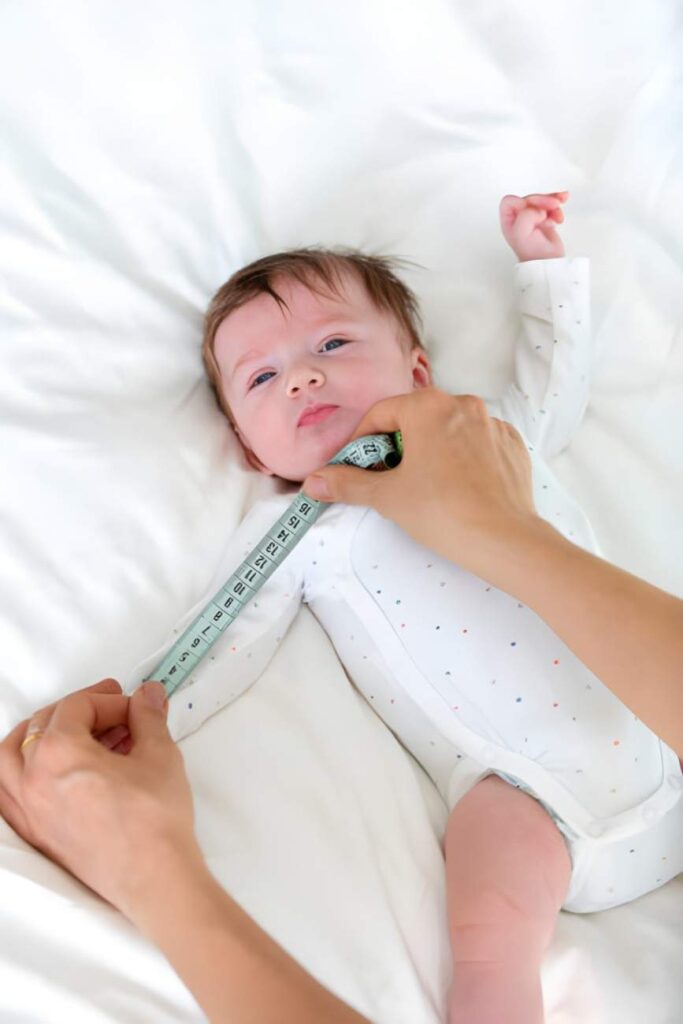
Pediatricians monitor skeletal development during every "well-child" visit. They check for symmetry in limb movement, the closure of fontanelles, and the stability of the hip joints. Because the infant skeleton is so malleable, it is also susceptible to external shaping.
| Condition | Skeletal Involvement | Management |
|---|---|---|
| Plagiocephaly | Flattening of the flexible skull plates. | Tummy time and repositioning. |
| Hip Dysplasia | Shallow hip socket (cartilage not yet bone). | Bracing or specialized swaddling. |
| Greenstick Fracture | Partial break due to bone flexibility. | Splinting or casting (rapid healing). |
| Rickets | Delayed ossification due to Vitamin D deficiency. | Supplements and nutritional adjustment. |
As the child transitions through infancy, the "soft" skeleton gradually hardens. By the time they are walking, the primary ossification centers of the long bones have significantly mineralized, providing the structural support needed for bipedal movement. Yet, even in a walking toddler, the growth plates remain wide open, signaling that the journey from cartilage to bone is still in its early stages.
Ultimately, the newborn skeleton is a testament to the body’s ability to prioritize growth and adaptability over rigid strength. By beginning with a flexible, cartilaginous model, the human frame ensures a safe entry into the world and provides the versatile foundation required for the most rapid period of human development.