The Irish Heel Prick Test: A Comprehensive Guide for New Parents
Understanding Newborn Bloodspot Screening (NBS) in the Republic of Ireland
Understanding the Heel Prick Test: Why Ireland Screens
In the Republic of Ireland, every baby born is offered a vital health check known as the Newborn Bloodspot Screening (NBS), commonly referred to by parents and public health nurses as the "Heel Prick Test." As a specialist, I view this programme as a cornerstone of preventive medicine. It identifies infants who may have rare but serious medical conditions that are not apparent at birth. Early detection through this national programme allows for immediate treatment, which significantly prevents long-term health complications or developmental delays.
The Health Service Executive (HSE) oversees this programme, ensuring that every child has an equal opportunity for a healthy start. While these conditions are rare—affecting only a small number of babies in Ireland each year—the impact of early intervention is profound. The test is voluntary, but highly recommended by medical professionals across the country.
The 9 Rare Conditions: What We Look For
As of late 2024 and moving into , the Irish National Newborn Bloodspot Screening Programme currently screens for nine specific rare conditions. These are broadly categorized into metabolic disorders, endocrine disorders, and a severe immune deficiency. Following recent updates, Ireland has expanded its panel to include conditions like ADA-SCID, reflecting a commitment to modern genomic and biochemical advancements.
A metabolic disorder where the body cannot break down an amino acid called phenylalanine. Without a specific diet, it can lead to brain damage.
Ireland has one of the highest rates of CF in the world. Screening looks for specific enzymes and genetic markers to start early lung and digestive care.
The baby's thyroid gland does not produce enough hormone. Simple daily medication prevents severe developmental delays.
A life-threatening inability to process galactose (a sugar in milk). Immediate switch to specialized formula is critical.
| Condition Name | Category | Primary Intervention |
|---|---|---|
| Phenylketonuria (PKU) | Metabolic | Low-protein diet |
| Maple Syrup Urine Disease (MSUD) | Metabolic | Strict dietary management |
| Homocystinuria (HCU) | Metabolic | Vitamin B6 and specialized diet |
| Classical Galactosaemia | Metabolic | Galactose-free diet |
| Cystic Fibrosis (CF) | Genetic/Systemic | Physiotherapy and enzymes |
| Congenital Hypothyroidism (CHT) | Endocrine | Thyroxine medication |
| MCADD | Metabolic (Fatty Acid) | Avoiding long periods of fasting |
| Glutaric Aciduria Type 1 (GA1) | Metabolic | Low-lysine diet |
| ADA-SCID | Immunological | Enzyme replacement or transplant |
Timing and Procedure: Between 72 and 120 Hours
In Ireland, the timing of the Heel Prick Test is precise. It must be performed between 72 and 120 hours after birth (specifically on day 4 or 5 of life). This window ensures that the baby has fed sufficiently for certain metabolic markers to be detectable in the blood, while still being early enough to start treatment if a condition is found.
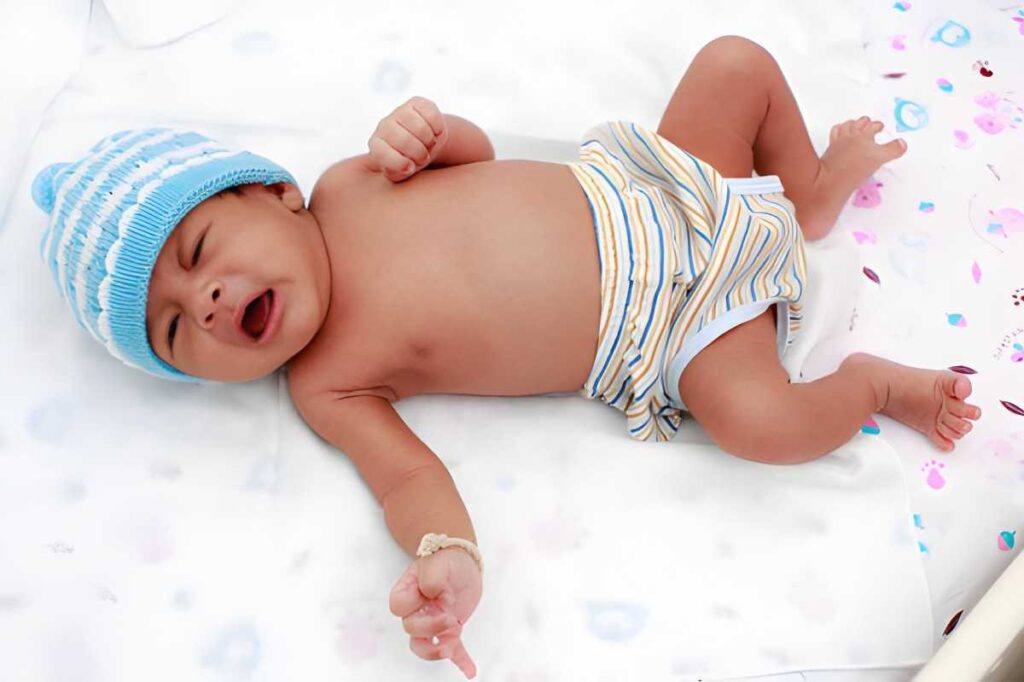
The procedure is typically carried out by a Public Health Nurse (PHN) during a home visit or by a midwife if you are still in the hospital or attending a postnatal clinic. The nurse uses a small device to prick the baby's heel and collects four large drops of blood onto a special screening card. This card is then dried and sent via a dedicated courier service to the National Newborn Screening Laboratory.
Comforting Your Baby: Tips for a Calm Experience
As a parent, seeing your baby undergo a prick can be stressful. However, there are several evidence-based ways to minimize discomfort for your infant during the process. In the Irish healthcare setting, we actively encourage "comfort measures" during the screening.
Breastfeeding or bottle-feeding during the prick provides natural pain relief through sucking and skin-to-skin contact.
Holding your baby against your bare chest helps regulate their heart rate and reduces stress hormones during the procedure.
Warming the baby's foot gently with your hand before the nurse arrives increases blood flow, making the collection faster and easier.
The Lab at Temple Street: Where the Samples Go
Every screening card collected in Ireland is sent to the National Newborn Screening Laboratory (NNSL) located at Children's Health Ireland (CHI) at Temple Street in Dublin. This centralized facility uses sophisticated mass spectrometry and genetic testing to analyze thousands of samples every month.
The centralization of testing in Dublin ensures that every baby in Ireland, whether born in Kerry or Donegal, receives the same high standard of analysis. The lab works closely with clinical teams across the country to ensure that if a result is concerning, the family is contacted immediately by a specialist hospital team.
Interpreting Results: Negative, Positive, and Repeats
Understanding what happens after the test is a common concern for Irish parents. The communication of results follows a specific protocol designed to minimize anxiety while ensuring rapid action when necessary.
Most parents will not receive a letter or phone call if the result is negative. In the Irish system, "no news is good news." However, you can always ask your Public Health Nurse at your developmental checks to confirm that the results have been returned to your baby's file. Results are usually available within 10 to 14 days of the test.
If a condition is suspected, you will be contacted quickly by a doctor or nurse from a specialist hospital (usually Temple Street or Crumlin). They will explain the finding and arrange for diagnostic testing. It is important to remember that a screening result is not a final diagnosis—it is a signal that further investigation is needed.
Occasionally, the lab may ask for a repeat sample. This does not mean your baby is ill. The most common reasons for a repeat are: the first sample was too small, the blood was collected too early (before 72 hours), or the baby had a blood transfusion. Try not to worry if a repeat is requested; the nurse will simply come back to collect a second card.
Parental Rights and Data Protection in Ireland
In Ireland, the NBS programme operates with strict adherence to the General Data Protection Regulation (GDPR). When you sign the consent form for the Heel Prick Test, you are giving permission for the blood collection and the subsequent laboratory analysis. You are also agreeing to how the information is stored.
Card Storage and Disposal:
Currently, the screening cards (which contain the leftover dried blood spots) are stored securely by the HSE for ten years. After ten years, the cards are disposed of according to national guidelines. These cards are occasionally used for quality control or, with very strict ethical approval, for anonymized research to improve the screening programme itself. You have the right to request that your baby's card be returned to you or destroyed earlier if you have specific concerns, though this is rare.
Parental Summary Checklist
- ✔️ Ensure the test is scheduled for day 4 or 5 (72–120 hours).
- ✔️ Provide a valid phone number and Eircode to the nurse or midwife.
- ✔️ Practice skin-to-skin or breastfeeding during the procedure for comfort.
- ✔️ Keep your copy of the NBS information leaflet (often found in the "Bounty" bag or given by the hospital).
- ✔️ Note that if you don't hear anything within 2 weeks, the results were likely normal.