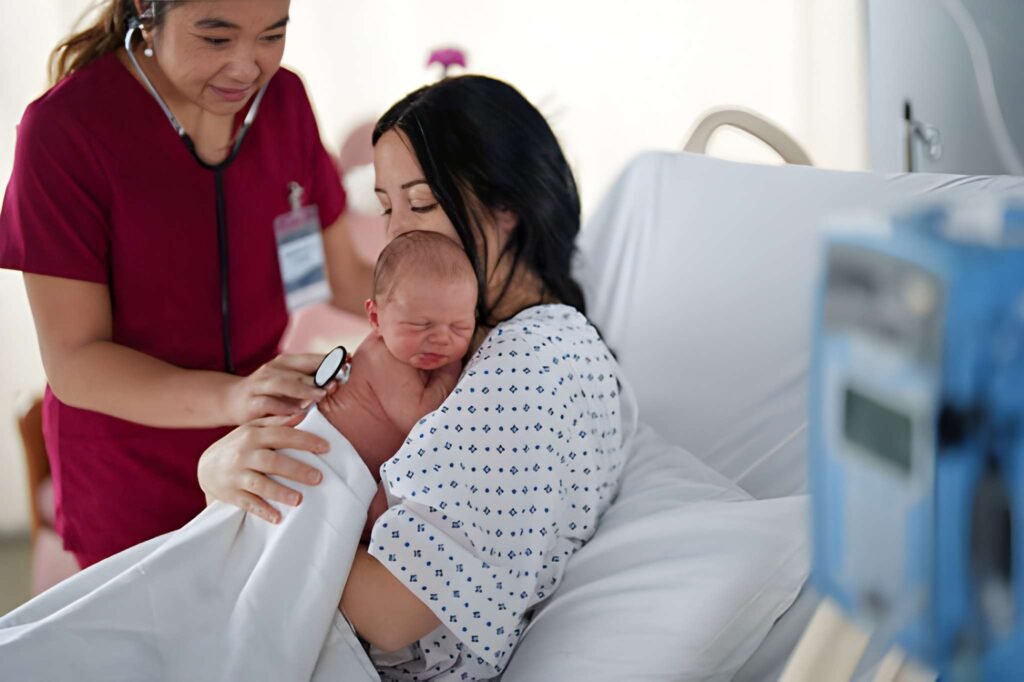
Defining the 34-Week Newborn
A female newborn delivered at 34 weeks gestation falls into the category of late preterm infants. While these babies often look like smaller versions of full-term infants, their internal systems remain in a critical stage of development. In the United States, late preterm births account for a significant portion of neonatal intensive care unit (NICU) admissions, as these infants occupy a middle ground between extreme prematurity and full maturity.
Clinicians often refer to 34-weekers as the great pretenders. This term highlights the paradox of their outward appearance versus their physiological vulnerability. A 34-week infant has completed much of the structural development of the major organs, yet the fine-tuning required for independent life outside the womb continues. For parents, understanding that their daughter is biologically younger than she looks helps manage expectations regarding hospital stay duration and feeding progress.
Physical Characteristics and Appearance
When you first observe a female infant born at 34 weeks, several distinct physical traits stand out. Unlike a term baby who typically has a rounded, "plump" appearance, the 34-weeker has significantly less body fat. This lack of adipose tissue makes the skin appear thinner and more translucent, sometimes allowing the underlying blood vessels to be visible.
34-Week Newborn
- Weight: Typically 4.5 to 5.5 pounds.
- Skin: Thin, possibly covered in lanugo (fine hair).
- Reflexes: Developing but easily fatigued.
- Muscle Tone: Slightly more relaxed (frog-leg position).
Full-Term Newborn (40 Weeks)
- Weight: Typically 7 to 8 pounds.
- Skin: Thicker, opaque, little to no lanugo.
- Reflexes: Robust and persistent.
- Muscle Tone: Flexed and strong.
The female 34-weeker may still have vernix caseosa—the waxy white coating that protects the skin—in the folds of her limbs. Her ears may feel soft and lack the firm cartilage found in older babies, and her genitalia may appear slightly different as the labia majora are not yet large enough to fully cover the labia minora. These are normal developmental milestones for this gestational age.
Breathing and Respiratory Support
The lungs are among the last organs to reach full maturity. Although a 34-week newborn has begun producing surfactant—the substance that keeps the tiny air sacs in the lungs from collapsing—the volume may be insufficient. Consequently, many infants born at this stage experience initial respiratory distress.
Feeding and Growth Coordination
Feeding is often the primary hurdle that determines the length of a hospital stay for a 34-weeker. To feed successfully, an infant must coordinate sucking, swallowing, and breathing. This complex neurological task usually matures between 34 and 36 weeks. Before this point, the baby may suck well for a minute then "forget" to breathe, leading to exhaustion or choking.
Initial feedings often occur via a gavage tube (a small tube passed through the nose or mouth into the stomach). This ensures the baby receives adequate nutrition while preserving her energy for growth. As she matures, clinicians introduce "oral trials" via breast or bottle. Because late preterm infants tire easily, they may only have the stamina for two or three oral feedings a day initially, with the rest provided through the tube.
Feeding Requirement Estimation
A typical 34-week infant requires approximately 100 to 120 milliliters of milk per kilogram of body weight each day to gain weight. If a baby weighs 2.2 kg (approx 4.8 lbs):
2.2 kg x 110 ml = 242 ml per day
Divided into 8 feedings, this is roughly 30 milliliters (1 ounce) per feeding. This calculation helps parents visualize why even small amounts of milk are vital for progress.
The Challenge of Temperature Control
A female newborn at 34 weeks possesses very little "brown fat"—a specialized type of fat used to generate heat through non-shivering thermogenesis. Coupled with a large surface area relative to her weight, she loses heat rapidly. If her body temperature drops (hypothermia), she consumes calories to stay warm that should have been used for growth and brain development.
Hospital care often involves an isolette (incubator) which provides a controlled, warm environment. As the baby gains weight and skin thickness, nurses gradually lower the incubator temperature to see if she can maintain her own body heat. Successfully maintaining temperature in an open crib is a mandatory milestone for discharge.
Potential Medical Complications
While the outlook is overwhelmingly positive, certain complications are more prevalent in the 34-week population. Awareness of these issues allows for early intervention and better outcomes.
| Condition | Why it Happens | Management |
|---|---|---|
| Hyperbilirubinemia | Immature liver cannot process bilirubin efficiently. | Phototherapy (blue light blankets/lamps). |
| Hypoglycemia | Low glycogen stores in the liver. | Frequent feedings or IV glucose. |
| Sepsis Risk | Immature immune system and thinner skin barrier. | Antibiotics and close monitoring. |
| Anemia | Reduced iron storage occurring late in pregnancy. | Iron supplements or specialized formula. |
Preparing for the Transition Home
The road to discharge for a 34-weeker is not based on a specific weight or date, but on the attainment of three functional goals. First, she must maintain her body temperature in an open crib. Second, she must take all her feedings by mouth (breast or bottle) without the need for a gavage tube. Third, she must demonstrate consistent weight gain, usually 15 to 30 grams per day.
Parents should also prepare for the car seat challenge. Because late preterm infants have less neck muscle tone, their heads can flop forward in a semi-upright car seat, potentially obstructing the airway. The hospital will monitor the baby in her car seat for 90 to 120 minutes to ensure her heart rate and oxygen levels remain stable before she is cleared for travel.
Growth and Developmental Outlook
When tracking a 34-weeker's development, it is essential to use her corrected age. If she was born 6 weeks early, and she is now 10 weeks old chronologically, her developmental milestones (like smiling or lifting her head) should be compared to a 4-week-old baby. Most late preterm infants "catch up" to their peers by the age of two.
The neurodevelopmental outlook for a 34-weeker is generally excellent. However, research indicates these children may have slightly higher rates of school-age challenges such as ADHD or subtle learning delays compared to term infants. Early intervention and regular pediatric follow-ups are the best tools for ensuring long-term success. Providing a rich sensory environment at home—through talking, singing, and skin-to-skin contact—supports the rapid brain growth occurring during this phase.
Caring for a 34-week female newborn requires a blend of medical vigilance and parental patience. While the initial days in the NICU or special care nursery may feel overwhelming, these infants are remarkably resilient. By the time they reach their original "due date," many 34-weekers have transitioned from fragile newborns into robust, thriving infants ready to meet the world on their own terms.