Clarifying the role of urine volume versus hormone concentration in achieving accurate home and clinical pregnancy test results.
Article Navigation
Clarifying the Metric: Volume (mL) vs. Concentration (mIU/mL)
The two most important metrics when discussing pregnancy tests are volume (milliliters, or mL) and concentration (milli-International Units per milliliter, or mIU/mL). The confusion between these two often leads to questions about specific volumes like 5 mL. The critical factor for test reliability is the **concentration** of the hormone, not the volume of the sample, provided the minimum requirement is met.
The Dominance of mIU/mL
The effectiveness of any pregnancy test relies on its **sensitivity**, measured in mIU/mL. This number defines the minimum amount of Human Chorionic Gonadotropin (hCG) hormone the test can detect. For instance, a test with a sensitivity of 10 mIU/mL is an "early result" test, capable of detecting a pregnancy sooner than a standard test rated at 25 mIU/mL. The test strip must simply be exposed to the urine long enough to draw the fluid up into the reaction zone; this requires only a minimal sample volume.
Standard Home Test Requirements and Technique
Standard at-home pregnancy tests require very little urine volume to function correctly. The 5 mL quantity is significantly more than what is needed for a successful result.
Urine Volume for Home Tests
Home tests come in two primary forms, both requiring minimal fluid:
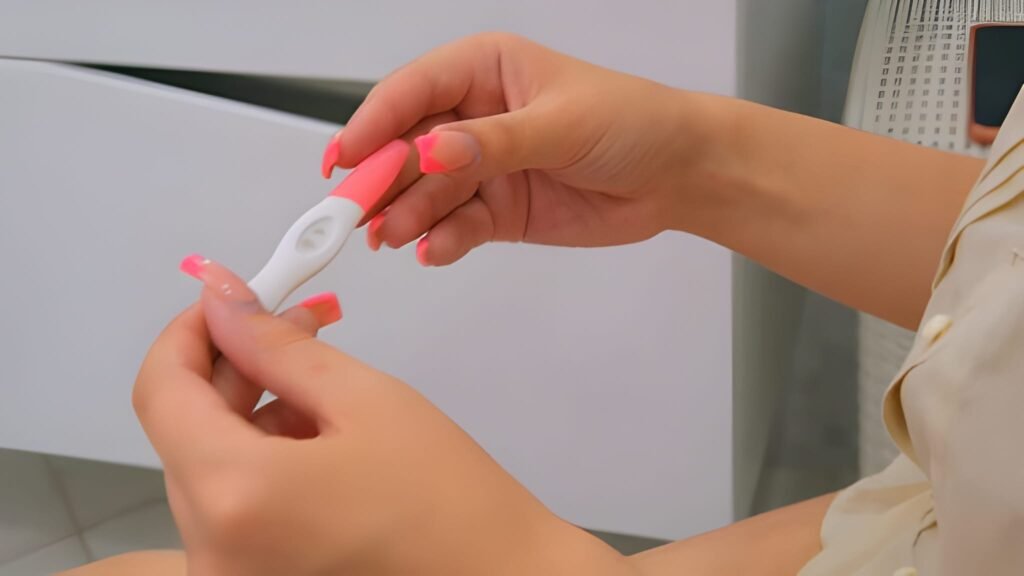
- Midstream Tests (Sticks): These tests require the stick's absorbent tip to be held in the urine stream for 5 to 10 seconds. The volume absorbed is negligible, far less than 5 mL.
- Dip Strips/Cassette Tests: These require collecting a small amount of urine (often collected in a cup) and dipping the strip in for a specified time (e.g., 10 seconds). The liquid absorbed into the strip is microscopic, but the cup must contain enough volume to submerge the maximum dip line, which is usually only a few milliliters.
Error: Oversaturation and Invalid Results
If too much urine is applied to the absorbent pad (oversaturation), the test result becomes invalid. Excess fluid can wash out the chemical reagents and the dye, often resulting in a missing control line. Therefore, collecting a specific, large volume like 5 mL and then applying it incorrectly could actually reduce the reliability of the result.
The Clinical Context: Quantitative Lab Tests
The mention of a specific, controlled volume like 5 mL is much more relevant when discussing blood or urine samples collected for a quantitative lab test.
Quantitative Serum hCG Testing (Blood Draw)
This test is the "gold standard" for pregnancy confirmation and viability monitoring. It measures the precise numerical value of hCG in the bloodstream (e.g., 150 mIU/mL) rather than providing a simple positive/negative.
- Sample Volume: While the final test only uses a fraction of the sample, blood draws are typically collected in evacuated tubes. A standard serum collection tube (such as a 'tiger top' or 'gold top') often holds between 3 and 10 mL of blood. In this context, 5 mL refers to the volume of blood collected for processing, not the volume of urine.
- Purpose: These tests are used to confirm pregnancy and track the vital doubling time of hCG over 48 to 72 hours, essential for assessing early pregnancy health.
The Core Science: hCG Detection and Doubling
Focusing on the hormone concentration, rather than volume, is the key to timing and understanding the test result.
hCG Doubling and Reliability
Once the fertilized egg implants, hCG levels begin to double approximately every 48 to 72 hours. This exponential growth dictates test timing. Waiting longer (e.g., until the day of the missed period, or 14 DPO) allows the concentration to rise high enough to overcome the sensitivity limit of the test.
The Power of First Morning Urine
The concentration of hCG is highest in the first urine passed in the morning because the urine has accumulated overnight. This concentrated sample dramatically increases the hormone density (mIU/mL), making the first morning test the most reliable, regardless of the physical volume of urine used.
The number of days past ovulation (DPO) is the primary determinant of success, assuming optimal concentration (first morning urine).
At 10 DPO, hCG levels are often 10-25 mIU/mL. Only highly sensitive tests (10 mIU/mL) may detect the hormone. False negatives are very common, regardless of urine volume.
At 14 DPO, hCG levels are typically over 100 mIU/mL. All standard home tests (25 mIU/mL) provide high accuracy, as the concentration is robust.
Testing Best Practices and Cost Management
When utilizing home pregnancy tests, focusing on technique and sensitivity is more important than achieving a large volume of urine.
Cost Management and Home Test Strategy
For couples frequently testing, focusing on cost-effective bulk test strips (dip-strips) is advisable. These are often rated at 10 mIU/mL and are extremely sensitive, typically costing less than $1 each. They require only a small cup of urine to confirm the result. The expensive digital tests (often $15 to $25 each) are best reserved for providing a clear, text confirmation after a visual line test has already been achieved.
Importance of Reading the Directions
Always read the test instructions precisely. These instructions define the specific duration for dipping or holding the test in the stream (the fluid flow rate), ensuring the correct, minimal volume is absorbed to allow the lateral flow immunoassay to complete the chemical reaction without oversaturation. Disregard any result seen after the manufacturer's specified reading window.
Gaining Confidence in Testing
While your query regarding the "5ml pregnancy test" is unusual, it highlights the importance of distinguishing between the volume of urine and the hormone concentration. For definitive results, focus on the test's sensitivity (mIU/mL), use first morning urine, and wait until the day of the expected missed period (14 DPO). If your healthcare provider requests a 5 mL sample, assume they are asking for a quantitative blood draw or a specific, high-volume urine sample for a clinical lab test, which is the necessary step for confirming viability and monitoring a healthy early pregnancy.
© 2025 Child and Mother Specialist Guidance. All rights reserved.