Your Definitive Answer
16 DPO Positive: Certainty, Viability, and Your Essential Next Steps
Table of Contents
The Biological Certainty of 16 DPO
Hitting the 16 days past ovulation (DPO) mark is a significant milestone in the reproductive cycle, particularly for those trying to conceive. While a positive test at 14 DPO offers good confidence, a positive result at 16 DPO moves the result from hopeful possibility to clinical certainty. By this day, the typical luteal phase, which generally lasts 12 to 16 days, is definitely over. If menstruation has not started and a test shows positive, the chance of a false negative drops dramatically.
Why 16 DPO Matters More Than 14 DPO
The difference comes down to timing and hormone accumulation. Implantation, the moment the developing embryo attaches to the uterine wall, typically occurs by 12 DPO at the latest. At 14 DPO, the hCG hormone has had only 2 to 4 days to accumulate. By 16 DPO, the hormone has had 4 to 6 days to double, often multiple times, ensuring concentrations are well above the threshold of even less sensitive home tests. This extended time greatly reduces the chance of testing too early.
Key Fact: At 16 DPO, a positive result is typically considered definitive for the presence of a pregnancy. Your body has established sufficient hormonal output to maintain the uterine lining, officially halting the menstrual cycle for the duration of the pregnancy.
The Power of High hCG: What the Numbers Say
The human Chorionic Gonadotropin (hCG) hormone is the signal of pregnancy. It is produced by the cells that eventually form the placenta. The hormone's rapid rise is the single most important indicator of a healthy, progressing early pregnancy.
Understanding hCG Doubling
In a viable early pregnancy, hCG levels double approximately every 48 to 72 hours. This predictable exponential growth is why the timing of the test is so critical. A typical home pregnancy test (HPT) detects hCG at 25 mIU/mL. By 16 DPO, the median hCG level has risen substantially, making detection virtually guaranteed.
| Days Past Ovulation (DPO) | Median hCG Level (mIU/mL) | Common Range (mIU/mL) |
|---|---|---|
| 10 DPO | 12 | 8 to 58 |
| 12 DPO | 48 | 20 to 180 |
| 14 DPO | 137 | 50 to 420 |
| 16 DPO | 334 | 150 to 900+ |
At the median level of 334 mIU/mL, the concentration is more than ten times the sensitivity threshold of most store-bought tests. Even if implantation occurred late, the level is highly likely to be well above 100 mIU/mL, leading to a strong, clear positive line.
Interpreting Your Strong Positive: Dye Stealers and Faint Lines
By 16 DPO, the appearance of the test line can offer clues about the strength of the pregnancy hormone surge. While a line is a line—meaning a positive is a positive—many individuals look for visual confirmation that the pregnancy is progressing strongly.
The "Dye Stealer" Phenomenon
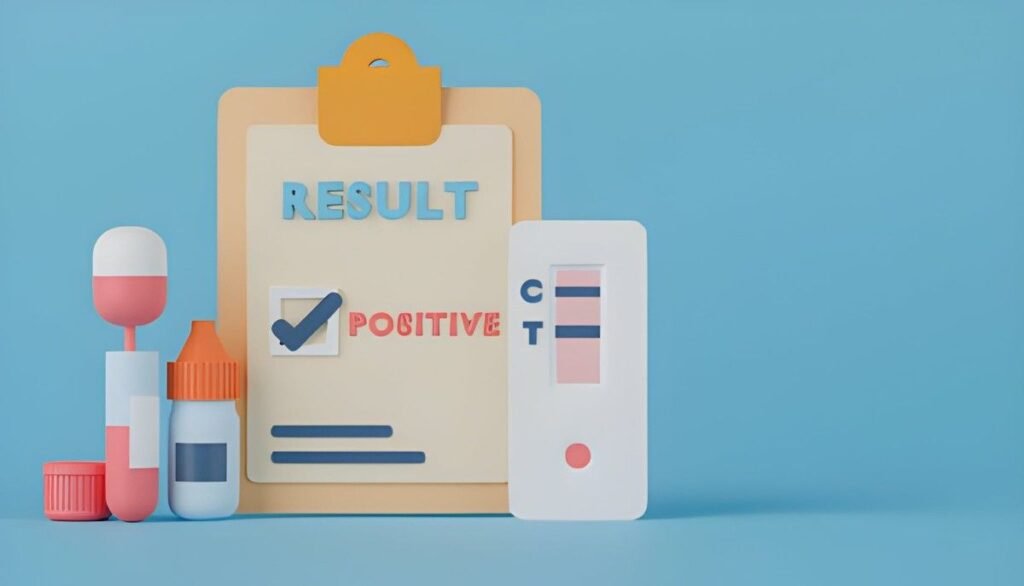
A "dye stealer" occurs when the test line (T-line) is significantly darker than the control line (C-line). This happens because the hCG concentration in the urine is so high that it pulls the chemical dye away from the control line. While not a medical diagnostic tool, a dye stealer at 16 DPO offers powerful visual reassurance of strong, rapidly rising hormone levels. It suggests your hCG is likely in the upper end of the expected range.
When the Line Remains Faint
If your test line is positive but remains lighter than expected at 16 DPO, it usually indicates one of two things: either your ovulation date was miscalculated (meaning you are actually 12 or 13 DPO, not 16), or implantation occurred very late. It is also possible that the pregnancy is proceeding with lower, but still rising, hormone levels. The presence of any line is a positive result. If the line does not progress in darkness over the next 48 to 72 hours, consult your physician, as serial blood draws may be necessary to monitor the doubling rate.
Determining Your Due Date: The DPO Advantage
One of the most valuable aspects of knowing your DPO (16 DPO in this case) is that it provides a more accurate date for the conception event than the traditional method of relying solely on the Last Menstrual Period (LMP).
The Dating Formula
Healthcare providers typically date a pregnancy from the first day of the LMP, counting 40 weeks from that date. This assumes ovulation occurred exactly 14 days later. However, since you know the exact DPO, you can calculate the estimated gestational age more precisely. Gestational age is calculated as the time since the LMP.
Gestational Age Calculation at Positive Test:
At 16 DPO, the fertilization event happened approximately 16 days ago. Since gestational age includes the 14 days before ovulation:
Gestational Age = 16 Days Post Ovulation + 14 Days (Pre-Ovulation) = 30 Days.
30 Days is approximately 4 Weeks and 2 Days pregnant.
This early dating information is essential for your first prenatal appointment, but the final, most reliable dating confirmation will come from the first ultrasound, typically performed between 6 and 10 weeks.
Managing Anxiety: Addressing Chemical Pregnancy Concerns
After achieving a positive result, especially in the context of trying to conceive, the immediate concern often shifts to viability. Questions about chemical pregnancies (a very early miscarriage confirmed only by high hCG levels) and long-term health are common.
What a Chemical Pregnancy Means
A chemical pregnancy occurs when implantation happens, triggering hCG production, but the embryo stops developing very shortly thereafter. The result is a positive test followed by a period arriving around the expected time or slightly late. They are incredibly common, but a positive result at 16 DPO significantly reduces the chance of this specific outcome.
Because your hCG levels have had several extra days to double and reach a high threshold by 16 DPO, the pregnancy has demonstrated viability beyond the earliest days of implantation. While the risk of miscarriage always exists in the first trimester, this strong early reading provides a vital measure of assurance that the pregnancy has successfully established itself.
Focusing on What You Control
You cannot control the genetics of the embryo, which account for the majority of first-trimester loss. You can control your supportive environment. Focus your energy on the actions that benefit both you and the developing fetus:
- Prioritize rest and gentle movement.
- Maintain consistent prenatal vitamin intake.
- Avoid exposure to known toxins, including alcohol and tobacco.
The First 48 Hours: Essential Next Steps
The first step after a confirmed positive is contacting your healthcare provider. This call initiates your prenatal care journey and allows the medical team to guide you through the next few weeks.
Estimate Your Due Date (EDD)
Enter the date of your positive 16 DPO test to estimate your delivery date.
Medical Intake and Initial Advice
Your doctor's office will schedule your first appointment, likely around 8 weeks gestation, and provide immediate advice:
- Confirm Medications: Review all prescription and over-the-counter drugs with a healthcare professional, including supplements, to ensure they are pregnancy-safe.
- Folic Acid Review: Ensure your prenatal vitamin contains at least 400 mcg of folic acid. This is non-negotiable for early fetal neurological development.
- Symptom Discussion: Report any unusual symptoms, especially severe cramping or bright red bleeding, which warrant immediate assessment.
Early Pregnancy Symptoms at 16 DPO
At 16 DPO, progesterone and the rising hCG hormone levels are actively changing your body's physiology. Unlike the ambiguous feelings at 12 DPO, symptoms at this stage often intensify and become more distinct from typical premenstrual syndrome (PMS).
Common Intensified Symptoms:
- Extreme Fatigue: The body is rapidly building the placenta, a massive undertaking that consumes considerable energy. This fatigue often feels profound and does not resolve fully with typical rest.
- Nausea and Aversions: Often starting subtly around 16 DPO, nausea can be triggered by specific smells or hunger. This is directly correlated with rising hCG levels.
- Breast Tenderness: The tenderness often shifts from general soreness (like PMS) to a dull ache or sensitivity, sometimes accompanied by the visual darkening of the areolas.
- Increased Urination: Due to increased blood volume and the efficiency of the kidneys processing waste, you may notice the need to urinate much more frequently than usual.
Building Your Support Network
Pregnancy, especially in the early, vulnerable weeks, requires a strong emotional foundation. Sharing the news with a trusted partner or close friend can provide essential emotional relief and practical support.
Remember that self-care is a foundational pillar of maternal health. Allow yourself the grace to slow down. If the exhaustion is overwhelming, reduce non-essential commitments. Nutrition at this stage should focus on small, frequent meals to manage potential nausea and keep blood sugar stable. Prioritizing rest is not a luxury; it is a critical component of building a healthy environment for the developing child.
A positive test at 16 DPO marks a powerful beginning. You move from the intense uncertainty of the waiting period into the active, supportive phase of prenatal care. Embrace this transition with confidence, knowing the scientific timing of this confirmation offers a strong foundation for the journey ahead.