Biological Surprises: When a Newborn with Male Anatomy Has Female Chromosomes
A Comprehensive Guide to 46,XX Testicular Disorder of Sex Development
Contents
Defining the Phenotype-Genotype Mismatch
In the quiet moments following a birth, medical teams perform a standard physical examination. Occasionally, they encounter a scenario that challenges the traditional understanding of biological sex: a newborn who appears entirely male on the outside but carries a female genetic blueprint, known as 46,XX chromosomes. This condition, historically called De la Chapelle syndrome and now formally termed 46,XX Testicular Disorder of Sex Development (DSD), occurs in approximately 1 in 20,000 newborn males.
For parents, receiving this news involves navigating a complex web of genetics, endocrinology, and developmental biology. The presence of male anatomy—including a penis and scrotum—suggests the presence of a Y chromosome, yet the genetic test (karyotype) returns a result typically associated with females. Understanding this condition requires looking beneath the surface at how the body determines and differentiates sex during the earliest stages of gestation.
The Genetic Mechanics: The SRY Gene Shift
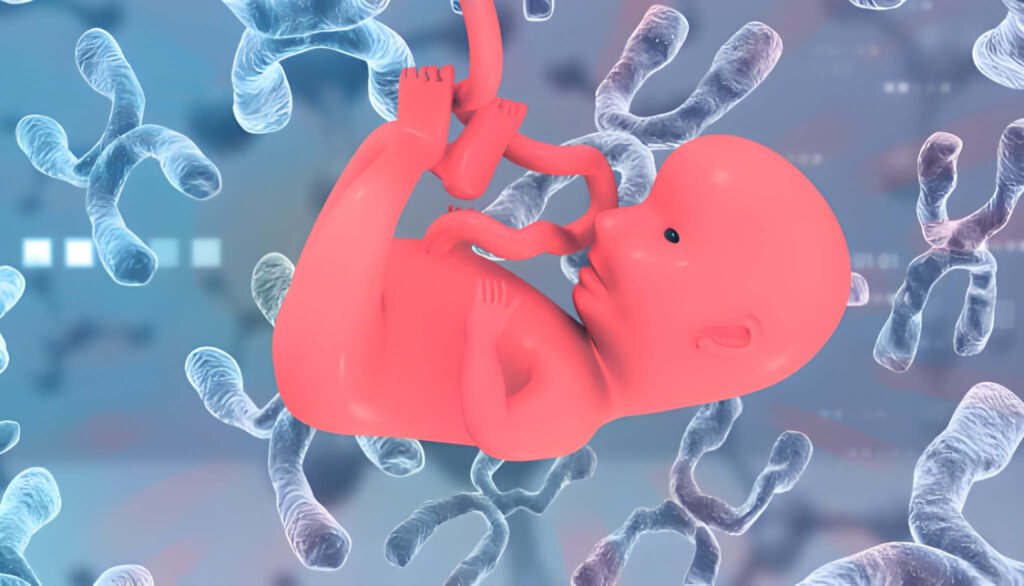
In standard human development, the 23rd pair of chromosomes determines biological sex. An XX pair leads to female development, while an XY pair leads to male development. The "master switch" for male development is a specific gene called SRY (Sex-determining Region Y), which is normally located on the short arm of the Y chromosome.
In roughly 80% to 90% of individuals with 46,XX Testicular DSD, a rare event occurs during the formation of sperm in the father (meiosis). During a process called crossing over, the SRY gene accidentally detaches from the Y chromosome and attaches to the X chromosome. When this specific X chromosome, now carrying the SRY gene, fertilizes the mother's egg, the resulting embryo has XX chromosomes but possesses the genetic trigger to develop testes and male external genitalia.
| Genetic Factor | Standard Male (XY) | Standard Female (XX) | 46,XX Testicular DSD |
|---|---|---|---|
| Chromosome Pair | XY | XX | XX |
| SRY Gene Location | Y Chromosome | Absent | X Chromosome (Translocated) |
| Gonad Type | Testes | Ovaries | Testes (usually small) |
| Internal Structures | Male (Wolffian) | Female (Müllerian) | Male (No Uterus) |
A smaller percentage of cases (about 10% to 20%) are SRY-negative. In these instances, the male anatomy develops even without the SRY gene. Science suggests this happens due to mutations in other genes, such as SOX9 or DAX1, which can override the default female pathway and force the development of testicular tissue.
Clinical Presentation: How It Is Identified
Most newborns with 46,XX Testicular DSD are identified because they appear as healthy, typical males. In many cases, the condition is not discovered until much later in life, often during puberty or when investigating infertility in adulthood. However, some infants are diagnosed early due to specific physical markers or prenatal screening.
While many babies look like typical males, some may present with:
- Undescended Testes: The testes may not have dropped into the scrotum.
- Hypospadias: The opening of the urethra is on the underside of the penis rather than at the tip.
- Ambiguous Genitalia: In rare cases, the genitalia may not appear clearly male or female.
With the rise of Non-Invasive Prenatal Testing (NIPT), more cases are caught early. A family might receive NIPT results indicating a female fetus (XX), but the subsequent anatomy ultrasound shows a male penis. This "mismatch" triggers further diagnostic testing, such as amniocentesis or a postnatal karyotype, to confirm the genetic makeup.
Management and Path Forward for Families
The management of 46,XX Testicular DSD is focused on supporting the child's development, monitoring hormone levels, and providing psychological support. Because these children have testes, they produce testosterone during infancy, often in levels indistinguishable from XY males. This ensures the brain and body undergo typical "masculinization" during the first few months of life.
The Role of a Multidisciplinary Team
Expert care typically involves several specialists working together to provide a holistic view of the child's health:
- Pediatric Endocrinologist: Monitors hormone production and growth.
- Pediatric Urologist: Addresses any physical needs, such as undescended testes or hypospadias.
- Genetic Counselor: Helps parents understand the "how" and "why" of the translocation.
- Psychologist/Social Worker: Supports the family in navigating the social and emotional aspects of the diagnosis.
Long-term Considerations
As the child grows toward puberty, there are two primary areas of focus:
- Hormonal Support: While the testes produce enough testosterone for childhood, they may struggle to produce adult levels during puberty. Testosterone replacement therapy is common to ensure the development of secondary sex characteristics (voice deepening, muscle mass, facial hair).
- Fertility: Because the Y chromosome contains essential genes for sperm production (the AZF regions), and these regions are not translocated with the SRY gene, individuals with 46,XX Testicular DSD are almost universally infertile.
Comparison: 46,XX vs. 46,XY Development
To understand why the body looks male despite the XX chromosomes, we can compare the developmental milestones of the three different paths.
| Developmental Milestone | 46,XX (Female) | 46,XY (Male) | 46,XX (SRY+ Male) |
|---|---|---|---|
| Gonadal Fate (Week 6-7) | Ovaries | Testes | Testes |
| Internal Duct Retention | Müllerian (Uterus/Tubes) | Wolffian (Vas Deferens) | Wolffian (Vas Deferens) |
| External Appearance | Female | Male | Male |
| Pubertal Hormones | Estrogen | Testosterone | Variable (Needs Monitoring) |
| Adult Stature | Average Female Height | Average Male Height | Slightly Shorter than Average Male |
The Psychological Dimension
A diagnosis of 46,XX Testicular DSD is often more impactful for the parents initially than it is for the child. In infancy, the child is simply a baby. As they grow, the most important factor is a supportive environment. Studies show that the vast majority of individuals with this condition identify strongly as male, as their brain was exposed to typical male hormone levels during critical windows of development in the womb and during "mini-puberty" in early infancy.
Transparency is key. Many specialists recommend sharing information with the child in an age-appropriate way. For example, explaining that "everyone's body is built with a unique set of instructions, and your instructions are a little special" can lay the groundwork for later discussions about fertility and hormone therapy.
Frequently Asked Questions
In most cases, no. The translocation of the SRY gene usually happens as a random "glitch" during the formation of a single sperm cell. This means the parents generally do not "carry" the condition, and the risk of it happening again in a subsequent pregnancy is extremely low.
Surgery is only necessary if there are functional issues, such as undescended testes (to prevent future health risks) or hypospadias (to ensure proper urination). Purely cosmetic surgeries are increasingly discouraged by major medical associations until the individual can participate in the decision.
Currently, biological fatherhood is not possible for those with 46,XX Testicular DSD because the genes required for sperm production are missing. However, many men with this condition choose to build families through adoption or sperm donation.
There is no evidence to suggest that 46,XX Testicular DSD impacts cognitive ability or intelligence. Boys with this condition have the same range of personalities, interests, and behaviors as any other boys.