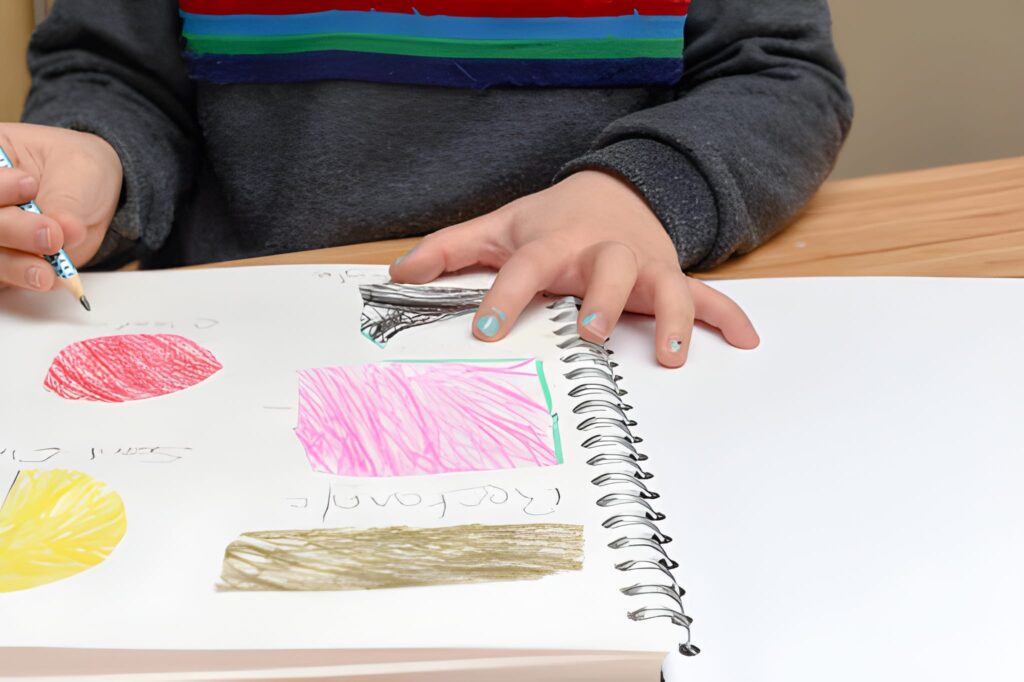
Tactile learners, also known as hands-on or kinesthetic learners, absorb information most effectively through physical interaction and movement. Unlike visual or auditory learners, tactile learners struggle with passive study methods such as reading or listening. They retain knowledge best when they engage their sense of touch, manipulate objects, or perform tasks related to the material. For students in school, college, or professional training, understanding and leveraging tactile learning can dramatically improve comprehension, memory, and exam performance.
Understanding Tactile Learning
Tactile learners often display the following traits:
- Learn best through hands-on activities and movement
- Enjoy building models, conducting experiments, or using manipulatives
- May fidget or move while studying
- Struggle with purely auditory or visual instruction
| Characteristic | Learning Preference | Study Implication |
|---|---|---|
| Learns by doing | Hands-on tasks and activities | Incorporate experiments, models, and interactive exercises |
| Needs movement | Active engagement enhances focus | Use gestures, movement, or role-play while studying |
| Uses muscle memory | Repetition strengthens retention | Physically perform steps for processes or skills |
| Dislikes passive learning | Gets bored with lectures or reading | Transform lessons into interactive activities |
1. Engage in Hands-On Practice
Tactile learners retain information most effectively when actively performing tasks.
- Science & Math: Conduct experiments, manipulate models, or solve problems physically.
- Example: Use molecular models to understand chemical structures or build geometric shapes to visualize concepts.
- History & Social Studies: Create timelines or use objects to represent historical events and relationships.
2. Incorporate Movement While Studying
Physical activity improves focus and helps encode memory.
- Walking & Reciting: Read notes aloud while walking.
- Gestures & Role-Play: Act out concepts or use hand movements to illustrate ideas.
- Fidget Tools: Small stress balls or textured items help maintain focus without distraction.
3. Use Interactive Learning Tools
| Tool | Application | Example |
|---|---|---|
| Flashcards | Physically sort, shuffle, and match | Vocabulary, formulas, or lab values |
| Models & Kits | Demonstrate abstract concepts | Anatomy models, chemistry kits |
| Educational Games | Learn while playing | Board games, simulation activities |
| Role-Playing | Act out scenarios | Historical events, business processes |
4. Write, Draw, and Manipulate Notes
Tactile learners benefit from physically engaging with notes.
- Techniques: Rewrite notes, draw diagrams, create charts, or label physical objects.
- Example: Map out the human circulatory system using colored pencils and 3D diagrams.
5. Integrate Real-Life Applications
Connecting concepts to physical or real-world activities enhances understanding.
- Examples:
- Measure ingredients to practice ratios in math.
- Conduct small experiments to explore scientific principles.
- Simulate patient care activities in nursing or medical training.
6. Combine Multi-Sensory Learning
Engaging multiple senses reinforces memory and comprehension.
- Visual + Tactile: Draw or color diagrams while handling models.
- Auditory + Tactile: Read notes aloud while performing related gestures or movements.
- Kinesthetic Practice: Actively manipulate tools, instruments, or models during study.
7. Use Spaced Repetition and Practice
Tactile learners benefit from repetition and consistent practice over time.
- Implementation: Review and perform concepts at intervals (daily, weekly, monthly).
- Example: Repeat lab procedures multiple times until confident or rehearse problem-solving steps physically.
8. Organize a Flexible Study Environment
A workspace that supports movement and interaction aids learning.
- Standing Desk: Enables movement while reading or writing.
- Whiteboards or Posters: Draw diagrams and visualize processes.
- Space for Projects: Room for experiments, modeling, or active role-playing exercises.
9. Collaborate and Teach Others
Teaching or demonstrating concepts to peers strengthens understanding.
- Tip: Work in study groups where tactile learners can physically demonstrate or act out concepts.
- Example: Explain a biology process by showing it on a model or performing steps aloud.
10. Leverage Technology for Interactive Learning
| Tool | Purpose | Example |
|---|---|---|
| Simulation Software | Practice hands-on concepts virtually | Chemistry, physics, or anatomy simulations |
| Interactive Apps | Engage through touch and interaction | Drag-and-drop matching games or puzzles |
| Video Demonstrations | Combine visual, auditory, and tactile engagement | Tutorials showing step-by-step procedures |
Comparison of Study Techniques for Tactile Learners
| Technique | Pros | Cons | Best Use |
|---|---|---|---|
| Hands-On Experiments | Deep understanding, improves retention | May require resources | Science, math, technical subjects |
| Movement While Studying | Boosts focus and memory | Needs private space | Memorization, active recall |
| Role-Playing | Makes abstract concepts concrete | Time-consuming | History, literature, business, medical training |
| Physical Flashcards & Models | Reinforces memory through touch | Setup required | Vocabulary, formulas, anatomy, procedures |
Socioeconomic Considerations
Access to physical learning materials may vary. Low-cost alternatives include DIY flashcards, homemade models, outdoor activities, and free online simulations. Peer collaboration, library resources, and school labs can help provide practical experiences for all tactile learners.
Conclusion
Tactile learners excel when study strategies involve movement, hands-on engagement, and real-world applications. Techniques like interactive experiments, role-playing, gesture-based learning, multi-sensory engagement, and spaced practice enhance understanding, retention, and motivation. By tailoring study routines to their learning style, tactile learners can maximize efficiency, deepen comprehension, and achieve academic and professional success.