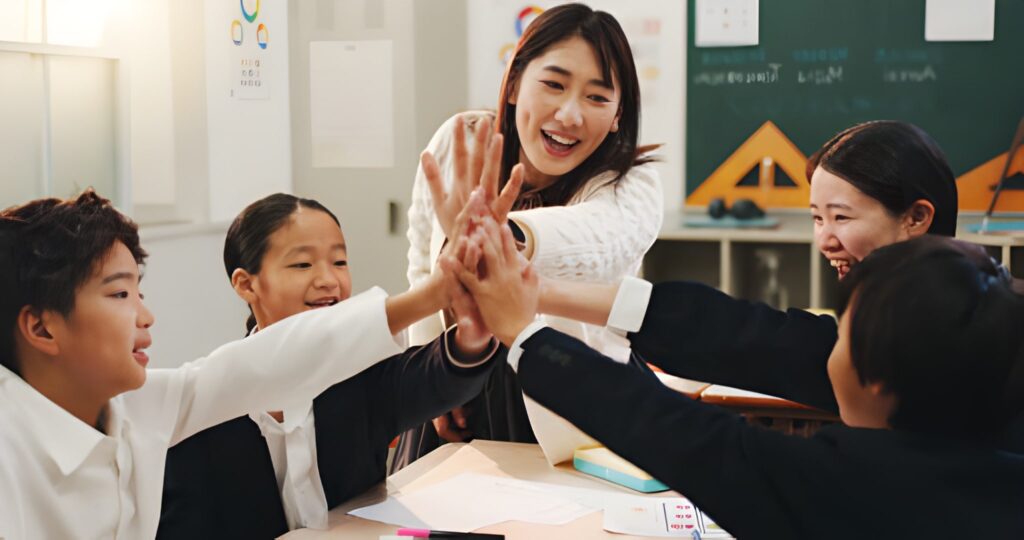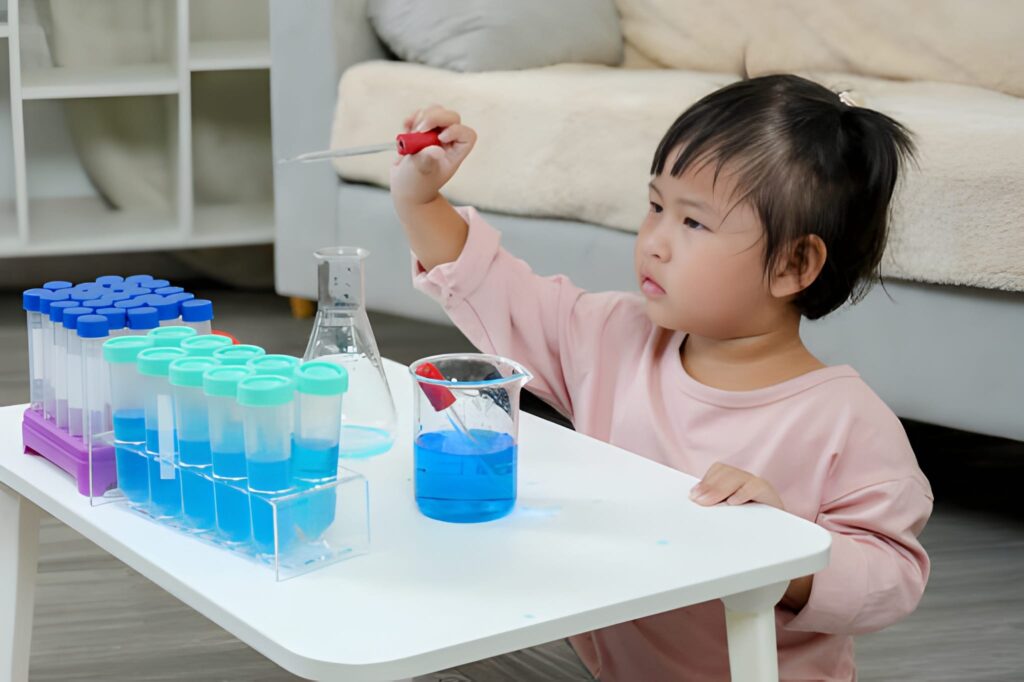
Early childhood is a time of natural curiosity, experimentation, and discovery. Providing young children with a “tiny lab” environment—an accessible, safe, and stimulating space for experimentation—can foster critical thinking, problem-solving, and creativity. A tiny lab is not a formal laboratory with complex equipment; it is a thoughtfully designed learning area where children can explore, manipulate materials, and observe outcomes. By engaging in hands-on experiences, children learn foundational concepts in science, math, literacy, and social skills while developing confidence, independence, and a love for discovery.
Purpose and Benefits of a Tiny Lab
A tiny lab in early learning serves multiple purposes:
- Encourages curiosity and inquiry by inviting children to ask questions and explore ideas.
- Promotes hands-on learning, allowing children to manipulate materials and test hypotheses.
- Supports problem-solving and critical thinking by presenting challenges with tangible outcomes.
- Integrates cross-disciplinary learning, connecting science, math, literacy, and the arts.
- Builds social and collaborative skills as children explore, discuss, and share findings.
Designing a Tiny Lab
A tiny lab should be engaging, safe, and adaptable to different ages and abilities. Key design considerations include:
- Space: A small corner or table in the classroom or home can serve as a lab. Ensure enough room for multiple children to work comfortably.
- Materials: Provide accessible, child-safe materials such as magnifying glasses, measuring cups, pipettes, sand, water, soil, magnets, and simple science kits.
- Organization: Clearly labeled bins, trays, and containers help children independently select and return materials.
- Documentation: Encourage children to record observations using drawings, charts, or photos, fostering literacy and reflective skills.
- Safety: Ensure all materials are non-toxic and that activities are supervised, especially with younger children.
Core Learning Areas in a Tiny Lab
A tiny lab can integrate multiple learning areas, making it a rich, holistic educational experience:
- Science Exploration
- Activities: Plant growth experiments, water displacement, floating and sinking objects, magnet exploration.
- Skills Developed: Observation, hypothesizing, experimenting, and understanding cause and effect.
- Mathematics
- Activities: Measuring liquids, counting seeds, sorting objects by size or color, creating simple patterns.
- Skills Developed: Numeracy, measurement, spatial awareness, and pattern recognition.
- Literacy and Communication
- Activities: Labeling experiments, storytelling about discoveries, recording observations in journals.
- Skills Developed: Vocabulary expansion, descriptive language, writing, and communication skills.
- Creative Arts
- Activities: Drawing experiments, creating models with clay, making posters of findings.
- Skills Developed: Fine motor skills, creativity, and expression of ideas.
- Social-Emotional Learning
- Activities: Collaborating on experiments, taking turns, sharing materials, discussing results.
- Skills Developed: Teamwork, empathy, self-regulation, and confidence in problem-solving.
Example Activities for a Tiny Lab
- Seed Growth Observation: Children plant seeds in transparent containers to observe germination. They measure height weekly, record changes with drawings, and compare growth under different conditions (light, water, soil type).
- Water Play Experiments: Using cups, pipettes, and containers, children explore concepts like volume, floating, sinking, and absorption.
- Magnet Exploration: Children investigate which materials are magnetic, sorting objects and creating simple charts to record results.
- Color Mixing: Using water, food coloring, and droppers, children explore color blending, documenting outcomes and experimenting with ratios.
- Mini Weather Station: Observing temperature, rainfall, and cloud patterns encourages predictive thinking and understanding of the natural environment.
Data Table Example: Seed Growth Experiment
| Day | Sunlight Group (cm) | Shade Group (cm) | Watered Group (cm) | Observations |
|---|---|---|---|---|
| 1 | 0.5 | 0.3 | 0.4 | Seeds just sprouting |
| 3 | 1.2 | 0.6 | 0.9 | Leaves emerging |
| 5 | 2.1 | 1.0 | 1.8 | Stem elongating, more leaves |
| 7 | 3.0 | 1.5 | 2.5 | Strong growth in sunlight |
Benefits of a Tiny Lab Approach
- Encourages Lifelong Curiosity: Children develop a natural interest in discovery and learning.
- Supports Holistic Development: Cognitive, physical, social, and emotional skills grow in tandem.
- Promotes Early Scientific Thinking: Concepts such as observation, classification, and cause-and-effect become familiar.
- Builds Confidence: Success in experiments and creative problem-solving strengthens self-esteem.
- Fosters Collaboration: Working with peers teaches negotiation, empathy, and communication.
Comparison Chart: Traditional Learning vs. Tiny Lab Approach
| Feature | Traditional Learning | Tiny Lab Approach |
|---|---|---|
| Engagement | Mostly passive | Active, hands-on |
| Learning Style | Teacher-directed | Child-centered, exploratory |
| Skills Developed | Academic focus | Holistic: cognitive, social, physical |
| Creativity | Limited | Encouraged and integral |
| Real-World Connection | Indirect | Direct, experiential |
Tips for Implementing a Tiny Lab
- Rotate activities weekly to maintain interest and provide varied experiences.
- Encourage children to ask questions and design their experiments.
- Integrate observations into group discussions to develop communication skills.
- Use everyday materials to make the lab accessible and low-cost.
- Document outcomes visually and verbally to enhance literacy and reflection.
Conclusion
A tiny lab for early learning is an invaluable educational tool, providing children with hands-on, meaningful, and engaging learning experiences. By integrating science, math, literacy, creativity, and social-emotional skills, a tiny lab promotes holistic development, critical thinking, and a lifelong love of learning. Implementing such spaces in classrooms or homes empowers children to explore, experiment, and discover in ways that are safe, fun, and educationally rich.