13 Weeks Pregnant with Twins: The Specialized Ultrasound and Management
Specialist Guidance on Fetal Assessment, Twin Type Identification, and Maternal Health
Article Overview
The 13-week mark in a twin pregnancy is a truly pivotal point. As you transition out of the first trimester, the focus shifts dramatically from simply confirming viability to establishing the precise type of twin pregnancy you carry and evaluating the complex shared environment of the womb. The ultrasound performed around this time is far more detailed than a standard single-fetus scan. As a specialist, I emphasize that this scan—which assesses fetal anatomy, dates the pregnancy, and determines the crucial *chorionicity*—forms the foundation for all subsequent prenatal care and management. Understanding these specialized assessments empowers you to navigate the path forward with confidence.
The 13-Week Twin Milestone
By 13 weeks, the period of highest risk for miscarriage is ending, and the pregnancy is now entering the safest and most comfortable phase. For a twin pregnancy, this milestone is marked by significant uterine expansion and the rapid growth of both placentas. The critical focus for twin pregnancies starts here.
Double the Development: Fetal Growth
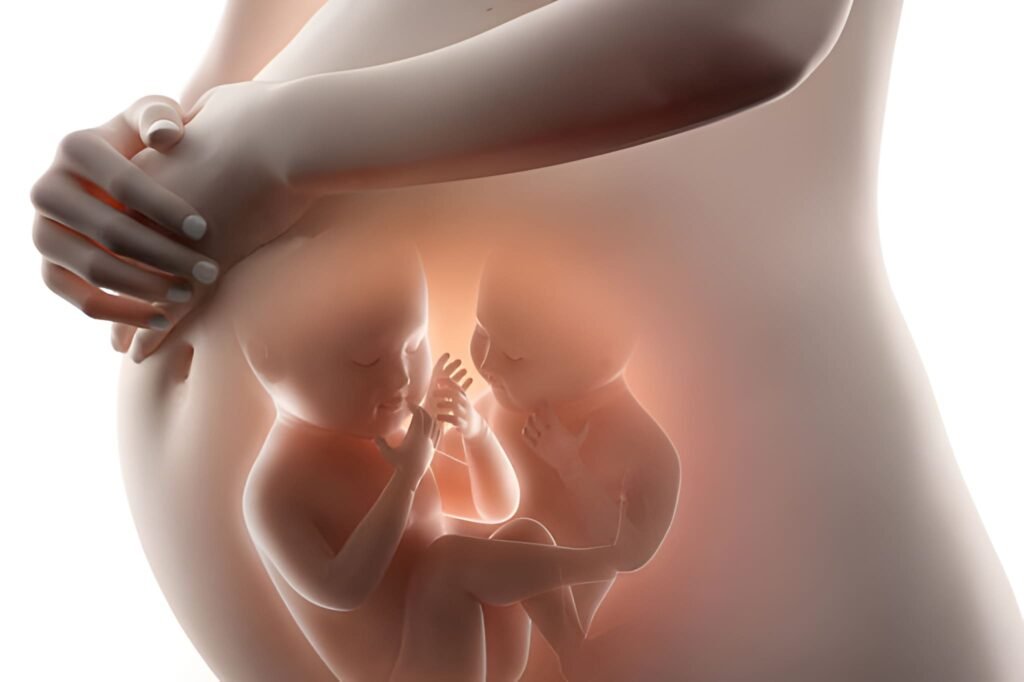
Each fetus, now officially called a **fetus**, is approximately the size of a lemon, measuring around 2.5 to 3 inches (6.3 to 7.6 centimeters) from crown to rump.
- Organ Systems: All major organ systems are fully formed and begin functioning. The kidneys are producing urine, and the liver is starting to secrete bile.
- Skeletal Structure: Bones are hardening (ossifying), especially in the arms and legs, and the tiny fingers and toes are separated.
- Fetal Movement: Although you likely cannot feel them yet, both fetuses are moving vigorously inside their sacs.
The 13-Week Twin Ultrasound: Specialized Assessment
This ultrasound, performed between 11 weeks and 13 weeks and 6 days, is arguably the most important scan of the entire pregnancy. It serves multiple, critical purposes unique to multiples.
Critical: Determining Twin Type (Chorionicity)
The primary goal of the 13-week scan is to definitively determine the twin type, known as **chorionicity**. This refers to the number of placentas and amniotic sacs, and it dictates the level of risk and the frequency of monitoring required throughout the rest of the pregnancy.
The sonographer uses visual cues like the **T-sign** or **Lambda (or Twin Peak) sign** to assess the membrane separating the fetuses.
The Three Twin Classifications:
- Dichorionic-Diamniotic (Di/Di): Each baby has its own placenta (chorion) and its own inner sac (amnion). This is the lowest-risk twin type, whether the twins are fraternal or identical. The placenta appears fully separate.
- Monochorionic-Diamniotic (Mo/Di): The babies share one placenta (monochorionic) but have two separate inner sacs (diamniotic). This only occurs in identical twins. Sharing a placenta increases the risk of complications, requiring highly specialized monitoring.
- Monochorionic-Monoamniotic (Mo/Mo): The babies share one placenta and one inner sac. This is the rarest and highest-risk form of identical twin pregnancy, requiring constant, specialized surveillance.
Assessing Risks Unique to Multiples
The 13-week scan is used to look for early markers of potential complications:
- Nuchal Translucency (NT): This is measured for both fetuses, assessing the risk of chromosomal abnormalities like Down syndrome.
- Growth Discrepancy: By measuring the Crown-Rump Length (CRL) of both fetuses, the provider ensures both are growing proportionally. A significant discrepancy at this stage warrants closer follow-up.
- Placental Positioning: For Mo/Di twins, the thickness of the dividing membrane and the insertion points of the umbilical cords are checked. This is an early check for conditions like Twin-to-Twin Transfusion Syndrome (TTTS), a serious complication where blood flows unevenly between the fetuses via shared connections in the placenta.
Twin Type Risk Summary Interactive
The chorionicity classification determines your personalized prenatal management plan.
| Twin Type | Placentas | Amniotic Sacs | Monitoring Frequency |
|---|---|---|---|
| Di/Di | 2 | 2 | Monthly to Every 3 Weeks |
| Mo/Di | 1 (Shared) | 2 | Every 2 Weeks (Specialized) |
| Mo/Mo | 1 (Shared) | 1 (Shared) | Weekly (High Risk) |
Key Takeaway: Monochorionic (Mo/Di and Mo/Mo) pregnancies carry higher intrinsic risks and require specialized fetal medicine surveillance due to the shared placenta.
First Trimester Screening & Genetics for Twins
Screening for chromosomal conditions in a twin pregnancy requires careful interpretation, as the standard biochemical calculations are significantly altered by the presence of two fetuses and two placentas (or one large shared one).
Adapting Screening for Multiples
The traditional maternal blood test (measuring PAPP-A and Free Beta-hCG) is less reliable in twins than in singletons because the levels are a mixture from both fetuses and placentas.
- Nuchal Translucency: This remains the most valuable non-invasive screening tool. The risks calculated from the NT measurement are considered individually for each fetus.
- NIPT Limitations: Non-Invasive Prenatal Testing (NIPT) analyzes fetal DNA fragments in the mother’s blood. While excellent for singletons, NIPT can only determine if *at least one* fetus has a trisomy; it cannot reliably distinguish which one, or if both are affected. For this reason, NIPT results in twins are often interpreted cautiously.
Maternal Health: Heightened Nutritional Demands
The 13-week mark often brings relief from severe morning sickness, but for a mother carrying twins, the biological demands are already significantly greater. Your body is managing a rapid increase in blood volume and supporting two developing placental systems.
Caloric and Weight Gain Requirements
The standard recommendation for caloric intake in a singleton pregnancy involves adding about 340 extra calories per day in the second trimester. For a twin pregnancy, this requirement is substantially higher to support healthy growth and manage nutrient stores.
Specialists often recommend an increase of approximately 600 calories per day during the second and third trimesters, beginning around 13 weeks, depending on your pre-pregnancy BMI.
If your typical daily caloric intake was 2000 calories, the required caloric intake in the second trimester for twins (RCI Twins) is calculated: \text{RCI Twins} = 2000 \text{ calories} + 600 \text{ calories} = 2600 \text{ calories}
Weight gain goals are also significantly accelerated, with the focus on gaining a steady amount early in the second trimester to optimize fetal growth.
Essential Nutrient Focus
Twin pregnancies require meticulous attention to specific nutrients to prevent common maternal deficiencies.
- Iron: The increased blood volume and demands of two fetuses make iron-deficiency anemia common. Your provider will likely recommend higher-dose iron supplementation.
- Folic Acid: Continuing high-dose folic acid (often $1000\text{ mcg}$ or more) is vital for neurological development and red blood cell formation for both babies.
- Protein: Increased protein intake is necessary to support tissue growth, blood production, and the two placentas. Aim for at least 70 to 80 grams per day.
Summary and Transition to the Second Trimester
The 13-week ultrasound in a twin pregnancy is a moment of critical data collection. Its main purpose is to determine the chorionicity, which is the single most important factor dictating the course of your prenatal care. By knowing whether your twins share a placenta (Mo/Di or Mo/Mo) or have their own (Di/Di), your medical team can initiate the appropriate surveillance schedule—ranging from routine checkups to specialized bi-weekly monitoring. With this vital information in hand, you can transition confidently into the second trimester, focusing on the heightened nutritional needs required to sustain two healthy, growing fetuses.