Conflicting Pregnancy Test Results: Decoding Two Positives and Two Negatives
Analyzing the biological, technical, and timing factors behind fluctuating home test outcomes.
Article Roadmap
The Three Main Possibilities Behind Conflicting Results
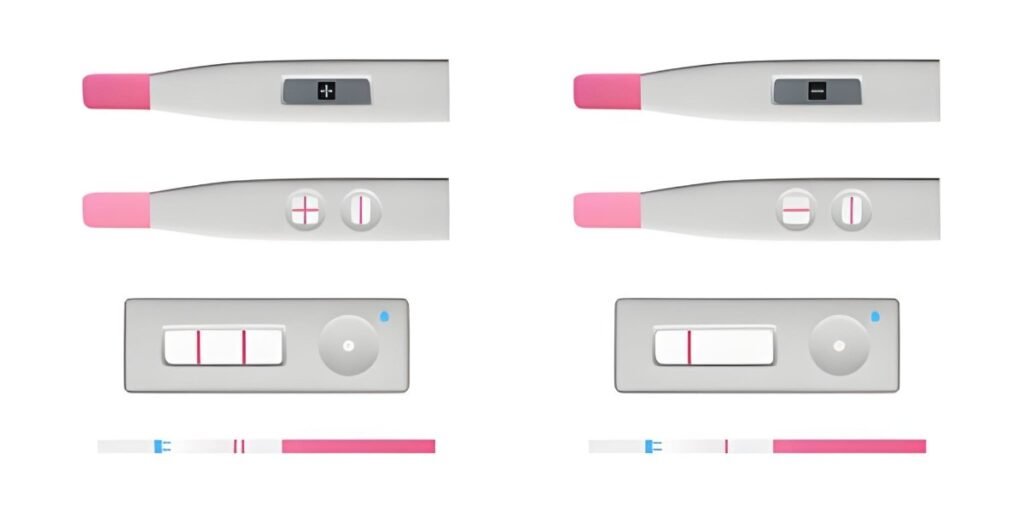
A sequence of two positive and two negative pregnancy tests (HPTs) creates a confusing and emotionally taxing situation. It is essential to recognize that this fluctuation usually points toward a combination of technical factors and genuine biological events. This confusing pattern rarely means the tests are simply broken; rather, it suggests the Human Chorionic Gonadotropin (hCG) hormone level is hovering near the detection threshold of the tests or is actively changing.
The Scenario Summary
The fluctuating results typically fit into one of three clinical and procedural possibilities. We must investigate which scenario best aligns with the timing and nature of the test results:
- Chemical Pregnancy: The most likely biological explanation, where the pregnancy implanted but failed early. The body produces hCG, causing the first positive results, but the hCG then drops rapidly, causing the subsequent negative results.
- Technical and User Error: Differences in test sensitivity or user mistakes (like urine dilution) caused the low hCG level to be missed on the negative days, classifying them as **false negatives**.
- The Rare False Positive: In very rare cases, the initial positive tests were faulty due to non-pregnancy related factors, and the negative tests were correct.
Biological Reasons for Fluctuation: The Rise and Fall of HCG
When tests show a true positive followed by a true negative, a rapid biological shift in hormone levels has occurred.
Chemical Pregnancy: The Early Loss
A chemical pregnancy is a very early pregnancy loss that occurs shortly after implantation, typically before five weeks of gestation. It is characterized by the following hormonal pattern:
- Positive Test: The embryo implants and begins producing hCG, triggering the positive result.
- Rapid Decline: For various reasons (most commonly chromosomal abnormality), the embryo stops developing. hCG production ceases and the hormone level drops quickly.
- Negative Test: The subsequent test turns negative because the hCG level has fallen below the HPT's threshold of detection (often 25 mIU/mL).
This scenario means a pregnancy occurred, but it was not viable. It is a common occurrence, estimated to account for 50% to 75% of all miscarriages, and often requires no medical intervention.
Ectopic Pregnancy (Less Common Fluctuation)
While less common, an ectopic pregnancy (where the egg implants outside the uterus) can sometimes produce erratic hCG patterns. The abnormal implantation site may struggle to maintain the expected exponential rise in hCG, leading to a slow or plateauing level. This inconsistent production can cause tests to fluctuate between faint positive and negative readings. Any fluctuating results accompanied by persistent, severe abdominal pain or unusual bleeding warrant immediate medical attention to rule out this dangerous condition.
Procedural Errors and Technical Factors
Even when hCG levels are consistently rising in a healthy, early pregnancy, several easily avoidable mistakes can lead to inaccurate negative results. These are categorized as **false negatives** caused by external interference.
Impact of Urine Dilution
The concentration of hCG is highest in the first morning urine (FMU) because it has accumulated overnight. If the two negative tests were taken later in the day, or after consuming a large volume of water or fluid, the urine sample was likely diluted. Diluted urine lowers the effective concentration of hCG below the test's sensitivity threshold, yielding a false negative result despite the existence of a viable pregnancy. This is one of the most common reasons for conflicting early results.
Test Sensitivity and Brand Variation
Different brands of pregnancy tests have different sensitivities, measured in mIU/mL (milli-international units per milliliter). Some tests detect hCG as low as 10 mIU/mL, while others require 25 mIU/mL or higher.
| Test Sensitivity (mIU/mL) | Likelihood of Positive at Low hCG |
|---|---|
| 10 mIU/mL (High Sensitivity) | More likely to yield the initial two positives. |
| 25 mIU/mL (Standard) | More likely to yield the subsequent two negatives if hormone levels are low or urine is diluted. |
If the two positive results were generated by a high-sensitivity test and the two negative results were generated by a low-sensitivity test or a different brand, the discrepancy is technical, not necessarily biological.
Understanding hCG Progression for Clarity
To resolve the confusion, focus must shift from the instantaneous result of the urine test to the pattern of the hormone's growth. In a healthy pregnancy, hCG should be rising exponentially, doubling every 48 to 72 hours.
The Rarity of the False Positive
It is important to emphasize that a **true false positive** (a positive test when no hCG is present) is extremely rare. Positive results almost always mean that hCG is or was recently present. Factors sometimes mistakenly labeled as false positives include:
- Evaporation Lines: A faint, colorless line that appears only after the specified reading time. Always read results within the manufacturer's window (usually 3–5 minutes).
- Recent Fertility Treatment: The use of an hCG trigger shot (e.g., Ovidrel) can cause temporary positive results if testing occurs too soon after the injection.
- Residual HCG: Lingering hCG after a recent delivery or miscarriage can yield a positive result even if a new pregnancy has not occurred.
The Hook Effect (High HCG False Negative)
In extremely rare cases, if a woman is much further along in pregnancy (usually in the second trimester with levels exceeding 500,000 mIU/mL) or has a molar pregnancy, the hCG concentration can be so high that it overwhelms the test strip's antibodies, resulting in a false negative. This phenomenon, called the "Hook Effect," requires specialized laboratory intervention to resolve and is highly unlikely in the scenario of very early pregnancy fluctuation.
When and How to Retest for Clarity
The only effective way to resolve conflicting results is through systematic retesting that eliminates procedural errors and tracks the true hormonal trajectory.
The 48-Hour Repeat Strategy (Action Guide)
To clarify the situation without immediate medical testing, follow these strict retesting rules:
- Wait 48 Hours: Allow time for the hCG hormone to double, which is the necessary time frame for a clear visual change.
- Use First Morning Urine (FMU): This is non-negotiable. FMU has the highest concentration and prevents dilution-based false negatives.
- Use the Same Brand: Use the same brand and sensitivity level that gave you the positive results.
- Observe Progression: If the pregnancy is healthy, the positive line in the new test should be noticeably darker than the initial positive lines. If the line is absent or fainter, the likelihood of a chemical pregnancy increases significantly.
Interpreting the Retest Result
- Darker Positive: Strong evidence of a progressing, viable pregnancy; the previous negatives were likely diluted false negatives.
- Fainter or Negative: Strong evidence of a chemical pregnancy or early loss; hCG levels are falling.
Clinical Confirmation and Socioeconomic Context
If home testing remains ambiguous or suggests a hormonal drop, the next essential step is seeking professional clinical care.
The Definitive Diagnosis: Serum HCG
A healthcare provider will order a quantitative serum β-hCG blood test. This measures the precise numerical value of the hormone, eliminating the ambiguity of HPT lines. Crucially, the provider will repeat this blood test 48 hours later.
- If HCG is rising: The patient has a progressing pregnancy.
- If HCG is dropping: The patient confirms an early loss (chemical pregnancy).
- If HCG is plateauing: This pattern is highly suspicious for an ectopic pregnancy and requires urgent ultrasound investigation.
Access and Emotional Support
The cost of sequential blood work, though necessary, can present a financial barrier in the US, particularly when multiple tests are needed to confirm a chemical pregnancy. Patients should communicate openly with their provider regarding financial constraints. Many community health clinics offer low-cost lab services, and utilizing these resources ensures the medical investigation needed to rule out serious conditions like ectopic pregnancy is not delayed due to cost. Regardless of the outcome, seeking emotional support—recognizing that even a chemical pregnancy is a real loss—is paramount for moving forward.