Understanding the 32-Day Cycle and DPO
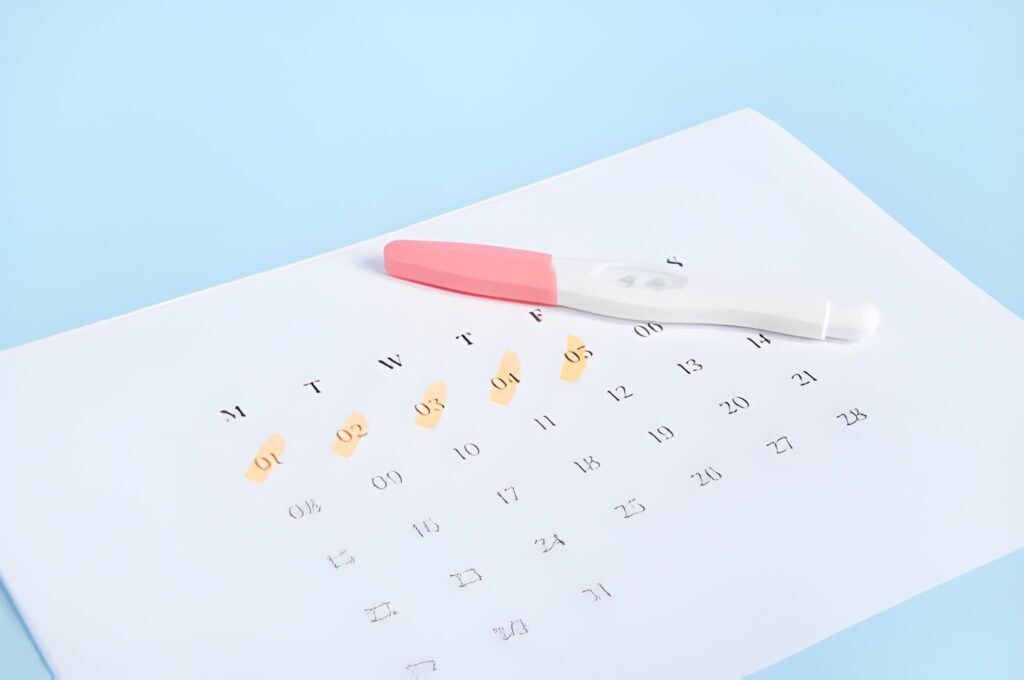
A cycle length of 32 days is considered entirely normal. While the average menstrual cycle spans 28 days, anything between 21 and 35 days is clinically typical. The length of your cycle is determined by the **follicular phase** (the time before ovulation), while the **luteal phase** (the time between ovulation and menstruation) remains remarkably consistent, typically lasting 12 to 14 days.
DPO Calculation for a 32-Day Cycle
In a 32-day cycle, ovulation most likely occurred around **Day 18** (32 days total minus 14 days luteal phase). Therefore, a negative test on Day 32 means you are at approximately **14 days past ovulation (14 DPO)**. This is the official day when menstruation is expected and when home pregnancy tests (HPTs) are designed to be most reliable.
Testing Milestone
Testing on Day 32 of a 32-day cycle is equivalent to testing on the first day of the missed period in a 28-day cycle. The result carries a high degree of medical certainty, but still leaves a small window for error due to biological variation.
Testing Accuracy at This Stage: A High-Confidence Result
At 14 DPO, home pregnancy tests are nearly 99 percent accurate in detecting the presence of human chorionic gonadotropin (hCG), the hormone produced after implantation. If fertilization occurred on time, and implantation proceeded normally (between 6 DPO and 12 DPO), hCG levels should be well above the 25 mIU/mL detection limit of standard tests by 14 DPO.
Immediate Interpretation of the Negative Result
A negative test on Day 32 indicates one of two distinct possibilities, both highly likely:
- **Accurate Negative:** Pregnancy did not occur this cycle, and your period is slightly delayed due to hormonal fluctuations.
- **False Negative (Improbable):** You are pregnant, but implantation occurred extremely late (Day 12 DPO or later), leaving insufficient time for hCG levels to build to a detectable threshold.
Reasons for a Potential (Though Rare) False Negative
While the chance of a false negative is small at 14 DPO, certain biological variables can still account for a negative result in a very early pregnancy:
Late Implantation Timing
Implantation normally completes by 10 DPO. If it occurs at the absolute physiological limit of 12 DPO, the hCG hormone has only had 48 hours to double by 14 DPO. In this narrow window, the level might be 5–10 mIU/mL, which is too low for most standard home tests to pick up.
Testing Error and Urine Concentration
Improper testing technique remains a leading contributor to inaccurate results. Testing later in the day or after consuming large amounts of fluid can dilute the urine, reducing the hCG concentration below the test's detection threshold. To maximize accuracy, the test should be performed using the **first urine of the morning**.
Reasons for an Accurate Negative and Cycle Delay
If the negative test is accurate, the period delay is caused by a slight fluctuation in your cycle's length, specifically an extension of the follicular phase, which delays ovulation.
Stress and Delayed Ovulation
The hypothalamus, the part of the brain that governs the menstrual cycle, is highly sensitive to stress hormones (cortisol). A period of high emotional stress, illness, intense travel, or sudden changes in diet/exercise can delay the release of the Luteinizing Hormone (LH) surge, pushing ovulation back by several days. If ovulation occurred on Day 20 instead of Day 18, your current Day 32 is only 12 DPO, meaning the period is not yet officially late.
Corpus Luteum Function
Occasionally, the corpus luteum (the structure that produces progesterone after ovulation) takes slightly longer than 14 days to degrade, temporarily sustaining the uterine lining and pushing back the start of menstruation by a day or two without pregnancy.
The Necessary Retesting Protocol: The 48-Hour Rule
When facing a negative test on the expected day of the period, the most prudent medical advice is to wait and retest. This delay allows time for two outcomes: either the delayed period will start, or hCG levels will rise if a late implantation occurred.
Wait 48 to 72 Hours
Wait 48 to 72 hours before retesting. The science behind this timing is rooted in the doubling rate of hCG. If you are pregnant, three days provides enough time for the hormone level to increase significantly, moving it above the detection threshold of nearly all home tests.
Projecting hCG Rise
Assume the test failed at 14 DPO because hCG was 10 mIU/mL (just below the cutoff).
14 DPO: 10 mIU/mL
16 DPO (48 hours later): 20 mIU/mL
18 DPO (96 hours later): 40 mIU/mL
By 18 DPO, the level of 40 mIU/mL ensures a clear, detectable positive result on any standard test if a viable pregnancy is present.
Hormones: PMS Versus Early Pregnancy
The progesterone dominance that characterizes the luteal phase means symptoms—fatigue, nausea, breast tenderness—are poor indicators of pregnancy at 14 DPO. They are indistinguishable from premenstrual symptoms.
| Symptom | Luteal Phase (PMS) | Early Pregnancy |
|---|---|---|
| Cramping | Dull, heavy ache, typically intensifying just before menstruation. | Mild, localized "twinges" or stretching felt low, not typically increasing in intensity. |
| Breast Changes | Tenderness usually subsides as the period approaches. | Tenderness often persists or intensifies; nipple or areola darkening may occur. |
| Spotting | Light brown/pink spotting that often precedes the heavy flow. | Implantation bleeding: light pink/brown, very brief (1–2 days), never progresses to heavy flow. |
When to Contact Your Healthcare Provider
If the period remains absent and a second test, performed 48 to 72 hours later, is also negative, professional guidance is required. Prolonged cycle delay warrants investigation to rule out underlying hormonal or health conditions.
Contact Your Doctor If:
- The period is delayed by **one full week** (Day 39 of your cycle or later) with persistent negative tests.
- You experience severe, sharp pain localized to one side (to rule out ectopic pregnancy).
- You experience symptoms of hormonal imbalance such as unexplained weight gain, sudden hair loss, or profound, constant fatigue.