5 cm Ovarian Cyst During Pregnancy: Monitoring, Risks, and Specialized Management
Understanding the Common Finding and Clinical Protocols Across Trimesters
Table of Contents
The discovery of an ovarian cyst, particularly one measuring 5 centimeters (cm), can introduce a layer of anxiety into prenatal care. However, it is a remarkably common finding, especially during the first trimester. The key medical insight is that most ovarian masses found during pregnancy are **benign** and **functional**, meaning they are a natural part of the cycle or are temporary. The diagnosis of a 5 cm cyst typically triggers a structured, conservative monitoring plan, as the primary goal is always to avoid invasive intervention unless absolutely necessary. Understanding the type of cyst, the specific risks it carries, and the specialized monitoring protocols allows for confident management.
Defining the 5 cm Cyst in Gestation
A cyst is defined simply as a fluid-filled sac. In the context of pregnancy, most ovarian cysts are discovered incidentally during a routine early ultrasound. The 5 cm size places the mass in a category where careful follow-up is warranted, as cysts under 5 cm are almost universally ignored, and those over 10 cm carry a higher rate of complication.
Incidence and Location
Ovarian cysts are detected in approximately 5% to 10% of all pregnancies. The vast majority of these masses are simple, non-cancerous, and resolve on their own. A 5 cm cyst is considered moderately sized and requires close surveillance to ensure it does not increase in size or develop concerning features.
Identifying the Most Likely Types
The type of cyst greatly dictates its behavior and the level of risk it poses during pregnancy. The gestational age at which the cyst is discovered helps narrow down the probability of its origin.
| Cyst Type | Typical Timing in Pregnancy | Behavior and Outlook |
|---|---|---|
| Corpus Luteum Cyst (Functional) | Almost exclusively first trimester (Weeks 4-16). | Normal and essential. This cyst produces progesterone to sustain the pregnancy until the placenta takes over. Usually resolves by 14–20 weeks. |
| Simple Cyst (Follicular) | Can be present before conception or develop early. | Fluid-filled, smooth walls. Usually monitored and resolves spontaneously by the second trimester. Highly benign. |
| Dermoid Cyst (Teratoma) | Present before conception; remains throughout. | Benign tumor containing tissue (hair, fat). Does not resolve. Risk is related to its size (5 cm) and susceptibility to torsion. |
| Endometrioma | Present before conception (linked to endometriosis). | Cyst filled with old blood ("chocolate cyst"). May shrink during pregnancy due to hormonal suppression. |
Size, Torsion, and Rupture Risks
While benignity is the rule, the 5 cm size carries a moderate, non-negligible risk of two mechanical complications that constitute a surgical emergency: ovarian torsion and cyst rupture.
Ovarian Torsion (The Highest Acute Risk)
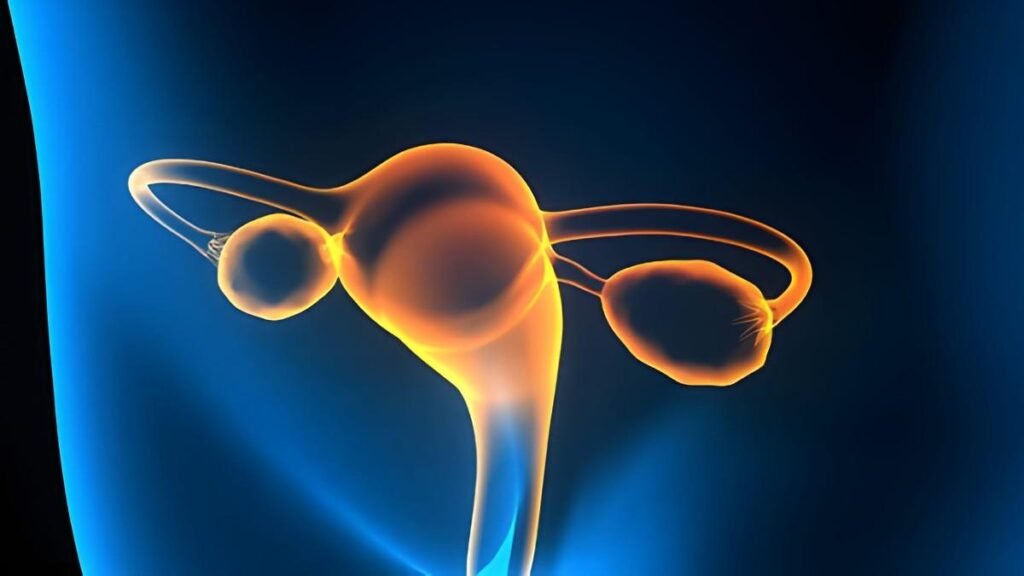
Torsion is the primary concern for any cyst greater than 4 cm. It occurs when the ovary twists around the ligaments that hold it in place, cutting off its blood supply. This event is more common during the **first trimester** (when the cyst is large but the uterus is still small) and again around the **start of the second trimester** (Weeks 14-16), when the enlarging uterus lifts the adnexa (ovary and tubes) out of the pelvis, leaving them free to twist.
Symptoms of Ovarian Torsion
Torsion is characterized by the sudden onset of **severe, sharp, unilateral (one-sided) pelvic pain** that is often accompanied by nausea and vomiting. This requires immediate emergency medical evaluation to prevent the loss of the ovary.
Cyst Rupture
A rupture occurs when the cyst bursts, releasing its fluid contents into the abdominal cavity. If the cyst is functional or a simple cyst, rupture may cause acute, sharp pain followed by rapid relief, as the fluid is usually benign and reabsorbed by the body. However, if the rupture causes internal bleeding or the cyst contained irritating material (like a dermoid cyst), surgical intervention may be required.
Clinical Monitoring Protocol
For a 5 cm cyst with no malignant features on initial ultrasound, the management is almost always expectant (watchful waiting) rather than surgical intervention.
Serial Ultrasound Surveillance
The standard protocol involves serial ultrasounds to track size and characteristics:
- First Follow-up: Usually 4-6 weeks after initial discovery to check if the cyst is resolving (if functional).
- Second Trimester Check (Around Week 16-20): If the cyst remains, a scan around the start of the second trimester is essential. If the mass has resolved, monitoring is discontinued.
- Third Trimester: If the cyst persists, a final check is often scheduled in the late third trimester to ensure the mass does not obstruct the birth canal, which would necessitate a cesarean delivery.
Interactive Acute Symptom Check
Use this tool to quickly assess whether your pain indicates a common pregnancy discomfort or requires urgent clinical contact.
Describe the pain associated with the cyst:
Timing and Options for Treatment
Surgical removal of an ovarian cyst during pregnancy (oophorectomy or cystectomy) is reserved for cases where malignancy is strongly suspected or an acute complication (torsion, bleeding rupture) is confirmed.
Surgical Timing Considerations
If surgery is deemed unavoidable (e.g., persistent growth, highly suspicious features), the procedure is typically scheduled during the **early second trimester (around Weeks 14–20)**. This timing is chosen for two critical reasons:
- Reduced Miscarriage Risk: By Week 14, the first trimester risk period has passed, and the placenta is fully functional, minimizing hormonal dependence on the corpus luteum.
- Accessibility: The uterus has grown enough to push the cyst up and out of the pelvis, making surgical access (often laparoscopic) safer and easier without disturbing the uterus.
Summary: Focusing on Watchful Waiting
A 5 cm ovarian cyst found during pregnancy is a common diagnosis that typically does not compromise the health of the pregnancy. The vast majority are benign, functional cysts that resolve naturally by the second trimester. Management relies on diligent, non-invasive ultrasound surveillance to confirm resolution and assess for any concerning features. The most crucial role for the patient is accurate self-monitoring for acute, severe pain—the primary red flag for mechanical complications like torsion. By adhering to the monitoring schedule and trusting the conservative management approach, you ensure the safest pathway for both maternal and fetal health.