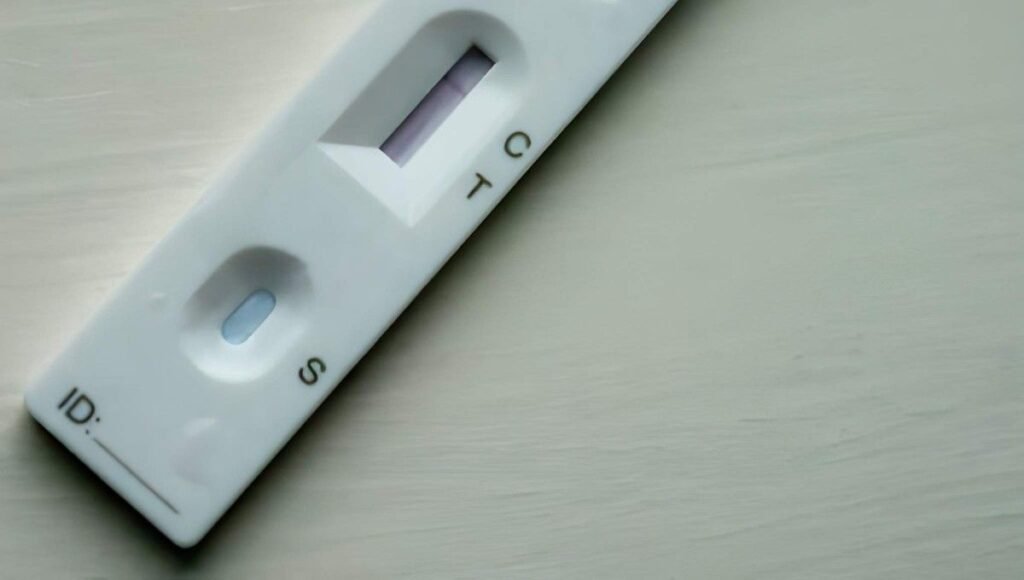
5 Days Overdue, Negative Test: Interpreting the Late Result and Clinical Next Steps
Analyzing the high accuracy of the test and the need to investigate non-pregnancy causes for a missed period.
Article Roadmap
Clinical Accuracy at 5 Days Overdue: Why Pregnancy is Improbable
When a pregnancy test is negative five days after the expected menstrual period, the result is considered **highly reliable**. This time frame usually places the individual at approximately 19 to 21 days past ovulation (DPO), well beyond the critical window for detection.
Reliability of Testing at 19-21 DPO
Home pregnancy tests (HPTs) detect the hormone Human Chorionic Gonadotropin (hCG), which is produced immediately following successful implantation. Since implantation is typically complete by 12 DPO, the hCG hormone would have had at least seven to nine days to double exponentially.
- By 19 DPO, average hCG levels are well over $100 \text{ mIU/mL}$.
- Most standard HPTs detect levels at or above $25 \text{ mIU/mL}$.
A negative test this late strongly suggests that either conception did not occur this cycle, or the pregnancy was a non-viable **chemical pregnancy** (an early loss that caused hCG to rise briefly before dropping back down to undetectable levels).
The High Certainty of a Late Negative
If a woman receives a negative result five days after her expected period, the accuracy rate of the test is estimated to be **over $99\%$** for ruling out a progressing pregnancy. The certainty of the negative shifts the clinical focus away from gestation and toward the menstrual cycle itself.
The Menstrual Delay Riddle: Primary Causes of a Late Period
If the test confirms the absence of pregnancy, the 5-day delay is attributed to a failure in the normal hormonal cascade that triggers menstruation. This failure almost always stems from a delayed or absent ovulation.
The Impact of Delayed Ovulation
The luteal phase (the time between ovulation and the next period) is remarkably consistent, lasting 12 to 16 days. The follicular phase (before ovulation) is the only variable part of the cycle. When a period is five days late, it is usually because ovulation occurred five or more days later than usual, prolonging the cycle.
Common External Causes of Ovulation Delay
- Acute Stress: High levels of emotional or physical stress (e.g., severe illness, travel, emotional trauma) can signal the hypothalamus to delay or inhibit the Luteinizing Hormone (LH) surge necessary for ovulation.
- Significant Weight Changes: Rapid weight loss, intense new exercise regimes, or sudden weight gain can disrupt the delicate hormonal balance required for timely ovulation.
- Medication Changes: Starting or stopping hormonal contraceptives, anti-depressants, or thyroid medications can temporarily destabilize the cycle.
Hormonal and Health Disruptors Requiring Investigation
If external causes are ruled out, a persistent delay suggests an underlying endocrine issue that requires medical diagnosis.
Underlying Medical Conditions
| Condition | Mechanism of Period Delay |
|---|---|
| Polycystic Ovary Syndrome (PCOS) | Hormonal imbalance (high androgens) prevents the maturation and timely release of an egg (anovulation). |
| Thyroid Dysfunction | Disruptions in thyroid hormone levels (Hypo- or Hyperthyroidism) interfere with pituitary hormone regulation necessary for menstruation. |
| Hyperprolactinemia | Excessive prolactin production inhibits the release of reproductive hormones, preventing ovulation and leading to amenorrhea. |
| Perimenopause/Early Ovarian Insufficiency | A decline in ovarian function leading to unpredictable and often skipped cycles, typically seen in older reproductive age but possible earlier. |
The Need for Diagnostic Clarity
If the period is late and the pregnancy test is negative, obtaining a definitive diagnosis for the underlying cause is crucial. Left untreated, conditions like PCOS and thyroid dysfunction affect long-term health beyond fertility, increasing risks for diabetes and cardiovascular disease.
The Rare Exception: False Negative Scenarios
In extremely rare cases, a negative HPT at five days overdue may still be a false negative. These exceptions are typically caused by biological anomalies or gross procedural errors.
Biological Anomaly: The Hook Effect
The Hook Effect is a rare immunological phenomenon where excessively high levels of hCG (typically seen in advanced gestation, molar pregnancies, or multiples) saturate the test antibodies, preventing the test from binding correctly and resulting in a false negative. This scenario is highly unlikely in early pregnancy, but if the patient has extreme nausea or other unusual symptoms, a healthcare provider might check for this by diluting the urine sample.
Procedural Failure: Diluted Urine
Although hCG levels are very high by 19 DPO, taking a test late in the day after consuming large quantities of water can still dilute the urine enough to drop the concentration below the test threshold. This is why a repeat test with the highly concentrated **First Morning Urine (FMU)** sample is always recommended before seeking clinical confirmation.
Mandatory Clinical Triage and Next Steps
If the period remains absent one week after the expected date (i.e., you are 7 days overdue), or if the negative tests persist, professional evaluation is required.
Clinical Protocol
- Quantitative Blood Test: The provider orders a serum hCG blood test. This is the definitive check; a result under $5 \text{ mIU/mL}$ confirms non-pregnancy.
- Hormone Panel: Blood work measures hormone levels (TSH for thyroid, prolactin, androgens) to screen for common endocrine causes of amenorrhea (PCOS, thyroid issues).
- Pelvic Ultrasound: A scan may be necessary to check the ovaries (for cysts related to PCOS) and the endometrial lining. If the lining is thick and the patient is not pregnant, medication may be prescribed to induce a withdrawal bleed and reset the cycle.
Socioeconomic Factors and the Cost of Diagnosis
The investigative steps required to diagnose the cause of amenorrhea present a significant financial barrier, especially in the U.S. healthcare model.
The Cost of an Endocrine Workup (Interactive Guide)
While a single HPT is cheap, the necessary follow-up for a non-pregnant, late-period patient is costly:
The full panel of diagnostic blood tests (hCG, TSH, Prolactin, Androgens) and a follow-up pelvic ultrasound can easily cost hundreds of dollars out-of-pocket, even with insurance, if the patient has a high deductible. This financial burden often causes women to delay the diagnosis of treatable conditions like PCOS.
Patients facing financial constraints should utilize Federally Qualified Health Centers (FQHCs) or local women's health clinics, which offer lab work on a sliding-scale fee based on income. Proactive communication with a provider is essential to streamline testing to only the most necessary, cost-effective options.
Receiving a late negative test is emotionally difficult, but it provides clear direction. By moving swiftly toward clinical diagnosis, patients reclaim control of their health and set a strong foundation for future cycles.