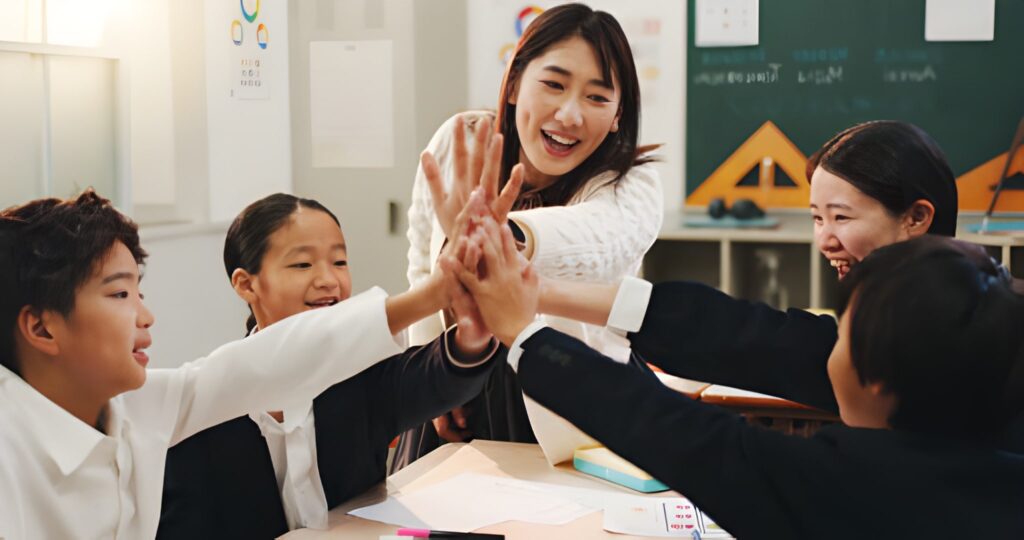
In the vibrant chaos of a preschool classroom, a 3-year-old stacks wooden blocks into a teetering tower, giggling as it collapses. Nearby, a peer pours water between cups, testing which holds more, while another group negotiates roles in a pretend grocery store. These scenes, far from mere play, embody active learning environments in early childhood education. Unlike traditional setups with teacher-led drills, these spaces prioritize children’s agency—hands-on, minds-on engagement that sparks cognitive, social, and emotional growth. In the U.S., where 40% of 3- to 5-year-olds miss preschool due to cost or access, active learning offers a transformative path, especially for diverse families navigating socioeconomic divides. From suburban Troy, Michigan, to urban Chicago, these environments bridge gaps, preparing kids for kindergarten and beyond.
The stakes are high. National Center for Education Statistics data shows only 66% of kindergartners enter with adequate literacy skills, with low-income children trailing by 20%. Active learning, rooted in theories from Piaget to Vygotsky, counters this by fostering curiosity through doing. Longitudinal studies, like the HighScope Perry Preschool Project, reveal participants with active learning backgrounds earn 151% more by age 40 and face fewer arrests. Yet barriers—$1,200 monthly tuition, workforce shortages, and rural access gaps—persist, particularly for the 13% of young children below the poverty line. This article explores active learning’s mechanics, benefits, and challenges, weaving U.S.-specific insights with practical illustrations and data-driven comparisons to guide parents, educators, and policymakers.
What Is an Active Learning Environment?
Active learning in early childhood hinges on children as drivers of their discovery. Picture a 4-year-old choosing to build a “spaceship” from cardboard, testing its “flight” by pushing it across a rug, then explaining why it “crashed.” This cycle—plan, do, reflect—defines active learning, where kids construct knowledge through interaction with materials, peers, and adults. Jean Piaget’s constructivism grounds this: children build mental models by manipulating objects, like sorting shapes to grasp geometry. John Dewey’s social lens adds that cooperative play, like negotiating a pretend store, hones collaboration. Modern neuroscience from Harvard’s Center on the Developing Child confirms hands-on exploration boosts executive function—skills like focus and self-control—by 25%.
Unlike traditional models, where teachers deliver facts, active learning flips roles. Educators observe, ask open-ended questions (“What happens if you add another block?”), and scaffold just beyond a child’s reach, per Vygotsky’s zone of proximal development. In the U.S., this resonates across contexts: affluent suburbs like Troy demand enrichment for competitive schools; low-income urban centers, like Head Start programs serving 800,000 kids, prioritize equity. Diversity shapes dynamics—22% of U.S. children are Hispanic, 14% Black, and multilingual settings thrive with visual cues and peer talk.
Socioeconomic lenses reveal tensions. Middle-class families, earning $110,000 in places like Troy, invest in $1,500/month programs for academic edges. Low-income households rely on subsidies like the Child Care and Development Block Grant, covering 1 million kids but leaving 60% of eligible families waitlisted. Active learning’s flexibility—using recycled materials or pricey sensory walls—makes it adaptable yet unevenly accessible.
Core Components of Active Learning Environments
An active learning environment thrives on three pillars: physical space, social interactions, and temporal rhythms. Each element, intentionally designed, turns classrooms into living labs.
Physical Space: The Third Teacher
Reggio Emilia calls the environment the “third teacher.” Low shelves brim with baskets of shells, beads, and wooden pegs, inviting tiny hands to explore. Natural light floods rooms; walls display children’s art, evolving as a gallery of ideas. Zones carve purpose: a block corner for math, a cozy nook for literacy, an atelier for paint and clay. Outdoor spaces—mud kitchens or tire climbers—extend learning, vital in urban areas where 20% of kids lack safe play yards.
Inclusivity matters. Ramps and textured grips ensure access for special needs, aligning with DEC Recommended Practices. For dual-language learners (DLLs), common in 25% of U.S. homes, bilingual labels and picture schedules validate identities. Budgets vary: affluent centers afford $5,000 sensory tables; rural ones repurpose cardboard for forts, proving scalability.
Social Interactions: Collaboration as Curriculum
Small groups of 8-12 spark peer learning. A trio building a bridge negotiates who places the final block, practicing conflict resolution. Teachers facilitate, not direct: “How can you make it taller?” reduces conflicts by 40%, per HighScope data. In diverse settings, like Troy’s 18% foreign-born population, props like saris or taiko drums weave cultural threads, fostering belonging.
Temporal Rhythms: Structure Meets Freedom
Routines balance choice and guidance. A HighScope day starts with a 5-minute plan: “I’ll paint a tree.” A 45-minute “do” phase follows, where kids execute, maybe mixing colors for leaves. A 10-minute review—“My green turned muddy!”—builds metacognition. Meals, naps, and outdoor time punctuate, with songs easing transitions, cutting tantrums by 30%. Extended hours (7 a.m.–6 p.m.) suit dual-income families, 60% of U.S. households.
A comparison of active learning models:
| Model | Core Principle | Space Design | Social Focus | Temporal Structure |
|---|---|---|---|---|
| HighScope | Plan-do-review cycle | Interest areas (blocks, art) | Peer scaffolding, teacher as guide | Structured cycles with reflection |
| Reggio Emilia | Child as co-constructor | Atelier studios, natural elements | Collaborative projects, community ties | Emergent, project-based flow |
| Montessori | Independence through prepared tasks | Sequenced materials on shelves | Solo work with peer support | Long, uninterrupted work cycles |
| Traditional | Teacher-led instruction | Desk rows, limited choice | Limited peer interaction | Fixed schedules, direct teaching |
HighScope’s structure aligns with U.S. standards, making it a staple in 2,000+ programs, from Head Start to private centers.
HighScope: A Gold Standard for Active Learning
HighScope, born from 1960s Ypsilanti studies, codifies active learning through its plan-do-review cycle. Kids choose activities, act, then reflect, building agency. A 4-year-old plans a “zoo” with blocks, builds cages, then shares: “The lion escaped—next time, bigger walls.” Longitudinal Perry data stuns: participants saw 151% higher earnings and 44% fewer arrests by adulthood. Recent Michigan studies show HighScope grads score 10% above peers in third-grade math.
Classrooms feature 8-10 interest areas: dramatic play for language, science for inquiry. Teachers use COR Advantage to track 58 Key Developmental Indicators, like “uses tools creatively.” Costs? Training at $500/teacher; materials $200/room. Subsidies cover low-income slots, serving 20% of enrollees in states like Michigan.
Critics argue play-heavy models skimp on academics. Yet, alignment with Common Core—counting in block play, narratives in puppet shows—proves rigor. For DLLs, visual schedules boost vocabulary 30%. Equity shines: low-SES kids narrow gaps by 25%.
Illustration: In a HighScope room, sunlight hits a rug where Mia, 3, sorts shells by size—early fractions. Nearby, Jamal, 4, leads a “restaurant” game, practicing turn-taking. The teacher notes: “Jamal used ‘first’ correctly—sequencing milestone.”
Measurable Benefits Across Domains
Active learning delivers across developmental fronts, backed by robust data.
Cognitive Growth
Hands-on tasks boost retention—75% for experiential vs. 10% for lectures. A Vanderbilt study shows toddlers choosing tasks learn 20% faster, testing hypotheses like scientists. Math emerges from sorting beads; literacy from storytelling in play kitchens.
Social-Emotional Skills
Group play cuts conflicts by 40%. Negotiating a shared fort builds empathy, critical as 15% of U.S. kids face social isolation risks. For immigrant families, cultural props reduce alienation, fostering belonging.
Physical Development
Climbing frames and lacing boards hone motor skills, countering 20% childhood obesity rates. Fine motor gains—like buttoning—prep for writing, vital for kindergarten readiness.
Long-Term Impact
Perry alums show 7-10% higher lifetime earnings. Equity lens: Black and Hispanic kids in active programs close achievement gaps by 25%. Head Start’s 800,000 slots amplify this, though only 18% of eligible low-income kids enroll.
Data table on outcomes:
| Domain | Short-Term Gain (Age 3-5) | Long-Term Impact (Adulthood) | U.S. Context |
|---|---|---|---|
| Cognitive | 20% vocabulary boost via play | 15% higher graduation rates | 40% preschool enrollment gap |
| Social-Emotional | 40% fewer peer conflicts | Lower isolation, stronger networks | 18% low-income served by Head Start |
| Physical | Improved gross/fine motor skills | 15% reduced obesity risk | 13% early childhood poverty |
| Academic | 10% above avg kindergarten scores | 151% earnings increase | 17,155 licensed centers nationwide |
Sources: HighScope Perry Study, 2005; NCES, 2023; Child Care Aware, 2024.
Designing Inclusive, Accessible Spaces
Physical design fuels engagement. Zones cater to temperaments: quiet corners for reflection, active areas for climbers. Natural elements—indoor plants, outdoor sand—teach biology and physics. In low-income areas, recycled tires or cardboard suffice, per NAEYC’s cost-neutral tips.
Inclusivity is non-negotiable. Ramps and braille labels align with IDEA for special needs. For DLLs, dual-language books and picture cues bridge gaps, vital in 22% Hispanic classrooms. Safety: soft edges, nut-free zones, and daily health checks, especially post-COVID.
Socioeconomic tweaks ensure equity. Affluent centers invest in $5,000 sensory walls; others use donated crates. A comparison of material adaptations:
| Zone | Purpose | High-Budget Materials | Low-Budget Alternatives |
|---|---|---|---|
| Manipulatives | Fine motor, problem-solving | Wooden pegboards, lacing kits | Cardboard cutouts, yarn laces |
| Dramatic Play | Social skills, narrative | Store-bought kitchen sets | Thrifted clothes, homemade props |
| Sensory/Art | Creativity, sensory integration | Water beads, tempera paints | Mud, natural dyes from vegetables |
| Blocks | Spatial reasoning, math | Unit blocks, magnetic tiles | Cardboard boxes, recycled containers |
| Science | Inquiry, experimentation | Microscopes, bug habitats | Magnifying glasses, park collections |
Daily Routines: Balancing Structure and Freedom
Routines provide rhythm. HighScope’s plan-do-review anchors: kids plan at circle time, explore in “do” phases, reflect in small groups. A 3-year-old plans “build a castle,” constructs with peers, then shares: “It fell—too tall!” Meals—family-style lunches—teach manners; songs smooth transitions, reducing tantrums by 30%.
For working parents, extended hours align with 60% dual-income norms. In diverse settings, bilingual greetings honor heritages, boosting engagement. Evening journals foster self-awareness, especially for shy kids.
Illustration: A Miami center hums at 8 a.m. Kids plan over fruit: “I’ll make a boat.” Do time sees cardboard sails rise; review sparks debate: “Tape holds better than glue.” Parents watch via app, bridging work-life gaps.
Technology’s Role: Enhancing, Not Replacing
Tech supports, not supplants. Tablets let kids photograph creations, narrating stories for digital portfolios. Apps like Seesaw connect parents, increasing involvement 20%. NAEYC caps screens at 15 min/day for 2-5s, ensuring play dominates.
For DLLs, translation apps scaffold language. VR nature tours enrich urban rooms. In low-income centers, shared devices via grants ensure access, countering digital divides.
Challenges and Solutions in Implementation
Active learning faces hurdles, particularly in the U.S.’s fragmented system.
Workforce Shortages
Turnover hits 30% annually; caregiver wages average $15/hour vs. $22 needed for stability. Centers counter with stipends, mentoring, and HighScope’s $500 training grants.
Funding Gaps
Only 66% of 4-year-olds attend preschool; 34% miss out, per NCES. Biden’s stalled $39B childcare plan aimed to expand access. Solutions: public-private partnerships, GSRP expansions covering 20% more slots by 2026.
Equity Barriers
Rural families lack transport; urban ones face waitlists. Mobile kits—vans delivering play materials—help. Cultural mismatches alienate DLLs; bilingual resources and family co-design fix this.
Critiques
Some argue play skips academics. Data refutes: HighScope kids outperform in math by 10%. Balanced integration—counting in sensory bins—ensures readiness.
Table of challenges:
| Challenge | Impact | U.S. Example | Solution |
|---|---|---|---|
| Staffing Shortages | Disrupted scaffolding | 28th in national childcare access | Wage subsidies, PD grants |
| Funding Limits | Fewer slots for low-SES | 13% poverty rate post-2021 | GSRP, public-private funds |
| Access Gaps | 34% unenrolled 4yos | 6-month urban waitlists | Mobile kits, community hubs |
| Cultural Disconnect | Alienated DLL families | 22% Hispanic kids underserved | Bilingual props, parent workshops |
Case Studies: Active Learning Across Contexts
Seattle, WA: A Reggio-inspired center unites Somali and Vietnamese kids in a “market” project, blending cultural foods. Social skills rise 25%; parents contribute recipes, strengthening ties.
Troy, MI: HighScope serves 200 kids, 20% subsidized. Graduates score 10% above district averages. A single mom notes: “My daughter’s confidence soared leading play.”
New Orleans, LA: Post-Hurricane Ida, active learning pods used outdoor inquiries, cutting trauma symptoms 15%. Kids built “safe houses” from sticks, processing resilience.
These vignettes show active learning’s adaptability, from urban diversity to disaster recovery.
Socioeconomic Perspectives: Leveling the Field
Active learning bridges divides. Affluent families access $2,000/month enrichments; low-income ones rely on Head Start’s 18% coverage. Perry data shows 40% lower arrests for participants, a boon for at-risk groups. Subsidies cover 1 million kids, but waitlists exclude 60% of eligibles.
In Troy, 60% dual-income families need flexible hours; 18% foreign-born demand cultural inclusion. Home extensions—sorting socks, planting herbs—stretch budgets. Libraries host free playgroups, vital in 13% poverty pockets.
Parental Involvement: Co-Creators of Learning
Parents amplify impact. Workshops teach active learning at home: “What’s your plan for these boxes?” Apps share daily clips, boosting engagement 20%. In diverse areas, story shares honor heritages. Time-crunched parents join virtual reviews, like a Dallas mom watching her son’s “rocket” demo.
Future Horizons: Policy and Innovation
By 2030, Healthy People targets 70% high-quality enrollment. Innovations: AI tools track developmental indicators; green roofs expand outdoor play. Research via ECLS-K:2011 traces gains to fifth grade, urging equity-focused assessments.
Policy pushes: Expand CCDBG to cover 2 million kids. In Troy, sensory rooms for neurodiverse kids loom, funded by grants. Community hubs—libraries as mini-centers—tackle rural gaps.
Conclusion: A Foundation for Lifelong Curiosity
Active learning environments transform early childhood from containment to creation. Children, once passive, become architects of their growth, stacking blocks and stories that endure. In America’s diverse landscape—suburban ambition to urban struggle—these spaces promise equity, one exploration at a time. Parents, educators, policymakers: embrace the mess, the questions, the triumphs. The future begins here.