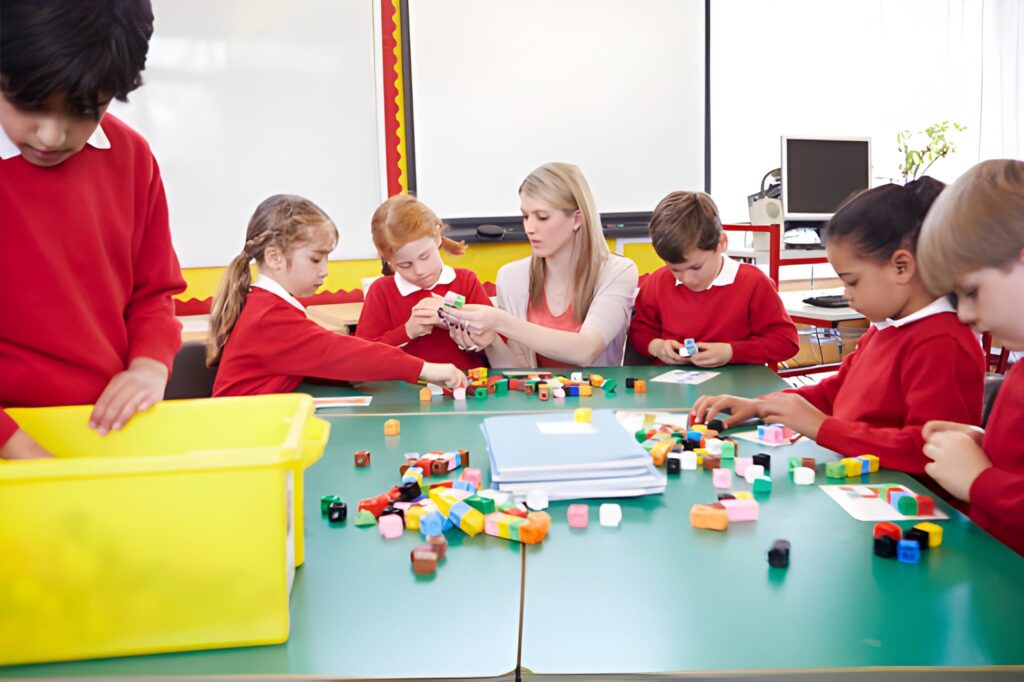
Activity-Based Learning (ABL) is an educational approach that emphasizes learning through hands-on activities, interactive tasks, and real-world experiences. In primary education, ABL is particularly effective because young learners are naturally curious, energetic, and eager to explore. Unlike traditional rote learning, ABL engages multiple senses, encourages collaboration, and allows students to construct knowledge actively. This article examines the concept, strategies, benefits, and practical applications of activity-based learning in primary education.
Understanding Activity-Based Learning
Activity-Based Learning centers on the principle that children learn best when they are actively involved in the learning process. It integrates play, exploration, and experimentation with structured educational objectives. Key characteristics include:
- Learner-Centered Approach: Students take ownership of their learning.
- Experiential Learning: Knowledge is gained through experience rather than passive instruction.
- Collaborative Environment: Peer interaction and teamwork enhance understanding.
- Practical Application: Concepts are linked to real-life situations, making learning meaningful.
Activity-Based Learning vs. Traditional Learning
| Feature | Traditional Learning | Activity-Based Learning |
|---|---|---|
| Teaching Style | Teacher-centered, lecture-based | Student-centered, hands-on |
| Student Role | Passive listener | Active participant |
| Learning Process | Memorization, repetition | Exploration, experimentation, problem-solving |
| Assessment | Written tests, recall | Observation, project work, presentations |
| Engagement | Low to moderate | High, interactive and fun |
Activity-Based Learning Strategies in Primary Education
- Learning Stations
Classrooms are divided into stations with different activities, allowing students to rotate and explore concepts. Examples include:
- Math manipulatives at one station.
- Reading corner with interactive stories.
- Science experiments like growing plants or observing insects.
- Project-Based Learning
Students work on projects over time, integrating multiple subjects. Examples:
- Creating a mini-garden to learn about ecosystems.
- Designing a simple weather station to understand meteorology.
- Crafting a storybook to enhance literacy and creativity.
- Games and Simulations
Games make learning interactive and enjoyable while reinforcing concepts. Examples:
- Math bingo for arithmetic practice.
- Spelling races to improve vocabulary.
- Role-playing historical events to understand social studies.
- Hands-On Experiments
Experiments allow students to observe, hypothesize, and conclude, strengthening understanding. Examples:
- Mixing colors to learn about primary and secondary colors.
- Simple chemical reactions to understand changes in matter.
- Water filtration activity to teach environmental science.
- Storytelling and Role-Play
Narratives and dramatization help students internalize concepts. Examples:
- Acting out scenes from a story to develop comprehension.
- Simulating market transactions for math and social studies learning.
- Role-playing community helpers to understand societal roles.
- Outdoor Learning Activities
Learning outside the classroom connects students with the environment. Examples:
- Nature walks to study plants, insects, and ecosystems.
- Physical education games that incorporate counting, strategy, or problem-solving.
- Observing weather patterns and recording data.
Benefits of Activity-Based Learning in Primary Education
- Improved Retention and Understanding: Active engagement helps children retain knowledge longer.
- Enhanced Critical Thinking: Students learn to analyze, evaluate, and apply concepts.
- Motivation and Interest: Hands-on activities increase curiosity and participation.
- Social Skill Development: Collaborative activities build communication, teamwork, and empathy.
- Catering to Diverse Learning Styles: Visual, auditory, kinesthetic, and tactile learners all benefit.
- Problem-Solving Skills: Students develop strategies to tackle challenges independently or in groups.
Data Table: Impact of ABL Activities on Learning Outcomes
| Activity Type | Cognitive Benefits | Social/Emotional Benefits | Engagement Level |
|---|---|---|---|
| Learning Stations | Improved concept mastery | Peer collaboration | High |
| Project-Based Learning | Integration of multiple skills | Responsibility, teamwork | Very High |
| Games and Simulations | Reinforced learning through practice | Motivation, healthy competition | High |
| Hands-On Experiments | Better understanding of concepts | Curiosity, confidence | High |
| Storytelling & Role-Play | Language and comprehension skills | Empathy, creativity | High |
| Outdoor Learning | Observational and analytical skills | Physical well-being, teamwork | Very High |
Implementation Guidelines for Teachers
- Set Clear Objectives: Ensure each activity aligns with learning goals.
- Plan for All Learning Styles: Incorporate visual, auditory, kinesthetic, and tactile elements.
- Prepare Materials in Advance: Use locally available resources for practical activities.
- Encourage Collaboration: Facilitate group work and peer learning.
- Assess Formatively: Observe, document, and provide feedback rather than relying solely on tests.
- Reflect and Adapt: Modify activities based on student engagement and learning outcomes.
Illustration: ABL Cycle in Primary Education
- Engage: Introduce a concept through an intriguing question or demonstration.
- Explore: Students participate in hands-on activities, games, or projects.
- Explain: Discuss observations, clarify misconceptions, and connect learning to concepts.
- Elaborate: Apply knowledge in new contexts or integrate with other subjects.
- Evaluate: Reflect on learning outcomes, peer feedback, and teacher assessment.
Challenges of Activity-Based Learning
- Time constraints to cover the curriculum.
- Large class sizes making individualized attention difficult.
- Limited resources or materials for hands-on activities.
- Teacher training gaps in designing and facilitating ABL activities.
Conclusion
Activity-Based Learning in primary education transforms the classroom into an engaging, student-centered environment where learners actively construct knowledge. Strategies like learning stations, project-based learning, hands-on experiments, storytelling, and outdoor activities enhance understanding, motivation, and social skills. While challenges such as resources and class size exist, careful planning, creativity, and teacher facilitation can make ABL a highly effective approach. By incorporating activity-based strategies, primary educators can foster a love of learning, critical thinking, and collaboration, laying a strong foundation for lifelong educational success.