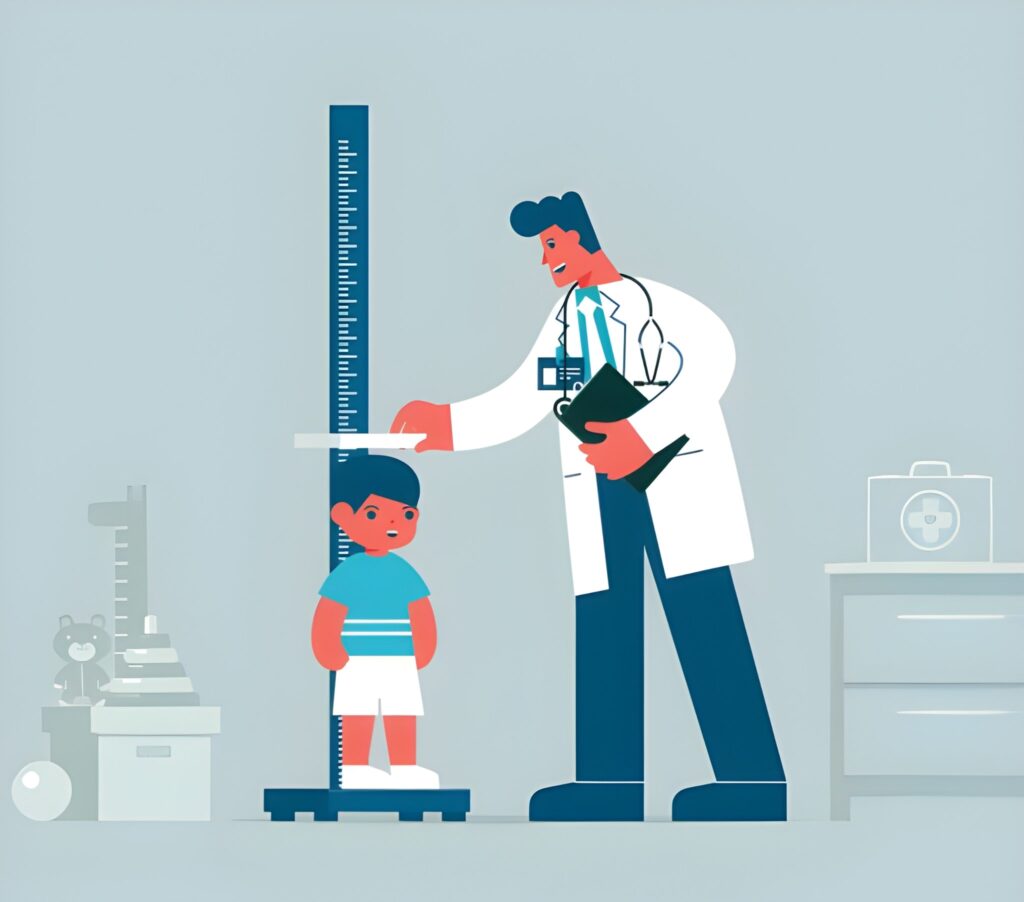
A child’s growth is a critical indicator of overall health, nutrition, and development. Pediatricians, endocrinologists, and caregivers evaluate growth to identify deviations from normal patterns, detect growth disorders, and monitor the effectiveness of interventions. Growth evaluation involves physical measurements, developmental assessments, and laboratory or imaging tests, depending on the child’s age and health status.
1. Anthropometric Measurements
The most common method to evaluate growth is through precise physical measurements, which are plotted on standardized growth charts. Key measurements include:
- Height/Length: For children under 2 years, recumbent length is measured; for older children, standing height is recorded. Regular height measurements allow calculation of growth velocity.
- Weight: Measured on calibrated scales, weight reflects nutritional status and health. Rapid weight changes can indicate underlying illness or endocrine disorders.
- Head Circumference: Particularly important in infants and toddlers, head circumference tracks brain growth and skull development.
| Measurement | Typical Use | Frequency |
|---|---|---|
| Length/Height | Linear growth assessment | Every 3–6 months in infants; annually after 2 years |
| Weight | Nutritional status, weight-for-age percentile | Every 1–3 months in infants; every 6 months in older children |
| Head Circumference | Brain growth and early detection of micro/macrocephaly | Birth to 3 years |
2. Growth Charts
Growth charts are essential for interpreting anthropometric data. The CDC and WHO growth charts provide percentile curves based on age and sex, allowing clinicians to determine whether a child’s growth is within normal limits.
- Percentiles: Indicate a child’s position relative to peers (e.g., 50th percentile = average).
- Z-scores: Represent standard deviations from the median, useful for more precise analysis in malnutrition or endocrine disorders.
- Growth Velocity Charts: Show the rate of change in height over time, highlighting periods of slow or rapid growth.
3. Bone Age Assessment
Bone age provides insight into skeletal maturity and helps predict final adult height. X-rays of the left hand and wrist are compared to reference standards such as the Greulich-Pyle atlas or Tanner-Whitehouse method. Bone age evaluation is particularly useful when:
- Growth rate is abnormal (too slow or too rapid).
- Suspecting endocrine disorders, such as growth hormone deficiency or thyroid hormone deficiency.
- Planning treatment interventions like GH therapy or puberty modulation.
| Parameter | Purpose | Typical Findings |
|---|---|---|
| Bone Age | Skeletal maturity | Matches chronological age in normal growth; advanced or delayed in disorders |
| X-ray of Hand/Wrist | Visualizes ossification centers | Provides reference for growth potential and epiphyseal plate status |
4. Laboratory Tests
Blood tests help evaluate hormonal and metabolic factors influencing growth. Common assessments include:
- Thyroid Function Tests: TSH, free T4 to detect hypo- or hyperthyroidism.
- Growth Hormone and IGF-1 Levels: Evaluates GH deficiency or insensitivity.
- Sex Steroids (Estrogen/Testosterone): Assesses pubertal development or precocious/delayed puberty.
- Complete Blood Count and Nutritional Labs: Detect anemia, vitamin D, calcium, and other deficiencies affecting growth.
5. Body Composition and Nutritional Assessment
Monitoring body mass index (BMI) and body composition can identify undernutrition, obesity, or failure to thrive. Tools include:
- BMI-for-Age Percentiles: Standard method for children over 2 years.
- Skinfold Thickness or Bioelectrical Impedance Analysis: Estimates fat and lean mass.
6. Developmental and Functional Evaluation
Growth assessment is complemented by evaluating motor, cognitive, and social-emotional milestones, ensuring holistic development. Delays in physical growth may coincide with delays in developmental domains, prompting early intervention.
7. Longitudinal Monitoring
Evaluating growth is most effective when done over time, allowing calculation of:
- Growth Velocity: Height gain per year; indicates whether a child is growing along their percentile curve.
- Trend Analysis: Detects subtle deviations from normal growth patterns before absolute measurements fall outside standard ranges.
Conclusion
A child’s growth may be evaluated using a combination of anthropometric measurements, growth charts, bone age assessment, laboratory tests, and developmental evaluations. Accurate, repeated measurements, coupled with proper interpretation of growth patterns, allow healthcare providers to identify growth disorders, monitor therapeutic interventions, and ensure optimal physical, cognitive, and emotional development. Early detection and intervention are key to helping children reach their full growth potential.