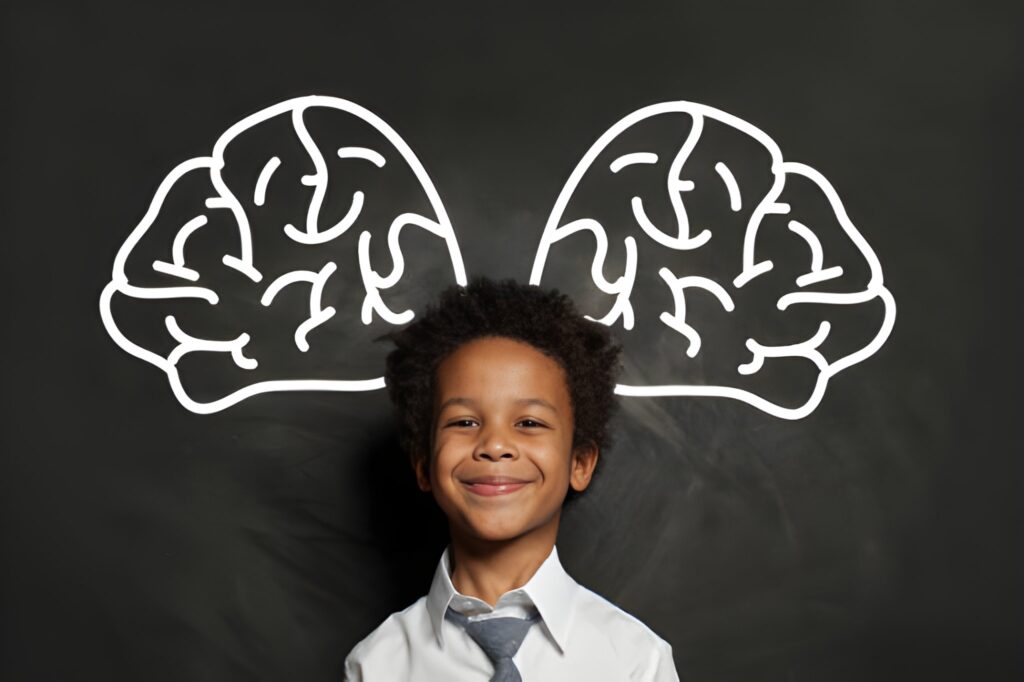
A growth mindset is the belief that abilities, intelligence, and talents can be developed through effort, learning, and persistence, rather than being fixed traits. Coined by psychologist Carol Dweck, this concept has profound implications for child development, influencing academic achievement, emotional resilience, social skills, and lifelong learning. Encouraging a growth mindset in children helps them embrace challenges, persist through setbacks, and develop a strong sense of self-efficacy.
Understanding Growth Mindset in Children
Children with a growth mindset:
- View challenges as opportunities to learn.
- Persist when facing difficulties rather than giving up.
- Value effort and strategies over innate ability.
- Learn from mistakes instead of fearing failure.
In contrast, children with a fixed mindset believe their abilities are static. They may avoid challenges, give up easily, or ignore feedback, limiting their potential.
Impact on Development
- Cognitive Development:
A growth mindset encourages children to tackle complex problems, fostering critical thinking, problem-solving, and adaptive learning strategies. Children become more open to exploring new concepts and integrating feedback. - Emotional Development:
By understanding that abilities can improve over time, children develop resilience, self-regulation, and a positive attitude toward setbacks. They learn to manage frustration and maintain motivation during challenging tasks. - Social Development:
Growth mindset children are more likely to collaborate, share ideas, and provide constructive feedback. They value teamwork and are less threatened by peer success, seeing others’ achievements as learning opportunities. - Academic Achievement:
Studies show that students with a growth mindset are more engaged in learning, achieve higher grades, and demonstrate greater persistence, especially in subjects requiring effort over innate talent, such as mathematics and reading.
| Domain | Fixed Mindset | Growth Mindset | Implications |
|---|---|---|---|
| Learning | Avoids challenges | Embraces challenges | Better long-term skill acquisition |
| Failure | Feels defeated | Sees as learning opportunity | Resilience and persistence |
| Effort | Sees as fruitless | Sees as path to mastery | Improved achievement |
| Feedback | Ignores criticism | Uses feedback constructively | Enhanced skill development |
| Peer Comparison | Threatened by others’ success | Inspired by others’ success | Better social collaboration |
Strategies to Foster a Growth Mindset in Children
- Praise Effort, Not Talent: Focus on the process, such as persistence, strategies, and problem-solving, rather than innate intelligence. For example, say, “You worked really hard on that puzzle,” instead of, “You’re so smart.”
- Encourage Risk-Taking and Mistakes: Normalize mistakes as part of learning. Discuss what can be learned from failures to promote reflection and resilience.
- Model Growth Mindset Behavior: Children learn from observing adults. Demonstrate perseverance, learning from errors, and continuous self-improvement.
- Use Growth-Oriented Language: Replace phrases like “I can’t do this” with “I can’t do this yet,” emphasizing potential for growth.
- Set Realistic, Challenging Goals: Encourage children to set goals that stretch their abilities while remaining achievable. Celebrate progress, not just outcomes.
- Teach Brain Plasticity: Help children understand that the brain grows and strengthens with practice, reinforcing the link between effort and improvement.
Long-Term Benefits
Children who develop a growth mindset are more likely to:
- Persist in learning throughout life.
- Adapt to new environments and challenges.
- Develop self-confidence and intrinsic motivation.
- Exhibit healthier coping mechanisms for stress and failure.
- Pursue ambitious goals and innovative thinking.
Conclusion
Fostering a growth mindset is integral to holistic child development, influencing cognitive, emotional, social, and academic growth. By emphasizing effort, resilience, and learning from mistakes, parents, caregivers, and educators can empower children to embrace challenges and reach their full potential. Cultivating this mindset early lays the foundation for lifelong learning, adaptability, and success in diverse areas of life.