Technology Meets Biology
First Response Digital: The Science of Unambiguous Pregnancy Testing
Table of Contents
The Digital Advantage: Clarity Over Lines
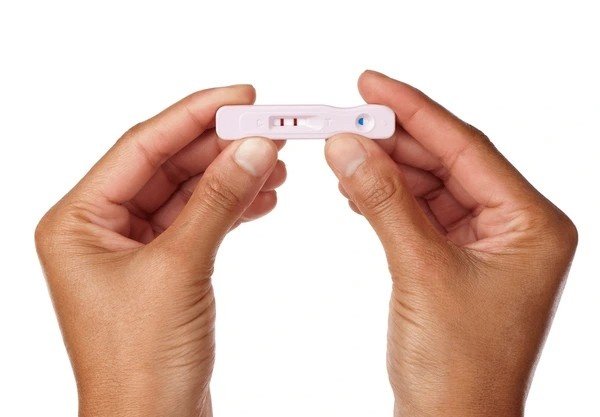
The experience of taking a home pregnancy test often involves a critical moment of visual interpretation: staring intently at a test stick, trying to distinguish a faint, barely-there second line from an evaporation line or the chemical residue of the test itself. Digital pregnancy tests, popularized by brands like First Response, eliminate this ambiguity. They replace the subjective interpretation of chemical dye lines with a clear, definitive digital display reading either "Yes," "Pregnant," or "No," "Not Pregnant."
This clarity offers significant emotional relief during the high-stress environment of the "Two Week Wait." For a working mother or family trying to conceive in the US, where planning and certainty are highly valued, the immediate, unambiguous answer provided by a digital test streamlines the process of moving from uncertainty to prenatal action.
Setting the Sensitivity Standard: First Response Technology
The term "First Response" is synonymous with early detection. The reason this brand, including its digital variant, is often recommended for early testing lies in its exceptional sensitivity to Human Chorionic Gonadotropin (hCG). While standard home pregnancy tests generally detect hCG levels at $25$ milli-international units per milliliter (mIU/mL), First Response tests are designed to detect levels as low as $6.3$ mIU/mL.
This heightened sensitivity is scientifically important because it shortens the time required between implantation (when hCG production begins) and accurate detection. Since implantation can occur as early as six days past ovulation (6 DPO), a test that can read such low levels offers the possibility of confirmation up to six days before the missed period.
How It Works: The Electronic Reader
A digital test operates on the same chemical principle as a traditional line test but incorporates a small electronic reader chip to process the result.
- Chemical Reaction: The absorbent wick still contains antibodies that bind to hCG in the urine. This binding causes a colored dye line to form internally, just like an analog test.
- Optical Scanning: Instead of relying on human eyes, the electronic chip uses an internal optical sensor to measure the intensity of the dye line.
- Digital Conversion: The chip processes the measured line intensity. If the intensity surpasses the programmed threshold (the $6.3$ mIU/mL equivalent), the chip triggers the "Pregnant" message. If it does not, the display shows "Not Pregnant."
Interpreting the Weeks Indicator
Some advanced First Response digital tests include a "Weeks Indicator" feature, which estimates the time since ovulation (or conception). This indicator is based on the concentration of hCG detected in the urine, correlating a specific level range with an estimated time frame.
HCG Level Correlation with Weeks Since Conception
The weeks displayed on the test are generally estimates of time since conception, not gestational age (which is counted from the LMP). This correlation relies on the predictable doubling rate of hCG in early pregnancy.
Estimated HCG Levels and Digital Weeks Display
| Digital Display | Estimated Weeks Since Conception | Approximate Serum hCG Range (mIU/mL) |
|---|---|---|
| 1–2 Weeks | $3-4$ Weeks Gestational Age | $25 - 200$ |
| 2–3 Weeks | $4-5$ Weeks Gestational Age | $200 - 2,000$ |
| 3+ Weeks | $5+$ Weeks Gestational Age | $2,000+$ |
Important Note: This indicator is an estimate and should not replace clinical dating. Only a doctor-ordered quantitative Beta hCG blood test and an early ultrasound can accurately determine gestational age and confirm viability.
Interactive: Step-by-Step Usage Guide
Ensure the highest level of accuracy by following these usage steps precisely. Click to expand each step.
Step 1: Timing the Test ▼
For the earliest and most accurate result, use your First Morning Urine (FMU). This is the most concentrated urine of the day, offering the highest density of hCG. Avoid drinking excessive fluids beforehand, as dilution can lead to a false negative.
Step 2: Urine Application ▼
Remove the cap and hold the absorbent tip pointing downwards directly in your urine stream for the time specified in the instructions (usually $5$ to $10$ seconds). Alternatively, collect a urine sample in a clean, dry cup and dip the entire absorbent tip for the prescribed time. Never dip past the marked line.
Step 3: Waiting for the Result ▼
Lay the test flat on a non-absorbent, clean surface with the results window facing up. The digital test will display a clock or hourglass symbol, indicating it is processing. Wait the full $3$ minutes specified by First Response before reading the final result. Do not discard the test early.
Step 4: Interpreting the Display ▼
The screen will display "Pregnant" or "Not Pregnant" (sometimes with the weeks estimate). Once the result is displayed, it is final. The digital display is designed to be easily readable, eliminating the need to look for faint lines.
Understanding False Results
Even with high-sensitivity digital tests, the possibility of an incorrect result—a false positive or a false negative—exists, although it is rare.
Causes of False Negatives
The most common reason for a false negative with a digital test is testing too early. While the test is highly sensitive (down to $6.3$ mIU/mL), if implantation occurred late (e.g., at $12$ DPO), the hCG level may not cross even this low threshold until $15$ or $16$ DPO. Other causes include:
- Diluted Urine: Taking the test after consuming large amounts of liquid.
- Hook Effect (Rare): Extremely high levels of hCG (seen only much later, typically after $8$ weeks) can overwhelm the test's antibodies, ironically causing a false negative. If this is suspected, diluting the urine sample can sometimes correct the result.
Causes of False Positives
A true false positive (detecting pregnancy when none exists) is exceptionally rare with any quality test. The most frequent causes are:
- Chemical Pregnancy: A fertilized egg implants and produces hCG, leading to a positive test, but fails to progress. The pregnancy ends shortly after the positive test, often just before the expected period.
- Medications: Taking fertility drugs that contain hCG (e.g., Ovidrel, Pregnyl). The test detects the drug, not a viable pregnancy.
- Rare Medical Conditions: Certain ovarian cysts or cancers can rarely produce hCG, but this is highly unusual.
Digital vs. Analog: A Comparison
Choosing between a digital test and a traditional analog (line) test depends on personal preference for clarity versus cost and line progression tracking.
Key Differences: Digital vs. Analog Tests
| Feature | Digital Test (e.g., First Response) | Analog Test (Strip/Stick) |
|---|---|---|
| Result Clarity | High (Unambiguous text display) | Low (Requires line interpretation) |
| Sensitivity | Very High (Down to $6.3$ mIU/mL) | Varies ($10$ mIU/mL to $25$ mIU/mL) |
| Line Tracking | Not applicable (No line to track progression) | Yes (Line darkness can be tracked) |
| Cost per Test | Higher | Lower |
| Weeks Estimate | Often available (hCG correlation) | Not available |
Conclusion: Confidence in the Digital Result
The First Response digital pregnancy test offers a unique blend of high sensitivity and absolute clarity, making it a valuable tool in the early stages of the pregnancy journey. Its ability to detect hCG at extremely low levels provides the opportunity for confirmation days before a missed period. While the digital reading provides peace of mind, it is vital to remember the result, whether "Pregnant" or "Not Pregnant," is simply the first step. Positive results should be followed by prompt consultation with a healthcare provider for clinical dating and ongoing prenatal care, treating the digital confirmation as the confident starting point it represents.